AI SEO Tools: Your 2025 Competitive Edge in Search

In the hyper-competitive digital landscape of 2025, relying solely on traditional optimization methods is no longer sufficient to secure top search engine rankings. As algorithms become increasingly complex, the difference between stagnation and growth lies in your ability to adapt quickly.
To truly dominate the SERPs and outpace your rivals, you must embrace the transformative power of AI SEO Tools. These advanced solutions have evolved from optional luxuries into essential assets, capable of automating tedious technical audits, uncovering hidden data insights, and predicting user intent with unprecedented accuracy.
This comprehensive guide serves as your roadmap for success in the new era of search. We will dive deep into the market's leading software, offering practical strategies to help you seamlessly integrate these technologies into your workflow. From streamlining high-quality content creation to executing smarter keyword research, read on to unlock the full potential of automation and secure a significant competitive advantage this year.
Understanding AI SEO: The 2025 Imperative
As we navigate the digital ecosystem of 2025, the integration of artificial intelligence into search marketing has transitioned from an experiment to an absolute necessity. The era of manual keyword guessing is obsolete; today, success depends on algorithmic alignment.
What Exactly Are AI SEO Tools?
AI SEO Tools are sophisticated software solutions that leverage artificial intelligence, machine learning (ML), and natural language processing (NLP) to automate, optimize, and enhance SEO processes. Unlike traditional tools that simply aggregate data, these platforms analyze vast datasets to predict ranking factors and automate complex tasks.
"In 2025, AI SEO is not just about tools; it is the infrastructure of digital visibility."
These tools function as a force multiplier, handling technical audits, content generation, and backlink analysis with a precision that human analysis cannot match in isolation.
The Core Benefits of AI in Search Engine Optimization
The primary advantage of adopting AI is the dramatic increase in operational efficiency and the depth of data insights. By processing real-time search trends, AI SEO Tools allow marketers to conduct faster research and ensure improved content relevance.
The operational shift is best understood by comparing traditional workflows with AI-enhanced processes:
| Feature/Process | Traditional SEO | AI-Enhanced SEO |
|---|---|---|
| Data Processing | Manual analysis of spreadsheets; time-consuming. | Real-time, automated analysis of massive datasets. |
| Content Strategy | Keyword-density focused; often robotic. | Intent-focused; optimizes for semantic relevance. |
| Speed to Insight | Days or weeks to identify trend shifts. | Instantaneous identification of algorithm updates. |
| Personalization | Generic content targeting broad audiences. | Hyper-personalized content tailored to user behaviors. |
How AI is Reshaping the Landscape
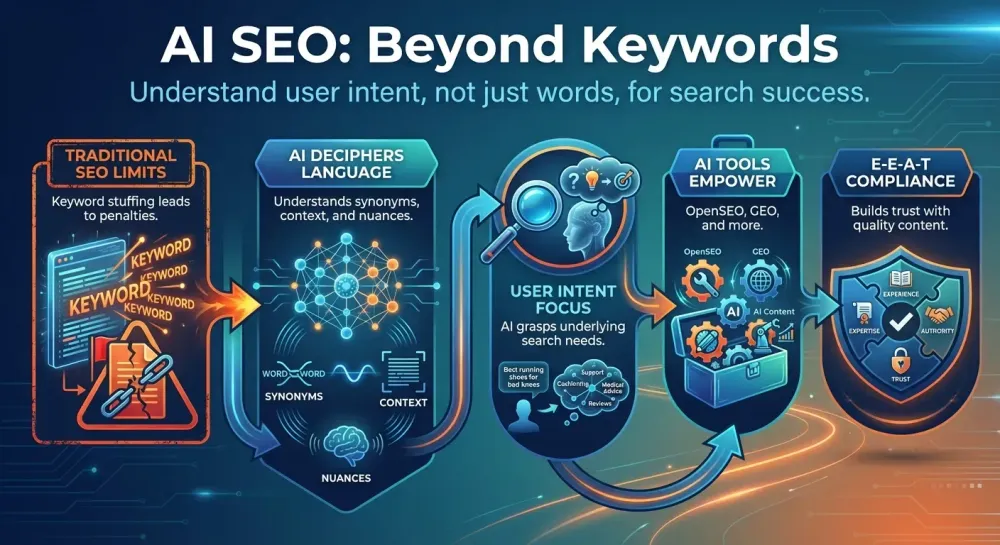
The search landscape in 2025 is defined by the dominance of Large Language Models (LLMs) and generative search experiences. User behavior has shifted from simple keyword queries to conversational, complex prompts. Consequently, search engine algorithms now prioritize semantic understanding over exact-match keywords.
To survive this shift, utilizing AI SEO Tools is essential. They enable brands to optimize for "answer engines" rather than just link lists, ensuring content satisfies the nuanced intent of modern users.
Top AI SEO Tools to Dominate Search in 2025
By 2025, the most successful marketers will be those who effectively partner with AI to scale their efforts. These tools not only automate repetitive tasks but also provide predictive insights that human analysis alone cannot achieve.
AI Tools for Advanced Keyword Research
The era of relying solely on search volume is over; success now requires understanding semantic relevance. AI-driven tools have revolutionized this process by automating topic clustering—grouping related keywords to build topical authority.
- Semrush: A leader in this space, Semrush utilizes AI to analyze vast datasets, identifying "low-hanging fruit" keywords and grouping them into clusters. This solves the challenge of keyword cannibalization by clearly mapping which pages should target specific terms.
- ChatGPT (with Plugins/Browsing): While a generalist tool, ChatGPT is invaluable for brainstorming seed keywords and understanding the conversational queries that dominate voice search.
Insight: "The value of AI in research lies not just in finding words, but in understanding the intent behind the search."
Leveraging AI for Content Optimization
Content remains king, but AI is the new chief of staff. Tools in this category focus on ensuring content is not only readable for humans but also perfectly structured for search engine crawlers.
SurferSEO stands out by using Natural Language Processing (NLP) to analyze top-ranking pages. It provides real-time feedback on keyword density, structure, and sentiment, effectively solving the "writer's block" dilemma and removing the guesswork from on-page optimization.
Comparison of Leading Content & Research Tools:
| Feature | SurferSEO | ChatGPT (Plus/Team) | Semrush |
|---|---|---|---|
| Primary Function | On-Page Optimization (NLP) | Generative Content Creation | Comprehensive Data & Strategy |
| AI Capability | Semantic analysis of SERPs | Conversational text generation | Keyword intent & gap analysis |
| Best Use Case | Optimizing articles for rank | Drafting outlines & meta data | Competitor research & tracking |
| Pricing Model | Paid Subscription | Freemium / Paid | Paid Subscription |
AI-Powered Technical SEO Audits
Technical SEO is often the most daunting aspect of optimization. AI SEO Tools in this sector act as 24/7 vigilant sentinels.
Tools designed for technical audits use machine learning to crawl websites more efficiently than traditional bots. They can instantly identify broken links, slow loading times, and schema markup errors. By automating these diagnostics, businesses can pivot from reactive fixing to proactive health management.
All-in-One Platforms vs. Specialized Tools
For many businesses, the choice between specialized tools and integrated platforms is critical.
- Integrated Platforms: Solutions like Semrush or Ahrefs offer a holistic view, integrating keyword data, content assistants, and technical audits into a single dashboard.
- Specialized Tools: Platforms like SurferSEO often offer deeper, more nuanced features for specific tasks.
By strategically selecting the right mix of these AI SEO Tools, businesses can secure a competitive edge, turning data into actionable strategies that drive traffic and revenue.
Strategic Implementation: Mastering Your AI Workflow
Possessing the technology is not enough; success lies in the strategic execution of these tools to enhance, rather than replace, your organic search efforts.
Integrating AI Seamlessly into Your Workflow
To integrate automation without disrupting existing processes, adopt a phased approach. Start by auditing your current workflow to identify high-friction bottlenecks.
- Assessment: Map out manual tasks that consume disproportionate time.
- Selection: Choose AI SEO Tools specifically designed for those bottlenecks (e.g., predictive analytics for trend forecasting).
- Pilot: Roll out tools to a small segment of your content team before full-scale adoption.
Strategic Insight: Treat AI as a junior analyst. It provides the raw data and drafts, but your senior strategists must approve the final output.
The Crucial Role of Human Expertise
While algorithms excel at pattern recognition, they lack emotional intelligence. Human oversight is paramount to ensure content aligns with brand values and meets Google's E-E-A-T (Experience, Expertise, Authoritativeness, and Trustworthiness) standards.
AI can structure an article, but it cannot replicate the unique insights derived from real-world experience. Strategy, creative storytelling, and ethical considerations must remain strictly in human hands.
Measuring the ROI of Your AI Investments
Tracking the success of AI integration requires looking beyond simple traffic numbers. Focus on efficiency metrics and content velocity relative to cost.
| Metric | Traditional SEO Workflow | AI-Augmented Strategy | Impact on ROI |
|---|---|---|---|
| Content Velocity | 2-3 articles per week | 10+ articles per week | High: Rapid scaling of topical authority. |
| Cost Per Unit | High (Man-hours intensive) | Low (Tool subscription + Edit time) | High: Reduced operational overhead. |
| Keyword Analysis | Reactive (Historical data) | Predictive (Future trends) | Medium: Better targeting of emerging intent. |
| Optimization | Manual on-page tweaks | Real-time scoring & suggestions | High: Faster ranking improvements. |
Navigating Common Challenges and Pitfalls
The most significant risk in 2025 is the temptation to publish unedited AI content. Search engines are increasingly sophisticated at detecting low-value, derivative content, which can lead to severe algorithmic penalties.
- Data Interpretation: AI tools often provide vast amounts of data without context. Marketers must interpret this data to make strategic decisions rather than following AI suggestions blindly.
- Hallucinations: AI can confidently present false information. Rigorous fact-checking protocols are essential to maintain credibility.
By balancing the efficiency of AI SEO Tools with human creativity and strict quality control, businesses can secure a dominant position in the search results of the future.
FAQ (Frequently Asked Questions)
Q1: What is the primary difference between traditional SEO tools and AI-powered SEO tools?
A1: Traditional SEO tools primarily aggregate data and offer insights based on historical information. AI-powered SEO tools go a step further by using machine learning and natural language processing to analyze data in real-time, predict trends, understand user intent more deeply, and automate complex tasks like content optimization and technical audits with greater accuracy and speed.
Q2: Can AI tools completely replace human SEO experts in 2025?
A2: No, AI tools are designed to augment human expertise, not replace it. While AI excels at data analysis, pattern recognition, and automating repetitive tasks, human SEO experts are crucial for strategic decision-making, creative content development, understanding nuanced brand voice, ethical considerations, and interpreting AI-generated insights within a broader business context.
Q3: How can small businesses afford to implement AI SEO tools?
A3: Many AI SEO tools offer tiered pricing plans, freemium options, or free trials, making them accessible to businesses of all sizes. For small businesses, focusing on one or two specialized tools that address their most pressing SEO challenges can be a cost-effective strategy. Prioritizing tools that offer the highest ROI in terms of time saved or improved performance is key.
Q4: What are the biggest risks associated with using AI for SEO?
A4: The primary risks include over-reliance on AI without human oversight, leading to unedited, low-quality content that could be penalized by search engines. Other risks involve misinterpreting AI-generated data without proper context, and the potential for AI "hallucinations" where false information is presented as fact. Rigorous fact-checking and strategic human interpretation are vital.
Conclusion
As we navigate the rapidly evolving digital landscape of 2025, it is clear that AI SEO Tools have transitioned from futuristic novelties to indispensable assets. Throughout this article, we have explored how these technologies offer powerful capabilities for automation, deep insight generation, and content optimization, fundamentally changing the paradigm of search engine optimization.
By leveraging these sophisticated platforms, you can process data at unprecedented speeds, allowing you to focus on the creative and strategic elements that truly drive sustainable growth.
To begin your journey toward SEO modernization, start by identifying your single biggest operational bottleneck. Whether you struggle with complex keyword clustering or technical on-page optimization, there is an AI solution designed to address that specific challenge. We recommend experimenting with free trials to find the right fit, focusing on seamlessly integrating one or two key tools into your daily workflow rather than overwhelming your team.
Are you ready to elevate your search performance in 2025? Don't let the competition outpace you. Explore the tools discussed today and start building your competitive edge immediately. We want to hear from you—share your favorite AI tools and experiences in the comments below!