16 min read1 viewsAuthorOpenSEO Team

Beyond the Basics: 15 SEO Tools for Advanced Digital Marketers

In the rapidly evolving digital landscape of 2025, foundational strategies are no longer enough to secure top rankings. With increasingly sophisticated AI-driven search algorithms, the difference between stagnation and exponential growth often lies in your technology stack. Are you truly equipped to navigate these complexities and maximize your organic visibility? To dominate the search engine results pages (SERPs), you need a robust arsenal of advanced SEO tools designed to uncover deep insights and automate complex tasks.

This comprehensive guide moves beyond entry-level software to explore 15 essential platforms specifically curated for experienced digital marketers. We'll dive deep into cutting-edge AI-powered solutions, precision keyword research data, and sophisticated backlink analysis software. Whether you need to refine on-page optimization or tackle intricate technical SEO challenges, these resources will empower you to craft data-driven strategies. Read on to discover how leveraging the right software can unlock hidden opportunities and drive unparalleled results for your brand.

The Evolving SEO Landscape: Why Advanced Tools Are Non-Negotiable in 2025

The digital marketing arena is in constant flux, and 2025 promises accelerated evolution, particularly within Search Engine Optimization (SEO). As algorithms become more sophisticated, understanding and adapting to these shifts is paramount. This necessitates a move beyond basic keyword stuffing and meta descriptions, demanding a deeper, data-driven approach. The reliance on advanced SEO tools is no longer a competitive advantage but a fundamental requirement for survival and growth.

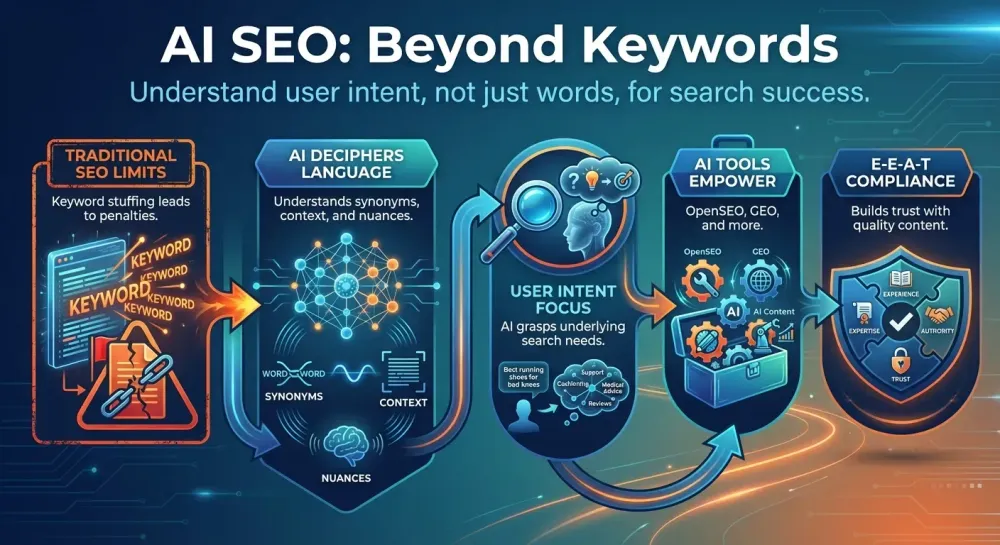
AI and machine learning are fundamentally reshaping how search engines interpret queries and rank content. In 2025, expect search algorithms to be even more adept at understanding nuanced user intent, moving beyond literal keywords to grasp context and implied needs. This means content must be comprehensive, authoritative, and directly address the user's underlying goal. Basic SEO tools that only track rankings will fall short; advanced platforms are essential for analyzing semantic relevance, topical authority, and predicting AI-driven ranking factors.

The Rise of 'Zero-Click' Searches and the Need for SERP Dominance

The proliferation of "zero-click" searches, where users find answers directly within the SERP through featured snippets, knowledge panels, and direct answers, presents a significant challenge. Achieving visibility without a click requires a strategic focus on SERP dominance. This involves optimizing for rich results, structured data, and ensuring your content is recognized as the definitive answer. Advanced SEO tools are crucial for identifying these opportunities, monitoring competitor SERP features, and refining content for maximum on-page impact.

Bridging the Gap: From Basic SEO to Advanced Digital Marketing

The transition from fundamental SEO to advanced digital marketing requires a paradigm shift. It’s about moving from isolated tactics to an integrated strategy that leverages data for informed decision-making. This involves understanding the entire customer journey, not just the initial search. Advanced SEO tools empower marketers to achieve this by providing in-depth analytics, competitive intelligence, technical SEO audits, and predictive insights, enabling proactive adaptation to the dynamic SEO landscape of 2025 and beyond.

Top Advanced SEO Tools for Unlocking Performance in 2025

As the digital landscape continues its relentless evolution, staying ahead of the curve in SEO is paramount for any marketer aiming for peak performance. The year 2025 promises even more sophisticated algorithms, nuanced user behaviors, and a greater reliance on AI-driven insights. To navigate this complexity and truly unlock your website's potential, a robust arsenal of advanced SEO tools is no longer a luxury but a necessity. This section delves into indispensable SEO tools, meticulously chosen for their depth of analytics, competitive intelligence, advanced keyword research capabilities, and technical SEO prowess. We'll explore how these powerful platforms empower advanced marketers to tackle specific challenges, from optimizing for ever-changing SERP features to deciphering complex user journeys, ensuring your strategy remains sharp and effective.

Comprehensive Suites: Mastering All-in-One SEO Platforms

For the advanced marketer, a comprehensive suite of SEO tools offers the unparalleled advantage of a unified dashboard, streamlining workflows and providing a holistic view of your online presence. These platforms are designed to be the central nervous system of your SEO strategy, offering a wide array of functionalities that cater to every facet of search optimization.

SEMrush: A true titan in the SEO world, SEMrush excels in providing deep competitor intelligence. Its strength lies in its ability to dissect competitor strategies, from keyword rankings and backlink profiles to content gaps and ad campaigns. For advanced marketers, SEMrush is invaluable for identifying untapped opportunities and formulating data-driven counter-strategies. Its AI integrations are increasingly sophisticated, offering content optimization suggestions and predictive analytics for keyword trends.

  • Best Use Case for Advanced Marketers: In-depth competitor analysis, market research, and comprehensive campaign tracking.
  • Key Features: Domain Overview, Keyword Magic Tool, Backlink Analytics, Site Audit, Content Marketing Platform (with AI writing assistant), Advertising Research.
  • Pricing Overview: Starts at $129.95/month (Pro), with higher tiers for more extensive features.
  • Pros: Extensive feature set, robust data, excellent for competitive research.
  • Cons: Can be overwhelming for beginners, pricing can escalate for advanced features.
  • Practical Tip for 2025: Leverage SEMrush's "Topic Research" and AI writing assistant to identify emerging content trends and generate high-quality, SEO-optimized drafts that address specific user intent for SERP feature optimization.

Ahrefs: Renowned for its exceptional backlink index and site explorer, Ahrefs is a powerhouse for understanding link-building opportunities and analyzing competitor backlink profiles. Its keyword explorer is also top-tier, offering valuable insights into keyword difficulty and search volume. Advanced marketers use Ahrefs to uncover the "why" behind competitor success and to build authoritative backlink profiles.

  • Best Use Case for Advanced Marketers: Advanced backlink analysis, content gap identification, and in-depth keyword research for competitive niches.
  • Key Features: Site Explorer, Content Explorer, Keywords Explorer, Site Audit, Rank Tracker.
  • Pricing Overview: Starts at $99/month (Lite), with higher tiers for more data and features.
  • Pros: Unmatched backlink data, intuitive interface, excellent for content ideation.
  • Cons: Can be more expensive than some competitors, limited site audit capabilities compared to SEMrush.
  • Practical Tip for 2025: Utilize Ahrefs' "Content Gap" feature in conjunction with its backlink data to identify content that competitors rank for and have strong backlinks to, but you don't. This is a goldmine for capturing untapped organic traffic.

Moz Pro: A long-standing player in the SEO space, Moz Pro offers a balanced suite of tools, with a particular focus on domain authority and on-page optimization. Its Keyword Explorer is user-friendly, and its Site Crawl feature is excellent for identifying technical SEO issues. Moz Pro is a reliable choice for marketers looking for a comprehensive, yet accessible, set of SEO functionalities.

  • Best Use Case for Advanced Marketers: On-page optimization, technical SEO auditing, and tracking keyword rankings with a focus on Domain Authority.
  • Key Features: Keyword Explorer, Site Crawl, Rank Tracker, Link Explorer, On-Page Grader.
  • Pricing Overview: Starts at $99/month (Standard), with tiered plans.
  • Pros: User-friendly interface, strong focus on on-page and technical SEO, good educational resources.
  • Cons: Backlink data not as extensive as Ahrefs, pricing can be a barrier for smaller teams.
  • Practical Tip for 2025: Regularly use Moz Pro's On-Page Grader to refine your content for specific keywords, ensuring all on-page elements are optimized to signal relevance and authority to search engines, especially for complex user journeys.

Specialized Powerhouses: Deep Dives into Niche Functionalities

Beyond the comprehensive suites, specialized SEO tools offer unparalleled depth in specific areas, allowing advanced marketers to hone in on critical aspects of their strategy.

Screaming Frog SEO Spider: This desktop-based website crawler is the undisputed champion for technical SEO audits. It crawls websites like a search engine bot, providing a wealth of data on broken links, redirect chains, duplicate content, and more.

  • Best Use Case for Advanced Marketers: Deep technical SEO audits, site migrations, and large-scale website analysis.
  • Key Features: Website crawling, URL discovery, broken link checking, redirect analysis, duplicate content detection.
  • Pricing Overview: Free version with a 500-URL limit; Paid version is £149/year.
  • Pros: Extremely thorough technical analysis, highly customizable, affordable for its power.
  • Cons: Desktop-based, requires some technical understanding to interpret data effectively.
  • Practical Tip for 2025: Schedule regular crawls with Screaming Frog to proactively identify and fix technical SEO issues that could be hindering your site's performance, especially after website updates or content refreshes.

Surfer SEO: This tool focuses on content optimization, using AI to analyze top-ranking pages for a given keyword. It provides actionable recommendations on content structure, keyword usage, and readability to help you create content that satisfies search intent.

  • Best Use Case for Advanced Marketers: Creating highly optimized content that targets specific keywords and SERP features.
  • Key Features: Content Editor, Keyword Research, SERP Analyzer, Outline Builder.
  • Pricing Overview: Starts at $49/month (Basic), with higher tiers.
  • Pros: Excellent for on-page content optimization, data-driven recommendations, helps understand what content wins.
  • Cons: Primarily focused on content, less emphasis on technical or off-page SEO.
  • Practical Tip for 2025: Use Surfer SEO's Content Editor to ensure your articles are not only keyword-rich but also structurally sound and comprehensive enough to rank for featured snippets and answer complex user queries directly.

AI-Driven Insights: Tools Leveraging Machine Learning for SEO Advantage

The integration of Artificial Intelligence is rapidly transforming the SEO landscape, offering predictive analytics, automated insights, and enhanced content generation capabilities.

MarketMuse: This AI-powered content intelligence platform helps identify content gaps, optimize existing content, and create comprehensive content strategies. It analyzes your entire website and the competitive landscape to provide data-driven recommendations.

  • Best Use Case for Advanced Marketers: Developing a holistic content strategy, identifying topic clusters, and ensuring content authority.
  • Key Features: Content Inventory, Topic Modeling, Content Briefs, Competitive Analysis.
  • Pricing Overview: Custom pricing, often starting at higher enterprise levels.
  • Pros: Advanced AI for content strategy, excellent for building topical authority, personalized recommendations.
  • Cons: High cost, can be complex to implement for smaller teams.
  • Practical Tip for 2025: Employ MarketMuse to map out comprehensive topic clusters, ensuring your content covers all facets of a subject, which is crucial for establishing authority and satisfying complex user journeys.

Clearscope: Similar to Surfer SEO and MarketMuse, Clearscope uses AI to analyze top-ranking content and provide detailed recommendations for optimizing your own. It focuses heavily on comprehensiveness and relevance.

  • Best Use Case for Advanced Marketers: Enhancing content quality and comprehensiveness to outrank competitors.
  • Key Features: Content Optimization, Terminology Research, SERP Analysis.
  • Pricing Overview: Starts at $170/month (Essentials), with higher tiers.
  • Pros: Highly effective for improving content relevance and depth, user-friendly interface.
  • Cons: Primarily content-focused, can be expensive.
  • Practical Tip for 2025: Integrate Clearscope into your content workflow to ensure every piece of content is as comprehensive and relevant as possible, directly addressing user intent and increasing its chances of ranking for featured snippets.

Essential Free Resources: Leveraging Google Search Console and More

While paid tools offer advanced capabilities, no SEO strategy is complete without leveraging the free, invaluable data provided by Google.

Google Search Console (GSC): This is an absolute must-have for any website owner. GSC provides direct insights into how Google views your site, including performance data, indexing status, mobile usability, and security issues.

  • Best Use Case for Advanced Marketers: Monitoring site performance, identifying indexing errors, understanding search queries, and submitting sitemaps.
  • Key Features: Performance reports, URL inspection, Index Coverage, Mobile Usability, Core Web Vitals.
  • Pricing Overview: Free.
  • Pros: Direct data from Google, essential for understanding search performance and technical health.
  • Cons: Data can be somewhat delayed, requires interpretation.
  • Practical Tip for 2025: Regularly review GSC's "Performance" report to identify high-impression, low-click queries. Optimize existing content or create new content around these topics to capture more organic traffic and address specific user intents.

Google Analytics (GA4): While not strictly an SEO tool, GA4 is indispensable for understanding user behavior on your website. It tracks traffic sources, user engagement, conversions, and much more, providing crucial context for your SEO efforts.

  • Best Use Case for Advanced Marketers: Analyzing user behavior, tracking conversion rates, understanding traffic sources, and measuring SEO ROI.
  • Key Features: Traffic acquisition, user engagement metrics, event tracking, conversion reporting.
  • Pricing Overview: Free.
  • Pros: Comprehensive website analytics, essential for understanding user journeys and campaign effectiveness.
  • Cons: Requires proper setup and configuration, can have a learning curve.
  • Practical Tip for 2025: Connect Google Analytics with Google Search Console to gain a deeper understanding of which keywords are driving not just traffic, but also valuable engagement and conversions, allowing for more strategic SEO decisions.

Google Trends: A simple yet powerful tool for understanding the popularity of search terms over time and across different regions. It's excellent for identifying seasonal trends and emerging topics.

  • Best Use Case for Advanced Marketers: Identifying trending topics, understanding search interest fluctuations, and informing content strategy.
  • Key Features: Search term popularity over time, related queries, geographic interest.
  • Pricing Overview: Free.
  • Pros: Easy to use, great for spotting trends and seasonality.
  • Cons: Lacks granular keyword data, focuses on relative popularity.
  • Practical Tip for 2025: Use Google Trends to forecast demand for certain topics and align your content creation schedule accordingly, ensuring you capitalize on peak search interest and address user needs proactively.

By strategically integrating these top-tier SEO tools into your workflow, advanced marketers can gain a significant competitive edge in 2025. The ability to conduct deep analytics, understand competitor strategies, perform meticulous keyword research, and address technical SEO challenges is no longer optional. These tools empower you to not only adapt to the evolving search landscape but to actively shape your digital success.

Strategic Integration: Building Your Ultimate SEO Toolkit for 2025 Success

In 2025, the competitive edge lies not in the quantity of software you possess, but in the strategic cohesion of your stack. Building an ultimate toolkit requires ensuring your SEO tools communicate effectively, transforming fragmented data into a unified engine for growth.

Synergizing Free and Paid SEO Tools for Maximum ROI

To maximize ROI, avoid redundancy by assigning distinct roles to your platforms. While paid suites like SEMrush or Ahrefs excel at competitive intelligence and technical audits, free tools like Google Search Console (GSC) provide the most accurate first-party performance data.

Feature Paid Tools (e.g., SEMrush) Free Tools (e.g., GSC, GA4)
Primary Function Market research & Competitor Audits Performance tracking & Indexing
Data Source Third-party database estimations Direct first-party user data
Strategic Value Identifying gaps and opportunities Verifying actual traffic and health

Workflow Optimization: Connecting Your Tools for Seamless Analysis

Data overload and tool fatigue are significant barriers to efficiency. To combat this, establish a centralized workflow using data visualization platforms like Looker Studio. By pulling data from multiple sources into a single dashboard, you reduce the time spent toggling between tabs.

Pro Tip: Automate your workflow by connecting your audit tools to project management software (e.g., Jira or Asana). This ensures technical errors identified during crawls are instantly converted into assigned tasks for developers.

Beyond Rankings: Measuring True Business Impact with SEO Analytics

Rankings are vanity metrics; revenue is the reality. Modern SEO analytics must demonstrate tangible business value. Shift your reporting focus from "organic sessions" to conversion attribution. By integrating your SEO data with CRM platforms, you can track a user's journey from an initial blog post visit to a closed sale. This approach proves the ROI of your efforts by linking specific keywords directly to leads and revenue generation.

FAQ (Frequently Asked Questions)

Q1: How do advanced SEO tools differ from basic ones?
A1: Advanced SEO tools go beyond simple keyword tracking and on-page analysis. They offer deeper insights into competitor strategies, comprehensive technical audits, sophisticated backlink analysis, AI-driven content optimization, and predictive analytics. They are designed for data-driven decision-making and uncovering complex opportunities that basic tools might miss.

Q2: Is it necessary for small businesses to invest in advanced SEO tools?
A2: While basic tools can be sufficient for very small businesses or beginners, advanced tools become crucial as a business grows and faces increased competition. Many advanced tools offer tiered pricing or specific features that can be scaled to fit different budgets. Focusing on a few key advanced features that address specific business needs can be a strategic investment.

Q3: How can AI-powered SEO tools help improve content strategy in 2025?
A3: AI-powered tools can analyze vast amounts of data to identify emerging content trends, understand user intent more deeply, and provide precise recommendations for content structure, keyword usage, and comprehensiveness. They can help create content that is not only optimized for search engines but also highly relevant and valuable to users, increasing the chances of ranking for complex queries and featured snippets.

Q4: What is the role of Google Search Console and Google Analytics in an advanced SEO toolkit?
A4: Google Search Console (GSC) and Google Analytics (GA4) are indispensable free resources. GSC provides direct insights into how Google sees your site, including performance, indexing, and technical health. GA4 offers crucial data on user behavior, traffic sources, and conversions. Integrating data from these free tools with paid platforms provides a holistic and accurate view of SEO performance and user engagement.

Conclusion

As we navigate the rapidly evolving digital landscape of 2025, it becomes undeniable that advanced SEO tools are no longer just optional add-ons; they are fundamental components required to stay competitive. Throughout this article, we have moved beyond the basics to explore a sophisticated array of platforms capable of transforming your marketing efforts. From uncovering hidden opportunities through deep keyword research and conducting rigorous technical audits to leveraging AI-driven insights for strategic analysis, we have demonstrated how to build and integrate a truly powerful toolkit.

The difference between a good strategy and a market-leading one often lies in the technology powering it. To ensure you remain at the forefront of the industry, follow these actionable steps immediately. First, honestly assess your current tool stack against the complex needs of advanced digital marketing in 2025. Second, select one or two new SEO tools or specific features from our list that solve your most pressing challenges. Third, schedule dedicated time this week to fully integrate these solutions into your workflow and begin interpreting their data.

By embracing these advanced technologies, you are not just optimizing for search engines; you are future-proofing your business. Ready to elevate your SEO strategy and drive meaningful growth? Share your favorite advanced SEO tool in the comments section below and be sure to subscribe to our blog for more cutting-edge digital marketing insights!