Boost Website Ranking: 15 Free SEO Tools for 2025

Is your website struggling to gain traction in the fiercely competitive digital landscape of 2025? Achieving top search rankings often feels like a costly endeavor reserved for large corporations. However, you don't need a massive budget to see real results. Mastering search engine optimization (SEO) is essential for your growth, and fortunately, the right strategy can be completely cost-effective.
By leveraging a suite of powerful free SEO tools, you can effectively audit your site, uncover high-volume keywords, and optimize your content strategy without spending a single dime. In this guide, we will equip you with 15 top-tier resources that rival paid software. You will learn how to conduct thorough competitor analysis, improve your technical site health, and utilize cutting-edge AI insights to drive sustainable organic traffic.
Whether you are a small business owner or a freelance marketer, it is time to level the playing field. Get ready to transform your approach and skyrocket your visibility with these essential zero-cost solutions.
The Power of Free SEO Tools in 2025: Leveling the Playing Field
In the rapidly shifting digital economy, visibility is the primary currency for growth. By 2025, the strategic utilization of free SEO tools has become the great equalizer, democratizing access to powerful optimization techniques. No longer is high-ranking search placement reserved solely for corporations with massive marketing budgets; today, the right tools level the playing field, allowing startups to compete effectively for organic traffic.
Why Free SEO Tools are Crucial for Small Businesses
For small businesses, budget constraints often limit access to enterprise-level software. However, free tools provide critical insights without the financial burden. Platforms have emerged to offer essential functionalities—from keyword tracking to site audits—enabling businesses to optimize their digital footprint efficiently.
"The democratization of SEO data means that strategy, not budget, is the deciding factor in 2025."
Comparison: Paid Suites vs. Free SEO Solutions
| Feature | Enterprise Paid Suites | Free Tools (e.g., Google KP) |
|---|---|---|
| Cost Barrier | High monthly subscriptions | $0 Entry Cost |
| User Experience | Complex, steep learning curve | Streamlined & Intuitive |
| Primary Focus | Deep technical data mining | Actionable Growth Insights |
| Accessibility | Large Marketing Teams | Small Businesses & Startups |
The Evolving Landscape of Search Engine Optimization
Search engine algorithms have matured significantly. In 2025, SEO continues to prioritize User Experience (UX) and E-E-A-T (Experience, Expertise, Authoritativeness, Trustworthiness) over simple keyword density. Furthermore, mobile-first indexing is now the absolute standard; if a site does not perform flawlessly on mobile devices, its ranking potential is severely diminished, regardless of content quality.
Setting Your SEO Strategy for Success in 2025
A well-defined SEO strategy, supported by the right free tools, is key to achieving sustainable website ranking. Leveraging foundational platforms like Google Keyword Planner for search volume analysis and Google Analytics for user behavior tracking is fundamental. By integrating these staples with versatile solutions, businesses can build a data-driven approach that aligns with modern search engine requirements, ensuring long-term organic growth.
Top Free Keyword Research Tools to Find Your Audience
Understanding your target demographic begins with identifying the language they use. For businesses and content creators operating on a budget, utilizing free SEO tools is the most effective strategy to uncover these insights without incurring high subscription costs. Mastering individual free tools is essential for a grounded strategy.
Google Keyword Planner: The Foundation of Keyword Research
Google Keyword Planner (GKP) remains the gold standard for gathering data directly from the source. As the foundation of many paid tools, GKP allows you to identify high-volume, low-competition keywords specifically tailored to your target region, such as a US audience.
Pro Tip: Focus on the "Avg. monthly searches" versus "Competition" columns to find the sweet spot—keywords that many people search for but few brands are bidding on.
By filtering for specific locations and languages, you can ensure your content strategy aligns with local search behaviors, providing a high degree of accuracy for your foundational keywords.
Exploring Long-Tail Keywords with Ubersuggest (Free Tier)
While GKP is excellent for raw data, Ubersuggest helps contextualize that data. Even its free version offers valuable insights into keyword difficulty (KD) and content ideas, which are crucial for ranking.
Ubersuggest excels at suggesting long-tail variations—phrases that are more specific and often convert better than generic terms. For instance, instead of "running shoes," it might suggest "best running shoes for flat feet."
Comparison of Key Research Tools:
| Feature | Google Keyword Planner | Ubersuggest (Free) | |
|---|---|---|---|
| Primary Data Source | Google Search Data | Google & Clickstream | Visual Search Trends |
| Best For | Ad campaigns & Volume data | Content ideas & Difficulty score | Niche & Demographic trends |
| Search Intent Focus | Commercial/Transactional | Informational/Commercial | Visual/Inspirational |
| Output Format | Raw Data Lists | Lists & Content Visuals | Images & Boards |
Leveraging Pinterest for Visual Keyword Discovery
Often overlooked, Pinterest acts as a powerful visual search engine rather than just a social media platform. It is particularly effective for uncovering niche, long-tail keywords relevant to specific demographics who prefer visual discovery.
If your niche involves lifestyle, design, or products, Pinterest Search Suggest (the drop-down menu) reveals what users are actively looking for before they even type it into Google. This helps you understand the search intent—whether users are looking to buy, learn, or get inspired.
Conclusion: Comprehensive Keyword Strategy
Effective keyword research goes beyond finding words; it is about understanding the search intent behind them. By combining the raw data accuracy of Google Keyword Planner, the content insights of Ubersuggest, and the visual trends from Pinterest, you can build a comprehensive strategy. Integrating these findings into your workflow ensures you stay ahead of the competition while maintaining relevance with your audience.
Essential Free Tools for On-Page and Technical SEO
In the competitive digital landscape of 2025, leveraging the right technology is non-negotiable for visibility. Free SEO tools have evolved into powerful suites capable of driving significant organic growth without draining marketing budgets. By strategically utilizing these resources, businesses can enhance their technical foundation and on-page relevance.
On-Page Optimization with SEOquake and MozBar
For immediate, granular analysis of web pages, browser extensions are indispensable. SEOquake and MozBar allow professionals to audit content directly from the browser interface. These tools are crucial for analyzing title tags, meta descriptions, and header structures in real-time.
- SEOquake: Provides a comprehensive "SEO Dashboard" overlay, displaying data on keyword density and internal linking structures instantly.
- MozBar: Offers instant metrics like Domain Authority (DA) and highlights link types (Follow/NoFollow) directly on the page.
"Efficiency in SEO starts with the ability to diagnose on-page elements instantly while browsing competitors or your own site."
Technical SEO Audits: Screaming Frog & Sitechecker
Technical health is the backbone of search performance. Identifying broken links, redirect chains, and crawlability issues requires robust auditing software. The free version of Screaming Frog SEO Spider remains the industry standard for crawling up to 500 URLs, offering deep insights into technical architecture.
However, for ongoing monitoring and user-friendly dashboards, Sitechecker is a vital addition to your stack. While Screaming Frog excels in deep dives, Sitechecker provides an accessible interface for quick health checks and identifying critical vulnerabilities that might impede indexing.
Comparison of Key Technical & Analysis Tools:
| Tool | Primary Function | Best Use Case | Platform |
|---|---|---|---|
| Screaming Frog | Deep Crawling | Identifying broken links & loops | Desktop App |
| Sitechecker | Site Health Check | Quick technical diagnostics | Web-based |
| SEOquake | On-Page Data | Competitor keyword density analysis | Browser Ext |
| MozBar | Authority Metrics | Checking DA & PA on the fly | Browser Ext |
Boosting Website Speed with Google PageSpeed Insights
User experience (UX) is inextricably linked to rankings. Google PageSpeed Insights is the definitive tool for optimizing load times. It provides actionable recommendations to optimize images, minify CSS/JavaScript, and improve server response times.
In 2025, Google’s mobile-first indexing is paramount. PageSpeed Insights assesses Core Web Vitals specifically for mobile devices, ensuring your site meets the rigorous standards required for mobile search visibility. By implementing these code and asset optimizations, you safeguard your site’s search ranking and reduce bounce rates effectively.
Leveraging Advanced Free & Freemium SEO Tools in 2025
In the competitive digital landscape of 2025, maximizing organic growth does not always require an enterprise-level budget. A strategic stack of free SEO tools can provide professional-grade insights if used correctly. By combining freemium tiers of industry giants with foundational platform data, marketers can build a comprehensive optimization strategy that rivals paid setups.
Exploring Semrush and Moz Pro: Powerful Freemium Options
Semrush and Moz Pro remain industry standards, and their free tiers offer surprisingly robust capabilities for competitor analysis and site audits. Smart SEOs utilize them for specific, recurring tasks. Semrush allows for limited keyword tracking and site auditing, while Moz offers excellent domain authority metrics and link research tools.
Comparison of Freemium Capabilities:
| Feature | Semrush (Free Tier) | Moz Pro (Free Tools) |
|---|---|---|
| Keyword Research | 10 requests/day | 10 queries/month |
| Site Audit | Crawl up to 100 pages | Limited crawl budget |
| Backlink Analysis | Limited historical data | Link Explorer (limited rows) |
| Project Tracking | 1 Project allowed | Non-recurring access |
The Rise of AI SEO Tools and LLM SEO Tools
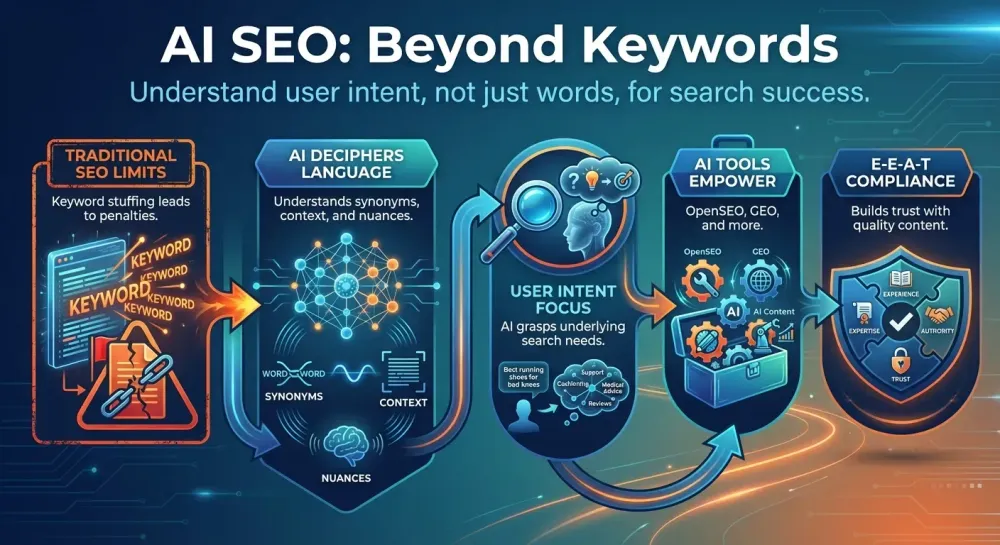
The integration of Artificial Intelligence has revolutionized how we approach optimization. AI SEO tools and LLM SEO tools are emerging to assist with content generation, intent matching, and granular data analysis. These tools move beyond simple keyword stuffing, offering optimization suggestions based on semantic relevance.
Tech Insight: The modern workflow involves using LLMs to analyze SERP intent patterns that traditional tools might miss.
In this evolving ecosystem, solutions are gaining attention for their ability to streamline specific optimization tasks. By integrating these tools into your workflow, you can leverage automated insights to enhance on-page elements and technical structures efficiently.
Utilizing Google Search Console for Performance Insights
While third-party tools are valuable, Google Search Console (GSC) remains the ultimate source of truth. It provides critical data on search performance, indexing status, and user errors that no external tool can fully replicate.
GSC is essential for monitoring Core Web Vitals and identifying "soft 404" errors or security issues. By cross-referencing the technical health data from GSC with competitive metrics from tools like Semrush, you gain a holistic view of your site's performance. This multi-tool approach ensures that your strategy is based on verified search engine data rather than estimation alone.
FAQ (Frequently Asked Questions)
Q1: Can free SEO tools truly compete with paid options for serious businesses?
A1: While paid tools often offer more advanced features and deeper data, a strategic combination of the best free SEO tools can provide significant value. For small businesses, startups, or those new to SEO, free tools offer an excellent way to learn, audit, and optimize without a financial barrier. They are sufficient for understanding core metrics, identifying keywords, and fixing common technical issues.
Q2: How often should I use these free SEO tools to monitor my website's performance?
A2: The frequency of use depends on your website's activity and your SEO strategy. For critical aspects like technical audits and keyword tracking, weekly or bi-weekly checks are recommended. For content optimization and performance monitoring (using tools like Google Search Console), daily or weekly review is beneficial. Regular, consistent use is key to staying on top of changes.
Q3: Which free SEO tool is the best for beginners just starting with SEO?
A3: For beginners, the most essential free SEO tools are Google Search Console and Google Analytics. These provide direct insights from Google about how your site is performing. For keyword research, Google Keyword Planner is fundamental. For on-page analysis, browser extensions like SEOquake or MozBar are easy to use and offer immediate feedback.
Q4: How do AI and LLM SEO tools differ from traditional SEO tools, and are they truly free?
A4: AI and LLM SEO tools leverage artificial intelligence to provide more sophisticated analysis, such as predicting search intent, generating content ideas, and identifying semantic relationships. Traditional tools often focus on data aggregation and keyword metrics. Many AI/LLM tools offer free tiers or limited usage, similar to other freemium SEO software, allowing for exploration of their advanced capabilities.
Conclusion: Your Roadmap to Free SEO Success in 2025
Mastering search engine optimization in 2025 is entirely achievable for any small business owner, regardless of budget constraints. As we have explored throughout this guide, there is a wealth of powerful free SEO tools available to help you level the playing field. From conducting foundational keyword research with staples like Google Keyword Planner to executing deep technical audits and leveraging cutting-edge AI-driven insights, these resources empower you to significantly improve your website ranking and attract valuable organic traffic without spending a dime.
To get started, do not feel the need to master every piece of software at once. Instead, select two or three free SEO tools from this list that directly address your most pressing needs. Dedicate specific time each week to analyze your website's performance, refine your keyword strategy, and implement on-page optimizations. Remember, SEO is a marathon, not a sprint, so do not be afraid to experiment with different platforms to see what works best for your specific niche.
Ready to take your digital presence to the next level? Bookmark this essential list of free SEO tools for 2025 so you always have these resources at your fingertips. Start implementing these strategies today to see a tangible boost in your website's ranking and organic traffic. For ongoing support and the latest SEO insights, subscribe to our newsletter and never miss out on expert advice designed to elevate your online success.