Gemini 3: Google’s AI Leap Beyond Previous Models
🚀 Key Takeaways
- Gemini 3 is an LRM (Large Reasoning Model): It moves beyond text prediction to complex problem solving and self-correction.
- Native Omni-Modality: Processes video, audio, and text simultaneously without conversion latency.
- Agentic Capabilities: Can autonomously execute tasks (booking, coding, emailing) rather than just retrieving information.
- SEO Impact: Marks the definitive shift from "10 Blue Links" to GEO (Generative Engine Optimization).
The AI arms race has never been about who gets to the finish line first; it has always been about who builds the most durable engine. In 2024, we marveled at Gemini 1.5’s massive context window. By early 2025, Gemini 2.0 introduced us to faster processing and improved agentic behaviors.
But now, with the release of Gemini 3, Google hasn't just iterated—they have evolved.
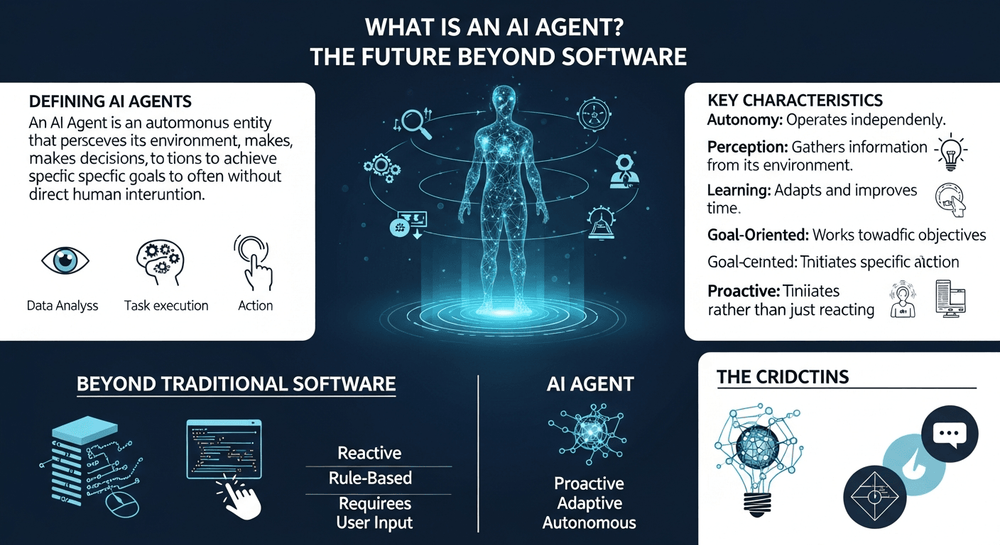
For marketers, developers, and SEO professionals, Gemini 3 represents a paradigm shift. It is no longer just a Large Language Model (LLM); it is a Large Reasoning Model (LRM) designed to understand intent, execute complex workflows, and reshape how the world interacts with information.
In this guide, we dive deep into what makes Gemini 3 a generational leap, how it compares to its predecessors, and what this means for the future of Search Engine Optimization (SEO).
What Is Gemini 3? The Era of "Fluid Intelligence"
Gemini 3 is Google DeepMind’s latest multimodal AI architecture. Unlike previous iterations that processed text, images, and video as separate data streams that were stitched together, Gemini 3 is natively omni-modal.
It doesn't "see" an image and then "think" in text. It processes visual, audio, and textual data simultaneously, mimicking human cognitive fluidity.
Key Technical Breakthroughs:
- Recursive Reasoning: Gemini 3 can "pause and think" (similar to Chain-of-Thought prompting but automated), allowing it to self-correct errors in math, coding, or logic before generating an output.
- Infinite Stream Context: Moving beyond the 2-million token limit of the 1.5 Pro era, Gemini 3 utilizes "streaming memory," allowing it to maintain continuity across weeks of interactions without losing details.
- Hyper-Personalization: The model adapts its tone, complexity, and format based on the user's historical behavior and real-time biometric feedback (via integrations with Fitbit/Pixel interfaces).
Gemini 3 vs. Gemini 1.5 & 2.0: The Comparison
To understand the magnitude of this update, we must look at the trajectory of Google's AI development.
| Feature | Gemini 1.5 Pro (2024) | Gemini 2.0 Flash (Early 2025) | Gemini 3 (Late 2025) |
|---|---|---|---|
| Primary Focus | Long Context Window | Speed & Latency Reduction | Deep Reasoning & Agency |
| Multimodality | High (Native) | High (Faster Processing) | Omni-Fluid (Real-time) |
| Reasoning | Intermediate | Advanced | Expert (Self-Correcting) |
| Actionability | Text/Code Generation | Basic API Calls | Full Autonomous Agents |
The Verdict: While Gemini 1.5 was a library that could read every book, Gemini 3 is the professor who has read the books, understands the nuance, and can write a thesis on them while managing a research team.
The 3 Core Pillars of Gemini 3's Dominance
1. Agentic Workflows (Doing, Not Just Saying)
The biggest criticism of AI in 2023-2024 was that it was a "chatbot." You had to copy-paste the answer to get value. Gemini 3 powers the Google Assistant Reborn. It doesn't just tell you the best flight; it accesses your calendar, cross-references your budget in Sheets, books the flight, and adds the itinerary to your email—all with a single prompt.
2. Natively Multimodal Content Creation
For content creators, Gemini 3 is a game-changer. It can analyze a video file and generate a blog post, social media snippets, and a podcast script in seconds. More importantly, it can generate high-fidelity video assets from text prompts with consistent character continuity—solving the "hallucination" issues of early video generators.
3. The "Trust Layer"
Google has integrated a Fact-Check Protocol directly into Gemini 3’s architecture. By cross-referencing its outputs against the Google Knowledge Graph in real-time, Gemini 3 significantly reduces hallucinations. For SEOs, this confirms that Google is doubling down on E-E-A-T (Experience, Expertise, Authoritativeness, Trustworthiness).
The Impact on SEO: Optimizing for the Gemini 3 Era
As an SEO expert with a decade in the field, I can tell you: the "10 blue links" are officially a legacy feature. Gemini 3 powers the evolved AI Overviews, which now occupy 60-70% of the mobile screen real estate.
A. From SEO to GEO (Generative Engine Optimization)
You are no longer optimizing just for a click; you are optimizing to be the source of the AI's answer.
- Action: Structure your data. Schema markup is mandatory. Gemini 3 relies on structured data to verify facts.
- Action: Focus on "Information Gain." If your content repeats what is already on Wikipedia, Gemini 3 will ignore it. You need unique data, original research, or a distinct viewpoint.
B. The Rise of "Entity Authority"
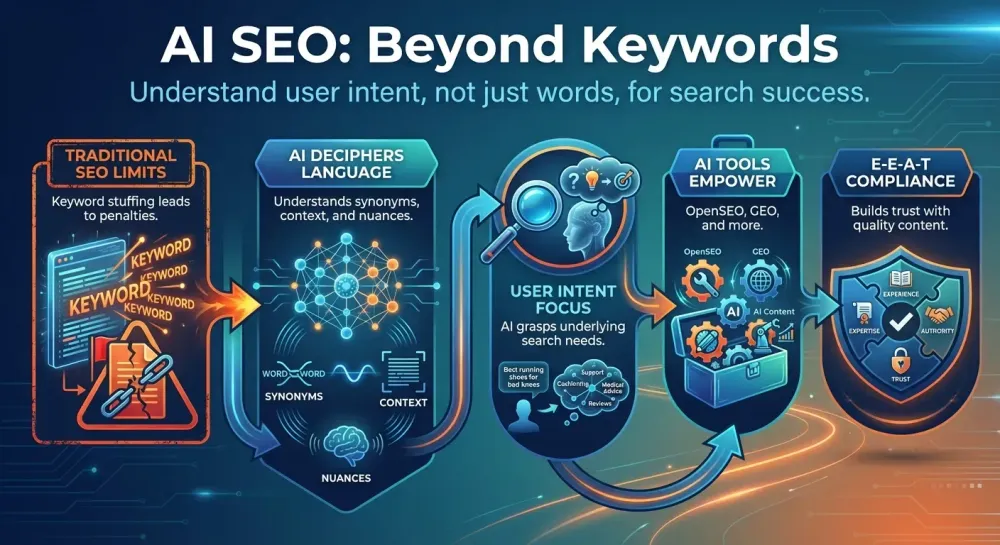
Gemini 3 thinks in concepts (Entities), not strings of text (Keywords). It maps the relationship between your brand, your authors, and your topic.
- Strategy: Build topical clusters. Ensure your "About Us" and author bios are robust and linked to verifiable external sources (LinkedIn, Crunchbase).
C. Conversational Search Intent
Users are no longer searching "best running shoes." They are searching: "I’m training for a marathon in Boston, I have flat feet, and a budget of $150. What should I buy?" Gemini 3 answers this directly.
- Strategy: Create content that answers complex, multi-layered questions. FAQ sections should evolve into detailed "Scenario-Based" solution guides.
Conclusion: Adapt or Obsolesce
Gemini 3 is not just an update; it is a signal. It signals that the future of search is agentic, personal, and verified.
For businesses and SEOs, the window to adapt is narrowing. The winners of 2025 won’t be the ones stuffing keywords into meta tags; they will be the ones building high-trust brands that Gemini 3 relies on to answer the world's questions.
The takeaway? Stop writing for robots. Start creating value so undeniable that the smartest AI on the planet has no choice but to cite you.
Frequently Asked Questions (FAQ)
Q1: Is Gemini 3 free to use?
Gemini 3 comes in a tiered model. The "Nano" version runs on Pixel devices locally, while the "Ultra" reasoning model is part of the Google One AI Premium subscription.
Q2: How does Gemini 3 affect my website traffic?
Informational queries may see a dip in clicks due to AI Overviews. However, transactional and complex queries will likely yield higher-converting traffic if you are cited as the expert source.
Q3: What is the difference between GPT-5 and Gemini 3?
While both are powerful, Gemini 3 holds a distinct advantage in its integration with the Google Ecosystem (Drive, Maps, YouTube) and its superior multimodal processing speed.
Ready to Future-Proof Your SEO?
Don't let the AI revolution leave your rankings behind. Integrate advanced AI tools into your workflow today.
Q4: What is the difference between GPT-5 and Gemini 3?
While both are powerful, Gemini 3 holds a distinct advantage in its integration with the Google Ecosystem (Drive, Maps, YouTube) and its superior multimodal processing speed.