How to Do SEO: A Complete, Actionable Guide for 2025
If you want your website to rank on Google, drive qualified organic traffic, and build long-term online authority, you need more than a checklist—you need a strategic, proven approach to Search Engine Optimization (SEO). This guide lays out the step-by-step process that works today: quality content, technical excellence, and user-focused optimization.
1. Understand What SEO Really Is
SEO (Search Engine Optimization) is the process of improving your website so search engines like Google can understand your content and recommend it to users. Modern SEO isn’t about “tricks”; it’s about:
- Creating helpful, expert-level content
- Making your site fast and technically sound
- Ensuring your content matches search intent
- Building trust and credibility over time
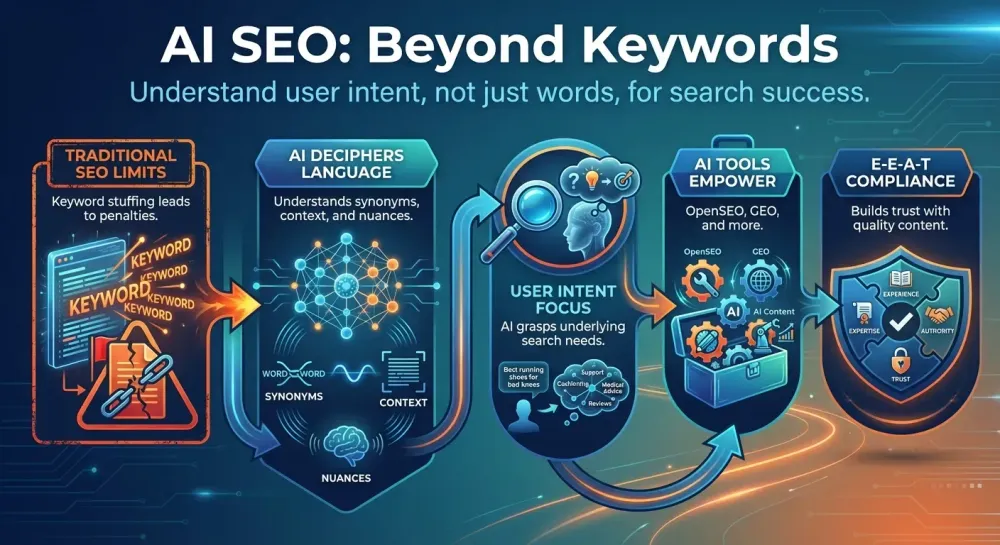
Google’s E-E-A-T guidelines—Experience, Expertise, Authoritativeness, Trustworthiness—are now the foundation of ranking systems. Your content must be accurate, original, well-structured, and genuinely helpful.
2. Start with Keyword Research
Keyword research is the foundation of all SEO work. It helps you discover what your target customers search for and how to create content that meets their needs.
How to find SEO keywords
- Identify your niche topics.
- Use keyword tools (free or paid) to gather related terms.
- Analyze search intent (informational, commercial, transactional).
- Look at long-tail keywords for easier rankings.
Tips: Don’t just chase high search volume—focus on keywords with clear intent and reasonable competition. Group related keywords into topical clusters to build authority.
Pro tip: If you want a fast, beginner-friendly way to generate keyword-optimized outlines and articles automatically, try OpenSEO — an AI tool designed specifically for SEO content generation.
3. Create High-Quality, SEO-Optimized Content
Content remains the heart of SEO. But not any content—search engines reward depth, clarity, structure, and helpfulness.
What makes SEO content rank?
- A clear headline that includes the primary keyword
- Engaging introductions
- Sections that answer user questions logically
- Rich detail from real experience
- Clean formatting (H1, H2, H3, bullet points)
- Internal links for navigation
- Concise, authoritative tone
Follow the E-E-A-T standard
To satisfy Google: share real insights from experience, reference proven knowledge or data, write with an authoritative voice, and keep content up to date.
AI for SEO content
Creating high-quality content consistently is tough. This is where OpenSEO can help — it provides one-click SEO article generation, optimized titles and outlines, and keyword-rich, human-like content to help you scale without sacrificing quality.
4. Optimize On-Page SEO
On-page SEO ensures your content is easy for search engines to understand. Key areas include:
Essential on-page elements
- Title tag with primary keyword
- Meta description optimized for click-through rate
- H1 heading describing the main topic
- H2/H3 subheadings for structure
- Short, readable paragraphs
- Internal links to related pages
- External links to credible sources
SEO copywriting tips
Use keywords naturally, place your primary keyword in the first 100 words, include semantically related terms, and focus on readability and user satisfaction.
On-page SEO is where content generated by OpenSEO excels — its output is structured, keyword-optimized, and aligned with search intent by default.
5. Technical SEO: Make Your Website Easy to Crawl
Technical SEO ensures your website functions smoothly for both users and search engines.
Key areas to check
- Page speed and performance
- Mobile-first design
- Clean URL structure
- XML sitemap
- Robots.txt configuration
- HTTPS security
- Fixing broken links
- Avoiding duplicate content
If search engines can’t crawl or index your site properly, even the best content won’t rank.
2025 update: Core Web Vitals matter more than ever
Google’s Core Web Vitals — loading speed, interactivity, and visual stability — are essential ranking signals. Make sure your site passes them.
6. Build Backlinks Through Value
Backlinks remain one of the strongest ranking factors. But quality—not quantity—matters.
Ways to earn high-quality backlinks
- Publish original research
- Create “linkable” resources (guides, templates, tools)
- Guest posting
- Helping journalists through platforms like HARO
- Producing data-driven content
Avoid link schemes or buying low-quality backlinks. They risk penalties.
7. Improve User Experience (UX)
Google rewards sites that provide a smooth, enjoyable experience.
UX elements that boost SEO
- Fast loading pages
- Clear navigation
- Easy-to-read content formatting
- No intrusive pop-ups
- Accessible design
User-centric websites consistently outperform competitors.
8. Track, Analyze, and Adjust
SEO is not a one-time task — it’s a continuous process of testing and improvement.
Tools to use
- Google Search Console
- Google Analytics
- Keyword tracking tools
- Heatmap tools (for UX insights)
Analyze regularly: which pages bring traffic, which keywords are moving up or down, what content needs updates, and how users behave on your site. Data-driven decisions lead to steady SEO growth.
9. Use AI Tools to Scale Your SEO Work
Modern SEO is fast-paced, and manual content creation can’t keep up with competition. Many marketers use AI tools like OpenSEO, which allow you to:
- Generate full SEO articles in one click
- Produce keyword-rich outlines
- Speed up content creation by 10x
- Maintain consistency across large volumes of posts
- Improve SEO performance with structured, optimized writing
Conclusion: SEO Success Comes from Consistency and Quality
Learning how to do SEO isn’t about hacking algorithms. It’s about creating valuable content, optimizing your site, and building trust with users over time. Whether you're a beginner or an experienced marketer, the combination of strategic SEO fundamentals and modern tools like OpenSEO can dramatically accelerate your growth.
If you stay consistent, follow E-E-A-T principles, and keep user needs at the center of your strategy, your website can build authority and rank organically — bringing you long-term, sustainable traffic.
© 2025 OpenSEO — open-seo.top