LLM SEO: 10 Tactics to Boost Your 2026 Visibility

The digital marketing landscape is undergoing a profound transformation, driven by the rapid advancements in Large Language Models (LLMs). As we look ahead to 2026, traditional SEO tactics alone will no longer suffice to ensure your content is discoverable. This guide presents a critical roadmap for mastering LLM SEO, equipping you with actionable strategies to not only adapt but thrive in an increasingly AI-powered search environment. We will delve into what LLM SEO entails, how it differs from established SEO practices, and provide specific tactics for content creation, optimization, and technical adjustments to enhance your visibility and authority.
Understanding the LLM SEO Revolution in 2026
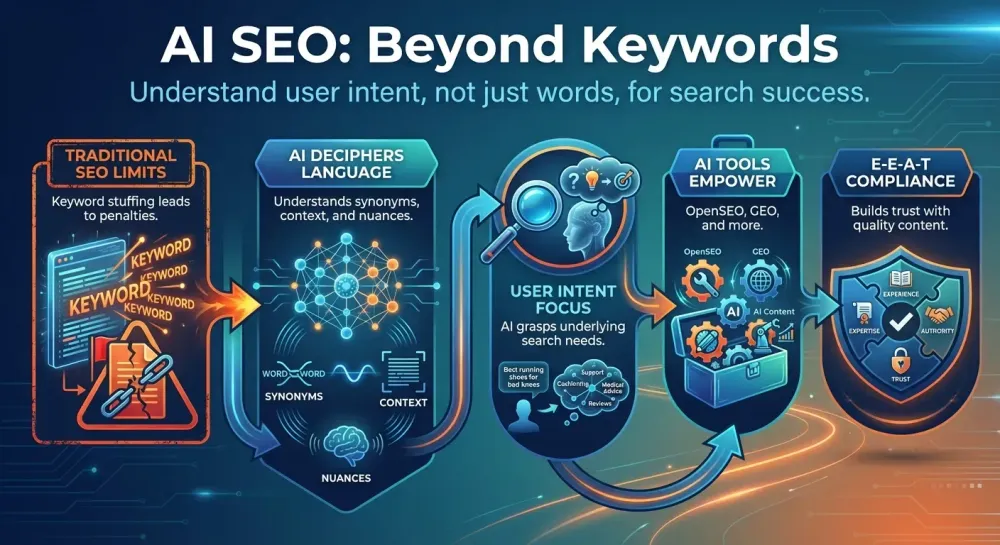
The way users search for information is fundamentally changing. LLMs are now integral to how search engines understand queries and deliver results, often through conversational and synthesized answers. This shift means LLM SEO is about making your content not just keyword-rich, but also highly interpretable and valuable to AI models. Traditional SEO, which focused heavily on keyword density, backlinks, and meta descriptions, remains a foundational element. However, LLM SEO elevates this by prioritizing clarity, logical structure, semantic relevance, and the overall context of your content. AI-powered search is already impacting organic click-through rates, and adapting your strategy now is crucial for maintaining and growing your organic traffic in 2026.
Tactical LLM SEO: Content Optimization for AI
To ensure your content effectively engages both human readers and sophisticated AI algorithms, a strategic approach to optimization is paramount. LLM SEO is no longer a concept for the distant future; it's a present-day imperative for achieving and sustaining online visibility and authority.
Crafting AI-Friendly Content: Clarity and Structure are Paramount
The cornerstone of effective LLM SEO is creating content that AI can easily understand and process. This involves using clear, concise language and organizing your information logically with well-defined headings and subheadings. Think of it as building an easily navigable structure that AI crawlers can efficiently parse, leading to improved indexing and higher rankings. Avoid jargon where possible, and explain complex concepts simply.
Leveraging LLMs for Enhanced Keyword Research and Semantic Integration
Traditional keyword research is evolving. LLMs can identify not just direct keywords but also semantically related terms, user intent, and conversational queries that users are likely to employ. This allows for a richer, more contextually relevant content strategy. Instead of focusing on a few exact match keywords, aim to cover a topic comprehensively, incorporating a wide range of related concepts and answering potential follow-up questions. This holistic approach ensures your content is discoverable through a broader spectrum of AI-driven searches.
The Power of Entities: Optimizing for People, Places, and Concepts
Building topical authority is crucial for AI recognition. LLMs understand and connect information based on entities—specific people, places, organizations, concepts, and events. By optimizing your content around these entities, you create a robust knowledge graph that AI systems can reference. This means not only mentioning relevant entities but also providing context, definitions, and connections to other related entities. This deep, interconnected approach to LLM SEO solidifies your expertise in the eyes of search engines and positions you as a trusted source.
Harnessing LLM Tools for SEO Efficiency in 2026
The advent of LLMs has unlocked a suite of powerful tools that can significantly enhance your SEO efforts. These tools can automate tasks, uncover insights, and help you create more effective content at scale.
Utilizing AI for Content Generation and Refinement
Tools like ChatGPT, Jasper AI, and Bard can be invaluable for drafting initial content outlines, generating variations of headlines, and even suggesting ways to improve clarity and conciseness. However, it's crucial to remember that AI is a co-pilot, not a replacement for human expertise. Always review, edit, and fact-check AI-generated content to ensure accuracy, originality, and brand voice.
Leveraging AI for Technical SEO Audits and Issue Resolution
AI-powered tools can also assist in identifying technical SEO issues that might hinder your visibility. This includes detecting broken links, duplicate content, slow page load times, and issues with site structure. By automating these checks, you can address potential problems more efficiently, ensuring a smoother crawling and indexing experience for search engines.
Prioritizing Tools for Brand Visibility and Prompt Analysis
When selecting LLM tools for SEO, look for those that offer features beyond basic content generation. Tools that provide brand visibility reports, analyze prompt effectiveness, or offer AI crawler audits can give you deeper insights into your performance and help you refine your strategies for better AI recognition. Understanding how your prompts are interpreted and what kind of content they generate is key to optimizing this new frontier.
Measuring and Future-Proofing Your LLM SEO Strategy
Successfully integrating LLM-driven content into your SEO requires continuous measurement and proactive adaptation. The field of AI in search is dynamic, and staying ahead means being agile.
Key Metrics for Tracking LLM SEO Performance
To gauge the effectiveness of your LLM SEO efforts, closely monitor shifts in organic traffic, particularly for queries that are likely to be answered by LLMs. Pay attention to the emergence and performance of AI-generated SERP features, such as featured snippets and direct answers. Understanding how users interact with these new formats is crucial for optimizing your content to appear in them. Also, track keyword rankings for semantically rich queries and look for improvements in topical authority metrics.
Common Pitfalls in LLM-Generated Content and How to Avoid Them
While LLMs offer immense potential, several pitfalls can undermine your SEO efforts. A primary concern is ensuring the accuracy and originality of AI-generated content. LLMs can sometimes "hallucinate" or present information that is factually incorrect. Furthermore, relying too heavily on AI without human oversight can lead to generic, uninspired content that lacks a unique brand voice or fails to address user needs comprehensively. Always implement a rigorous human review process to fact-check, edit for clarity and tone, and ensure ethical AI practices are followed.
Staying Ahead: The Evolving Landscape of AI in Search
The realm of AI in search is in constant flux. LLM technology is evolving at an unprecedented pace, and search engine algorithms are continuously updated to incorporate these advancements. To maintain sustained visibility and relevance, it's essential to stay informed about the latest developments in AI and search. This includes experimenting with new LLM capabilities, adapting your content strategies based on emerging trends, and continuously refining your LLM SEO approach to align with the future of search.
FAQ (Frequently Asked Questions)
Q1: How is LLM SEO different from traditional SEO?
A1: Traditional SEO primarily focuses on keyword optimization, backlinks, and on-page elements for human search engine crawlers. LLM SEO, on the other hand, emphasizes making content easily understandable and valuable to AI models by focusing on clarity, logical structure, semantic relevance, and entity optimization, aiming to be discoverable through AI-powered conversational search.
Q2: Can I use AI tools to write my entire website content for LLM SEO?
A2: While AI tools can be powerful assistants for content generation, it's not recommended to rely on them exclusively. Human oversight is crucial for ensuring accuracy, originality, brand voice, and ethical practices. AI-generated content should be reviewed, edited, and fact-checked by humans to maintain quality and trust.
Q3: What are the most important metrics to track for LLM SEO success?
A3: Key metrics include shifts in organic traffic, particularly for conversational or intent-based queries. Monitor performance in AI-generated SERP features (like featured snippets and direct answers), improvements in topical authority, and rankings for semantically rich keywords.
Q4: How do I ensure my content is optimized for entities in LLM SEO?
A4: To optimize for entities, clearly mention and define relevant people, places, organizations, and concepts within your content. Provide context, explain their significance, and link to authoritative sources or other related entities. This helps AI build a comprehensive understanding of your topic and your expertise.
Conclusion
The integration of Large Language Models into search presents a significant opportunity for brands willing to adapt their SEO strategies. By understanding the core principles of LLM SEO, crafting clear and semantically rich content, leveraging AI tools effectively, and continuously measuring performance, you can ensure your brand remains visible and authoritative in the evolving digital landscape of 2026. Embracing these 10 tactics will not only help you navigate the changes but position you for sustained success in an AI-driven future.
Ready to future-proof your online presence? Start implementing these LLM SEO tactics today to boost your visibility and connect with your audience in the new era of search. Explore AI-powered content optimization tools and begin refining your strategy for 2026.