11 min read0 viewsAuthorOpenSEO Team

Mastering SEO Optimization: Your Step-by-Step Content Guide

Mastering SEO Optimization: Your Step-by-Step Content Guide

In today’s competitive digital landscape, simply launching a website is no longer enough; you need to ensure it gets found by your target audience. Without true visibility, even the most valuable content remains unseen. Many business owners and marketers ask, "What is SEO optimization?" and how it can specifically drive qualified traffic and leads. The answer lies in understanding how search engines connect users to the solutions they need.

You've come to the right place. This comprehensive guide provides a clear, actionable roadmap designed to improve your visibility and achieve higher search rankings in 2025. We'll demystify the process by breaking down complex concepts into easy-to-follow steps. From keyword research and crafting optimized meta descriptions to technical SEO and building domain authority, we cover it all. Get ready to enhance your online presence and transform your website’s performance with strategies that deliver real results.

Understanding the Core of SEO Optimization in 2025

In the rapidly evolving digital landscape of 2025, standing out requires more than just a functional website; it demands a strategic engine that drives discoverability. As search algorithms become increasingly sophisticated, the definition of search performance has shifted from simple keyword matching to comprehensive value creation.

Defining SEO Optimization for Today's Search Engines

At its simplest, what is SEO optimization? It is the strategic practice of improving your website to increase its visibility when people search for products or services related to your business. However, in the current era, this goes beyond technical tweaks. It requires a deep understanding of user intent—ensuring your content not only ranks but resonates with the specific "why" behind a user's query.

"Modern SEO is less about tricking a robot and more about serving the user the best possible answer."

The Foundational Pillars: On-Page, Off-Page, and Technical SEO

A holistic SEO strategy relies on three distinct yet interconnected components: optimizing your content (on-page SEO), building authority through backlinks (off-page SEO), and ensuring your site is technically sound (technical SEO). Neglecting one pillar can compromise the entire structure.

To understand how these components interact, consider their primary functions:

SEO Component Focus Area Primary Objective Key Action Item
On-Page SEO Content & HTML Tags Relevance & User Experience Optimizing headlines, keywords, and content quality.
Off-Page SEO External Signals Authority & Trustworthiness Acquiring high-quality backlinks from reputable sites.
Technical SEO Backend Architecture Crawlability & Performance Improving site speed, mobile-friendliness, and security.

Why Visibility Matters: Connecting SEO to Business Goals

Visibility is vanity without conversion. The ultimate goal of SEO is to attract more qualified organic traffic that converts into leads or sales, aligning SEO strategy with tangible business outcomes. By ensuring your site appears exactly when potential customers are looking for solutions, you reduce reliance on paid advertising and build a sustainable asset. A successful strategy connects technical excellence with business revenue, proving that SEO is an investment, not a cost.

The Power of Keyword Research and Content Optimization

To fully grasp what is SEO optimization, one must look beyond technical site architecture and focus on the strategic use of language. At its core, SEO is about connecting your content with the specific questions and needs of your audience. This process begins with data-driven research and ends with compelling content that earns clicks.

Uncovering Your Audience's Search Terms: Keyword Research Essentials

Effective keyword research is the compass of your SEO strategy. It involves identifying the specific terms your target audience uses, analyzing their search volume, and understanding the competitive landscape. It is not enough to guess; you must utilize robust data.

Tools like Google Keyword Planner, Ahrefs, or SEMrush are essential for this analysis. They allow you to distinguish between "head terms" (high volume, high competition) and "long-tail keywords" (lower volume, higher intent).

Comparison of Popular Keyword Research Tools:

Feature/Tool Google Keyword Planner Ahrefs / SEMrush
Primary Focus Paid Search (PPC) Data Organic SEO & Competitor Analysis
Cost Model Free (requires Ads account) Monthly Subscription
Competition Data Based on Ad Bidding Based on Domain Authority/Backlinks
Best Use Case Initial idea generation Deep-dive strategy and gap analysis

Crafting High-Quality, Keyword-Rich Blog Posts

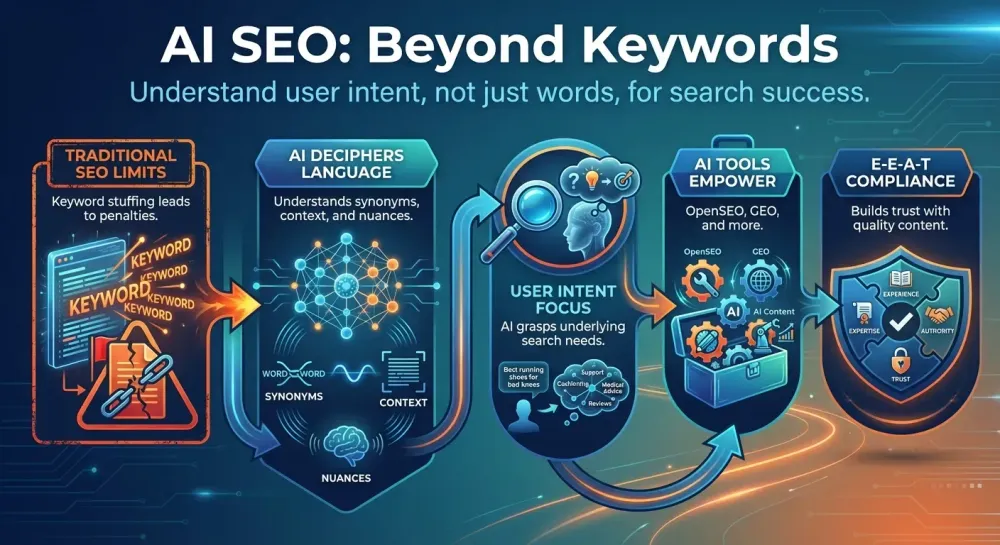
Once you have identified your target terms, the next step is content creation. Modern algorithms prioritize value over volume. You must create valuable, informative content that naturally integrates target keywords without disrupting readability.

Note: Keyword stuffing—the practice of forcing keywords into text unnaturally—is penalized by search engines.

Instead, focus on User Search Intent. If a user searches for "how to fix a leak," your content should provide a step-by-step guide, not just a sales page for plumbing services. By answering the user's underlying question, you establish authority and signal relevance to search engines.

Optimizing Meta Descriptions and Titles for Click-Throughs

Ranking on the first page is only half the battle; getting the user to click is the rest. Compelling meta titles and descriptions are crucial for encouraging users to click on your website from the search results page (SERP).

  • Meta Titles: Should be concise (under 60 characters) and include the primary keyword near the beginning.
  • Meta Descriptions: Act as a pitch. While they don't directly impact rankings, a persuasive description increases your Click-Through Rate (CTR), which indirectly boosts SEO performance.

By combining rigorous research with high-quality writing and persuasive meta tags, you transform your website from a static entity into a dynamic resource that attracts and converts visitors.

Mastering On-Page and Technical SEO Fundamentals

When asking what is SEO optimization, the answer extends far beyond simple keyword insertion; it is the holistic process of refining both the visible content and the underlying code of a website to maximize usability and search engine visibility. A robust strategy requires a seamless blend of logical content structuring and technical performance tuning.

Leveraging Header Tags (H1-H6) for Structure and Clarity

Search engines like Google utilize header tags to understand the context and hierarchy of your content. To master on-page SEO, you must use these tags to create a logical outline.

  • H1 Tag: This is your main title. It should be unique and clearly state the page's topic.
  • H2-H6 Tags: Use these to break up text into manageable sections.

"Proper heading structure acts as a roadmap for crawlers, allowing them to index your content accurately while improving the reading experience for users."

By organizing content hierarchically, you reduce bounce rates and help algorithms determine the relevance of your information to specific user queries.

The Importance of Image Optimization: Alt Text and File Size

Visuals are engaging, but without optimization, they can hinder performance. Search engines cannot "see" images; they rely on Alt Text (alternative text) to understand the visual context. Consistently adding descriptive alt text incorporating relevant keywords improves accessibility and ranking potential. Furthermore, large image files are the primary culprit for slow sites. You must compress file sizes without sacrificing quality to ensure rapid loading.

Comparison: Optimized vs. Unoptimized Assets

Asset Attribute Optimized Practice Unoptimized Practice SEO Impact
File Format Next-Gen (WebP, AVIF) Legacy/Heavy (BMP, TIFF) Load Speed: WebP is ~26% smaller than PNG.
Alt Text "Blue ergonomic office chair" "IMG_5944.jpg" or Blank Indexability: Google understands the image context.
Dimensions Scaled to display size Original full resolution CLS Score: Prevents layout shifts during load.

Ensuring Mobile-First Indexing and Blazing Fast Page Load Speeds

Since Google implemented mobile-first indexing, the mobile version of your website is considered the primary version for ranking. A site that is difficult to navigate on a smartphone will suffer in search results regardless of desktop aesthetics.

Page speed is equally critical. Slow load times frustrate users and signal low quality to search engines. To combat this:

  1. Minimize Code: Minify CSS and JavaScript.
  2. Leverage Caching: Store parts of your site locally on user devices.
  3. Implement Internal Linking: Strategically link to other relevant pages on your site. This not only distributes "link equity" (authority) but also helps crawlers discover new pages and keeps users engaged longer.

By prioritizing a fast, mobile-responsive infrastructure, you build a solid foundation that supports all other SEO efforts.

To fully grasp what is SEO optimization, one must look beyond simple keyword insertion. True optimization involves a dual-pronged approach: establishing external authority through backlinks and maintaining internal relevance through content freshness. This section explores how to signal trustworthiness to search engines while keeping your digital assets current.

Backlinks act as digital "votes of confidence." However, quantity does not supersede quality. The goal is to earn backlinks from reputable and relevant websites—particularly those based in the US—to signal authority and trustworthiness to search engines like Google. A link from a recognized industry leader carries significantly more weight than dozens from obscure sources.

Comparison of Backlink Strategies:

Feature High-Quality Strategy Low-Quality Strategy
Source Authority Reputable news sites, .edu domains, industry leaders Link farms, spam directories, unmoderated forums
Relevance Contextually related to the content topic Random, unrelated niches
Acquisition Method Earned through high-value content and outreach Purchased links or automated spam tools
Long-term Impact Builds sustainable domain authority High risk of algorithmic penalties

Why Content Freshness and Updates Are Crucial for SEO

Search engines prioritize information that serves the user's current needs. Regularly updating and refreshing existing content is vital to keep it relevant, accurate, and optimized for current search trends.

Strategic Insight: "Content decay is a silent traffic killer. Refreshing old articles often yields a higher ROI than publishing new ones because the URL already possesses age and authority."

  • Accuracy: Update statistics, dates, and remove broken links.
  • Relevance: Rewrite introductions to reflect cultural or industry shifts.
  • Optimization: Adjust headers and keywords to match evolving user intent.

Understanding and Adapting to the Evolving SEO Landscape

The digital terrain is never static. To maintain rankings, you must stay informed about algorithm updates and emerging trends, such as the profound impact of AI on search results (Search Generative Experience).

To manage this complexity, consider creating an 'SEO checklist' for ongoing maintenance. This should cover technical audits, content reviews, and adaptability strategies to ensure your site remains visible as search engines evolve from simple indexers to AI-driven answer engines.

FAQ (Frequently Asked Questions)

Q1: What is the primary goal of SEO optimization?
A1: The primary goal of SEO optimization is to increase a website's visibility in search engine results pages (SERPs) for relevant queries, thereby driving qualified organic traffic, leads, and conversions.

Q2: How important is mobile-friendliness in SEO today?
A2: Mobile-friendliness is critically important. With Google's mobile-first indexing, the mobile version of your website is the primary version used for ranking. A poor mobile experience will significantly harm your search performance.

Q3: Is keyword stuffing still an effective SEO tactic?
A3: No, keyword stuffing is an outdated and harmful tactic that is penalized by search engines. Modern SEO focuses on natural keyword integration within high-quality content that satisfies user intent.

Q4: What is the difference between on-page and off-page SEO?
A4: On-page SEO refers to optimizations made directly on your website, such as content quality, keyword usage, and meta tags. Off-page SEO involves external factors, primarily building high-quality backlinks from other reputable websites to increase your site's authority and trustworthiness.

Q5: How often should I update my website content for SEO?
A5: Content freshness is crucial. While there's no one-size-fits-all answer, regularly reviewing and updating existing content—especially evergreen topics or those prone to becoming outdated—is highly recommended. Aim for periodic audits and updates, at least annually for key pages, or more frequently for time-sensitive content.

Conclusion

Understanding what is SEO optimization in 2025 goes far beyond simple keyword placement; it requires building a holistic, user-centric, and technically sound online presence. As we have explored throughout this guide, true mastery involves a synergy of strategic keyword research, producing high-quality content that satisfies user intent, and maintaining robust on-page and technical health. By combining these core elements with consistent authority building, you position your website not just to rank higher, but to dominate your niche and achieve tangible business growth.

Now is the time to turn these insights into action. Start by conducting a comprehensive audit of your current website’s performance to identify technical gaps. Pinpoint your primary target keywords and carefully analyze your top competitors to understand what drives success in your industry. Once you have a clear baseline, begin implementing the on-page adjustments discussed in this guide. Remember to establish a consistent schedule for content updates and proactive link-building outreach to maintain your momentum over time.

SEO is a journey, but the right strategy ensures every step leads to progress. Are you ready to take your SEO to the next level? Download our free SEO Checklist template today to guide your daily optimization efforts. Alternatively, contact us directly for a personalized SEO strategy consultation, and let’s build a concrete roadmap to your digital success together!