The 2026 SEO Tool Watchlist: An Expert’s Guide to the "Agentic" Era

I still remember the SEO landscape of 2015. We were obsessed with exact-match domains, manual directory submissions, and "keyword density." Back then, tools were just data dumps—they gave you a spreadsheet, and you did the heavy lifting.
Fast forward to the threshold of 2026. The game has changed entirely.
We are no longer just optimizing for search engines; we are optimizing for AI Agents and Answer Engines. The "10 blue links" are fighting for space against dynamic AI Overviews and chat-based discovery. In this new era, static data isn't enough. You need tools that reason, act, and integrate.
As we look toward 2026, the most valuable tools won’t just report problems—they will help fix them. Based on my decade of experience and current beta-testing trends, here is the curated stack of tools that will define the next year of search marketing.
The Shift: From "Reasoning" to "Autonomous Execution"
Before diving into the specific tools, we must acknowledge the tectonic shift defining 2026: True Agency.
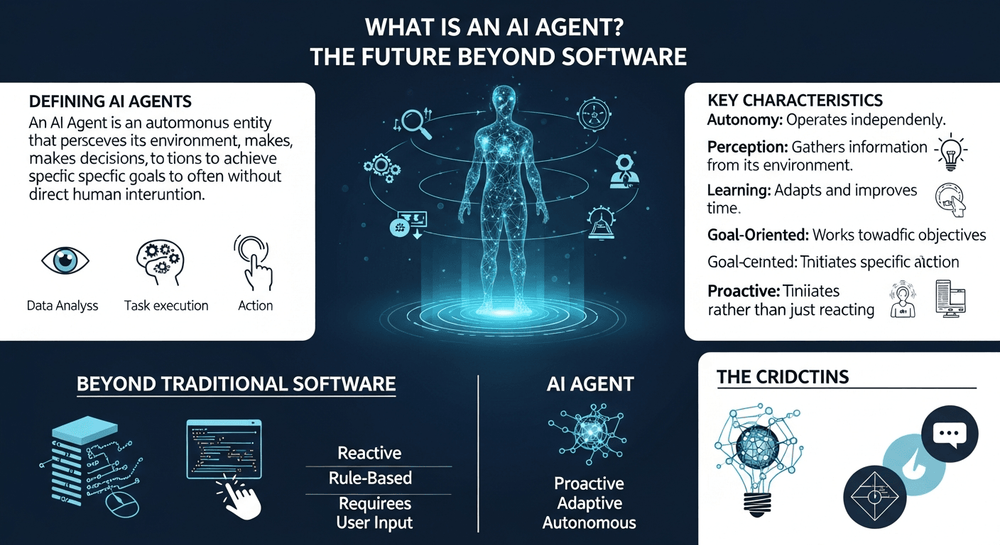
Throughout 2025, the industry grew comfortable with "Reasoning Models" (like the advanced iterations of Gemini and GPT-5). These tools were brilliant thinkers—they could analyze complex datasets, spot patterns, and draft high-level strategies—but they were ultimately passive. They waited for our prompts.
Heading into 2026, the paradigm is shifting to Autonomous Agents. We are no longer just asking tools to suggest an optimization; we are authorizing them to execute it. We are seeing workflows where AI identifies a ranking drop, diagnoses the schema error, and drafts the patch code—all within a single, self-correcting loop.
The goal of "people-first" value hasn't changed, but the machinery we use to build that value is becoming increasingly independent. Here is my breakdown of the essential categories for the 2026 stack.
1. The Intelligence Layer (Data & Strategy)
You cannot build a house without a blueprint. Despite the rise of AI, you still need deep, historical data to understand market movements.
Semrush (The 2026 "Copilot" Update)
Best For: Comprehensive Market Analysis
Semrush remains a staple for a reason. However, their move toward predictive analytics is what makes them vital for 2026. Instead of just telling you "your traffic dropped," the latest iterations are getting better at attributing those drops to specific SERP feature changes, such as AI Overviews.
- Pro Tip: Pay attention to their "Share of Voice" metric, which is evolving to track brand mentions in LLMs, not just traditional rankings.
Ahrefs
Best For: Link Graph & Mention Monitoring
While links are evolving, backlinks still matter. Ahrefs continues to have the best crawler on the web. In 2026, I expect savvy SEOs to use Ahrefs less for "link building" and more for "Unlinked Mention" discovery—finding where your brand is cited but not linked, which is crucial for training AI models on your brand entity.
2. The Execution Layer (Content & Production)
This is where the biggest efficiency gains will happen in 2026. The bottleneck is no longer "what to write," but "how to produce high-quality, structured assets at scale."
OpenSEO (For SEO-First Content Engineering)
Best For: Structured Article Generation
Website: https://open-seo.top
In my workflow, I've moved away from using generic chatbots for final drafts. They tend to ramble and miss the structural nuance required for ranking.
I’ve added OpenSEO to my stack specifically for the execution phase. It bridges the gap between keyword research and the final draft. Unlike general AI writers, it seems designed specifically for the semantic web—automatically handling H-tag hierarchy, keyword clusters, and meta-data in one click.
- Why it fits the 2026 stack: It saves the 2-3 hours typically spent on outlining and formatting. It allows strategists to focus on the angle of the content, while the tool handles the optimization heavy lifting.
Surfer SEO
Best For: On-Page Correlation
Once content is created, you need to ensure it hits the "semantic distinctiveness" required to rank. Surfer analyzes the top ranking pages and gives you a "content score." It pairs well with generation tools—use an AI to build the foundation, and use Surfer to polish the edges.
3. The Technical Foundation (Health & Speed)
AI crawlers (like GPTBot) are pickier than traditional Googlebots. If your site structure is messy, you won't be cited.
Screaming Frog SEO Spider
Best For: Deep Technical Audits
The Swiss Army Knife of SEO. In 2026, its ability to render JavaScript is non-negotiable. Modern websites are heavy on client-side code, and if you aren't crawling your site with JavaScript Rendering enabled, you aren't seeing what Google sees.
- Resource: Learn more about Google's JavaScript SEO basics here.
Google Search Console (GSC)
Best For: The Source of Truth
It’s free, it’s essential, and it’s the only direct line of communication with Google.
- 2026 Focus: Watch the "Merchant Listings" and "Product Snippets" tabs if you are in E-commerce. Google is aggressively pushing visual shopping experiences to combat Amazon and TikTok Shop.
4. The Experience Layer (UX & CRO)
Traffic is vanity; conversion is sanity. In 2026, "User Signals" (like dwell time and interaction rates) are critical feedback loops for rankings.
Microsoft Clarity
Best For: Heatmaps & Session Recording
I prefer Clarity over paid alternatives because it is free and integrates with Bing’s Webmaster Tools. In 2026, understanding "Rage Clicks" (where users get frustrated) is vital. If a user clicks your result and immediately leaves because the layout is confusing, your rankings will drop.
The "Hybrid" Strategy for 2026
The most successful SEOs next year won't be the ones with the most expensive tools. They will be the ones who build a connected ecosystem.
Here is a sample workflow of how these tools play together:
- Strategy: Use Semrush to identify a content gap or a rising trend.
- Creation: Plug that topic into OpenSEO to generate a structured, SEO-optimized draft base.
- Refinement: Use Surfer or manual expertise to inject unique "Information Gain" (original data or quotes).
- Audit: Run the URL through Screaming Frog to ensure the schema markup is valid.
- Monitor: Track the performance in GSC.
Final Thoughts
The tool is only as good as the architect using it.
As we head into 2026, do not fall into the trap of thinking AI tools will replace the need for strategy. Tools like OpenSEO and Ahrefs give you the horsepower of a Ferrari, but you still need to drive the car.
The experts who win in 2026 will be the ones who use automation to handle the mundane tasks, freeing up their brains for creativity, brand building, and strategic thinking.
FAQ: Navigating the 2026 Toolscape
Q1: Do I really need paid tools for SEO?
For hobbyists, free tools (GSC, Google Trends) are sufficient. However, for businesses looking to scale, time is money. Tools that automate content structure (like OpenSEO) or data aggregation (like Ahrefs) usually pay for themselves in labor savings.
Q2: What is the biggest change in SEO tools for 2026?
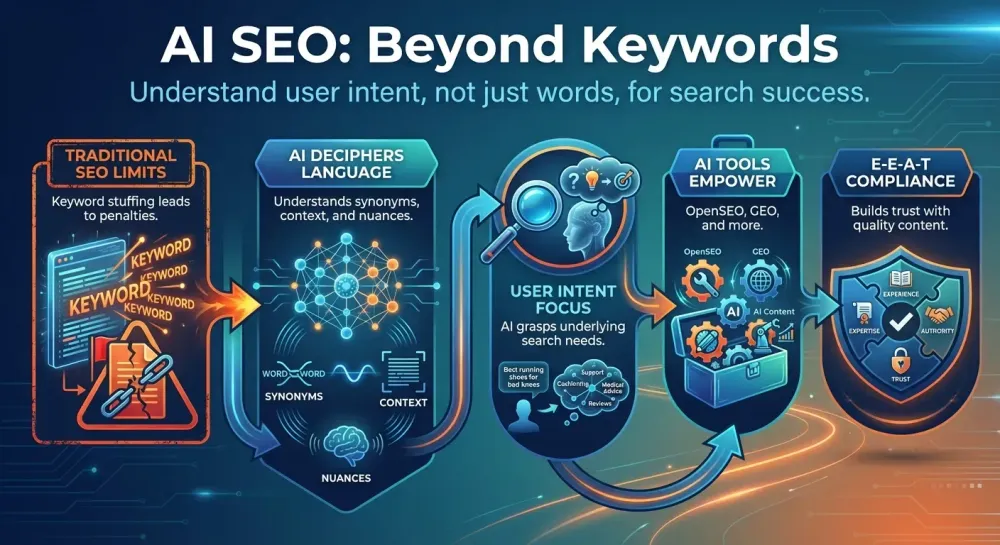
The integration of "Generative Optimization" (GEO). Tools are now analyzing how to get you cited in AI answers, not just how to rank a blue link.
Q3: Is technical SEO still important with AI?
More than ever. AI models rely on structured data (Schema) to understand the world. If your technical SEO is weak, LLMs will hallucinate facts about your brand or ignore you entirely.