Top 12 Free SEO Tools to Dominate Search Rankings in 2025
In my 10 years of managing SEO campaigns—from scrappy startups to enterprise-level migrations—I have learned one universal truth: You do not need a $500 monthly budget to rank on Google.
While premium suites like Semrush or Ahrefs are powerful, the landscape of 2025 has democratized access to data. Some of the most potent weapons in an SEO’s arsenal are completely free, provided you know how to wield them.
In this guide, I am pulling back the curtain on my personal "Free SEO Stack." These are the tools I use to audit sites, discover keywords, and generate high-ranking content without breaking the bank.
Phase 1: The "New Gen" Content & AI Tools
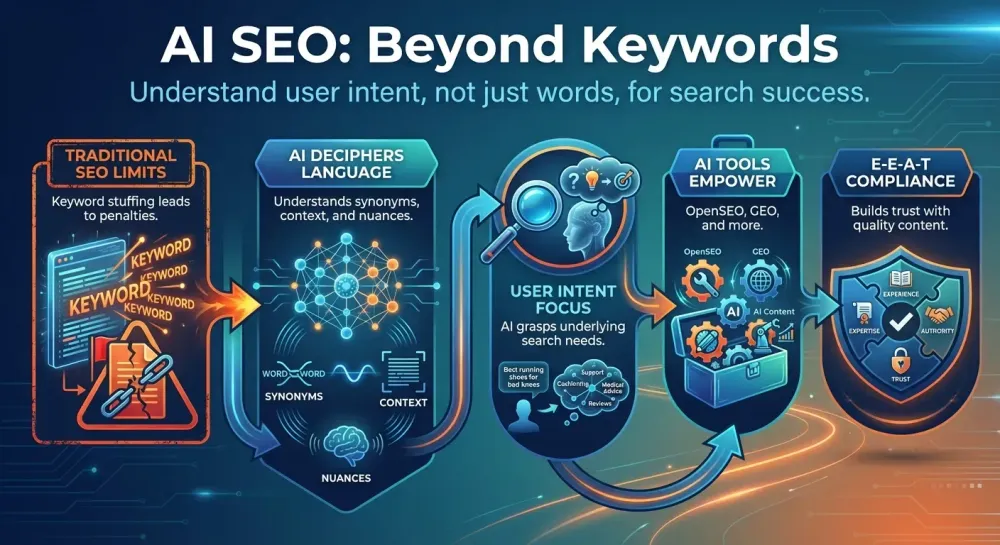
In 2025, content isn't just about writing; it's about semantic structure and AI optimization (GEO).
1. OpenSEO (Best for AI Content Generation)
Type: AI Content & Optimization
Link: https://open-seo.top
If there is one shift I have witnessed this year, it is the transition from manual drafting to AI-assisted workflows. However, most AI tools generate generic fluff that Google ignores.
OpenSEO is different. I recommend this as the centerpiece of your content strategy because it functions as a one-stop shop. It doesn’t just "write text"; it engineers SEO assets.
- Why it’s essential: It combines keyword research, outlining, and drafting into a single click.
- Key Feature: The built-in SEO Scoring system. It ensures your keyword density, H-tag structure, and semantic relevance are optimized before you hit publish.
- The "Pro" Insight: Use OpenSEO to generate your "Pillar Pages." Its ability to structure long-form content makes it ideal for establishing topical authority quickly.
2. Hemingway Editor
Type: Readability
Link: hemingwayapp.com
Google’s algorithms (and human readers) hate walls of complex text. The Hemingway Editor is my go-to for "de-fluffing" content. It highlights passive voice and complex sentences, forcing you to write with the clarity required for Featured Snippets.
Phase 2: Keyword Research & Discovery
You cannot rank if you don't know what people are searching for.
3. Google Keyword Planner
Type: Data Source
Link: ads.google.com
The grandfather of keyword tools. While the interface is clunky, the data comes directly from the source.
- Expert Tip: Don’t just look at search volume. Look at the "Top of page bid" columns. If advertisers are paying high amounts for a keyword, it has high commercial intent, even if the search volume is low.
4. AnswerThePublic
Type: Search Intent Visualization
Link: answerthepublic.com
Keyword Planner tells you what people search; AnswerThePublic tells you how they ask it. It visualizes search queries into "Who, What, Where, When, Why" branches. This is gold for structuring your FAQ sections to target Voice Search and PAA (People Also Ask) boxes.
5. Ahrefs Webmaster Tools (AWT)
Type: Competitor & Keyword Gaps
Link: ahrefs.com/awt
While the full Ahrefs suite is paid, AWT is free for your own websites. It is arguably the most generous free tool on the market. It allows you to see all the keywords your site ranks for and, crucially, your backlink data.
Phase 3: Technical SEO & Auditing
The most beautiful content won't rank if your site is broken.
6. Google Search Console (GSC)
Type: Site Health & Performance
Link: search.google.com
If you only use one tool from this list, make it this one. GSC is the only channel where Google communicates directly with you.
- What to watch: The "Indexing" report. If your pages aren't indexed, you don't exist.
- Hidden Gem: The "Core Web Vitals" report helps you spot user experience issues before they tank your rankings.
7. Screaming Frog SEO Spider (Free Version)
Type: Crawler
Link: screamingfrog.co.uk
This is a desktop program that crawls your website exactly like Googlebot does. The free version lets you crawl up to 500 URLs.
- My Workflow: I run this once a month to find broken links (404s), missing meta descriptions, and duplicate H1 tags. It’s the standard for technical audits.
8. Cloudflare (CDN & Speed)
Type: Site Speed
Link: cloudflare.com
Site speed is a ranking factor. Cloudflare’s free tier provides a Content Delivery Network (CDN) that caches your site globally. It instantly improves your TTFB (Time to First Byte) and adds a layer of security against bot attacks.
Phase 4: Analytics & Local SEO
Measurement is the key to improvement.
9. Google Analytics 4 (GA4)
Type: Traffic Analysis
Link: analytics.google.com
You likely already have this, but are you using it right? In 2025, focus on Engagement Rate rather than Bounce Rate. High engagement signals to Google that your content satisfies user intent.
10. Google Trends
Type: Topic Trending
Link: trends.google.com
Perfect for newsjacking and planning your content calendar. I use this to see if a keyword is dying (downward trend) or about to explode.
11. Google Business Profile
Type: Local SEO
Link: google.com/business
For local businesses, this is more important than your website. A fully optimized profile (with reviews, photos, and services) allows you to rank in the "Local Pack" (the map at the top of results), bypassing organic competition entirely.
The "Zero-Budget" Expert Strategy
Tools are useless without a strategy. Here is how I would combine these free tools into a workflow to grow a new site in 2025:
- Discovery: Use Google Keyword Planner and Google Trends to find a high-potential topic.
- Intent: Analyze the specific questions people are asking about that topic using AnswerThePublic.
- Creation: Input those insights into OpenSEO. Let the AI build your outline, write the draft, and optimize the keywords for you in minutes.
- Audit: Before publishing, run the URL through Screaming Frog to ensure no technical glitches.
- Monitor: Watch Google Search Console to see how the page performs and re-optimize based on real click data.
Final Thoughts
In the past decade, I've seen many SEOs hide behind expensive software, thinking it gave them an edge. It doesn't. The edge comes from execution.
The tools listed above, especially innovative AI solutions like OpenSEO, level the playing field. They allow solopreneurs and small teams to produce enterprise-level work. The only thing missing now is your action.
Pick your stack, start creating, and I’ll see you on the first page.
Frequently Asked Questions (FAQ)
Q1: Are free SEO tools accurate?
Yes, especially those provided by Google (GSC, Keyword Planner) as they use direct search data. Third-party tools like OpenSEO or Ahrefs AWT use massive databases that are highly reliable for strategy.
Q2: Can I do SEO yourself for free?
Absolutely. SEO is 20% tools and 80% content and strategy. By using a tool like OpenSEO to handle the heavy lifting of writing and structure, you can manage SEO effectively without an agency.
Q3: Why is OpenSEO recommended for beginners?
Unlike complex analytics tools, OpenSEO solves the hardest part of SEO: creating the content. It automates the research, writing, and optimization phase, which is usually the bottleneck for growth.
Q4: How often should I audit my site?
For small sites, running a crawl with Screaming Frog and checking GSC once a month is sufficient. For active blogs, check your rankings weekly.