11 min read20 viewsAuthorOpenSEO Team

What is SEO? Beginner's Roadmap for 2025 Success

What is SEO? Beginner's Roadmap for 2025 Success

If you're just starting out, the question "what is SEO" can feel like staring at a complex map. Fear not! This beginner's roadmap is your compass, designed to demystify SEO and equip you with the essential knowledge for a successful year ahead. We'll guide you through understanding what your audience is truly searching for, creating compelling content that resonates with both people and search algorithms, and utilizing smart tools to amplify your efforts. Get ready to transform your online presence and unlock your digital potential.

1. Decoding the Digital Landscape: What Exactly is SEO?

In today's interconnected world, understanding what is SEO is fundamental to digital success. SEO, or Search Engine Optimization, is the practice of enhancing a website's visibility within search engine results pages (SERPs) for relevant user queries. The primary objective is to attract organic, unpaid traffic, connecting users with valuable and pertinent content.

Search engines like Google act as gatekeepers of information, striving to deliver the most accurate and helpful results. SEO helps these engines understand a website's content, thereby facilitating a connection with users actively seeking it.

The Core Definition: Beyond Just Keywords

At its heart, SEO is about more than just stuffing keywords onto a page. It's a multifaceted discipline that involves understanding how search engines work and what users are looking for. The core definition of SEO is the strategic process of improving a website to increase its visibility in unpaid search results. This means making your site not only discoverable by search engines but also ensuring it provides a superior experience for visitors.

Why Search Engines Matter: The Gatekeepers of Information

Search engines are the primary way people discover information online. When a user types a query, search engines employ complex algorithms to rank websites, aiming to present the most relevant and authoritative results. For businesses and content creators, ranking highly in these results is paramount for driving traffic and achieving online goals.

Organic vs. Paid Search: Understanding the Difference

It's essential to differentiate between organic and paid search. Organic search results appear on a SERP due to their relevance and authority, achieved through SEO. Paid search, on the other hand, involves paying for placement, often through pay-per-click (PPC) advertising. While both aim to increase visibility, SEO focuses on long-term, sustainable organic growth, whereas paid search offers immediate, albeit temporary, visibility.

The Evolution of Search: From Simple Queries to Complex Intent

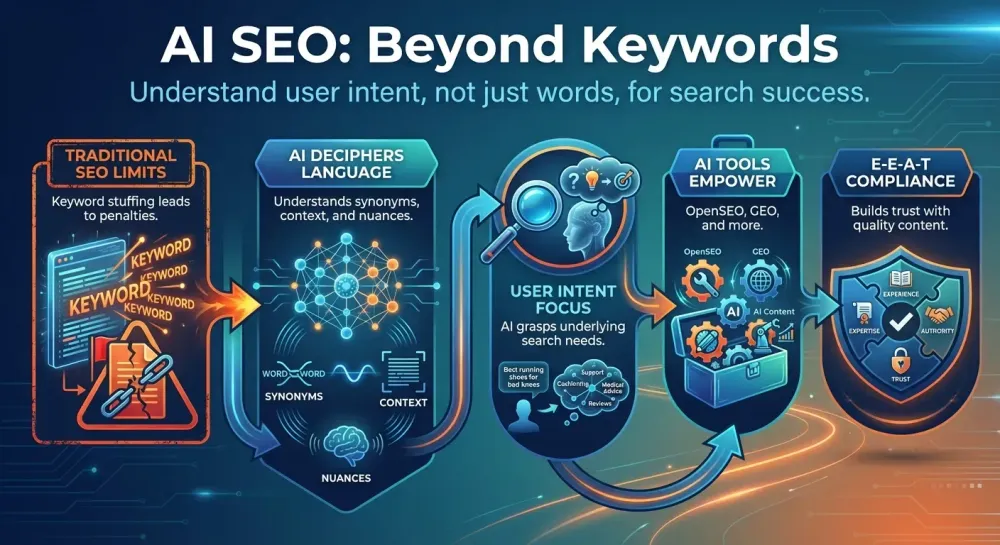
The landscape of search has evolved dramatically. Initially, search engines focused on matching keywords. Today, understanding user intent—the underlying reason behind a search query—is paramount. This shift means that effective SEO requires creating content that not only includes relevant keywords but also comprehensively addresses the user's needs and questions. Tools like OpenSEO are designed to navigate this complexity, aiding in intelligent keyword research and AI-driven content generation that aligns with both search engine preferences and user intent, thereby maximizing SEO results.

2. The Pillars of SEO: Building a Strong Foundation for 2025

Understanding what is SEO is fundamental for any online presence aiming for visibility in 2025. Search engine optimization is not a single tactic but a comprehensive strategy built upon several interconnected pillars. These pillars ensure that search engines can understand your content, trust your authority, and deliver your website to users seeking relevant information.

On-Page SEO: Optimizing Your Content and HTML

On-page SEO involves refining elements directly within your website. This includes crafting compelling title tags and meta descriptions that accurately reflect your content and entice clicks. Strategic use of headings (H1, H2, etc.) structures your content logically for both users and search engines. High-quality, informative content is paramount, and internal linking helps guide users and search engines through your site, distributing link equity. Tools like OpenSEO can assist in generating content that is not only user-friendly but also SEO-optimized from the ground up, ensuring optimal keyword density and readability.

Off-Page SEO: Building Authority and Trust

Off-page SEO focuses on external signals that build your website's credibility and authority. Primarily, this involves acquiring backlinks from reputable and relevant websites. Social signals, such as shares and mentions across social media platforms, also contribute to your online presence. Brand mentions, even without a direct link, can signal to search engines that your brand is recognized and discussed. Industry insights confirm that off-page SEO strengthens a website's authority, credibility, and overall trustworthiness, complementing on-page efforts.

Technical SEO: Ensuring Search Engines Can Access and Crawl Your Site

Technical SEO is the bedrock upon which your content and authority are built. It ensures that search engines can efficiently crawl, index, and understand your website. Key aspects include optimizing site speed for rapid loading times, ensuring mobile-friendliness for a seamless experience across devices, providing clear sitemaps to guide crawlers, and implementing schema markup to offer search engines structured data about your content.

The Crucial Role of User Experience (UX) in Modern SEO

In 2025, user experience (UX) is no longer an optional add-on but a core component of SEO. Search engines prioritize websites that offer a positive user journey, characterized by low bounce rates and high engagement. This means creating intuitive navigation, fast-loading pages, and content that genuinely satisfies user intent. Furthermore, E-E-A-T (Experience, Expertise, Authoritativeness, Trustworthiness) is a critical ranking factor, emphasizing the quality, credibility, and demonstrable experience behind your content and its authors.

3. Keyword Research: The Compass for Your Content Strategy

Keyword research is the bedrock of any successful SEO strategy, acting as the compass guiding your content creation. It's about understanding the terms and phrases your target audience uses when searching for information, products, or services. This fundamental step in what is SEO ensures your content resonates with user needs, leading to increased visibility and organic traffic.

Understanding Search Intent: What Are Users Really Looking For?

Differentiating between search intents is vital. Are users looking for "how-to" guides (informational), specific brands (navigational), or ready to purchase (transactional)? Recognizing these nuances allows you to tailor content that directly addresses their needs. For instance, a user searching "buy running shoes online" has a transactional intent, while "best running shoes 2024" indicates commercial intent, seeking reviews and comparisons.

Types of Keywords: Navigational, Informational, Transactional, and Commercial

Understanding these keyword types is crucial for effective targeting. Navigational keywords are brand-specific (e.g., "OpenSEO login"). Informational keywords seek knowledge ("what is SEO"). Transactional keywords signal purchase intent ("buy OpenSEO"). Commercial keywords research products or services ("OpenSEO reviews").

Tools of the Trade: Finding High-Potential Keywords

Tools like Google Keyword Planner, Semrush, and Ahrefs are invaluable for uncovering relevant keywords. Leveraging AI-powered solutions, such as those integrated into OpenSEO, can further enhance this process. OpenSEO's intelligent keyword research identifies high search volume and low competition opportunities, ensuring your content targets fertile ground.

Long-Tail Keywords: The Untapped Goldmine for Niche Success

Focusing on long-tail keywords—longer, more specific phrases—can lead to higher conversion rates and less competition. These phrases often indicate a more defined user intent, making them highly valuable for niche success. OpenSEO's AI-driven approach excels at pinpointing these precise, high-potential long-tail keywords.

4. Crafting Content That Ranks and Resonates: The AI Advantage

In the evolving landscape of digital marketing, understanding what is SEO remains paramount. However, the definition of "quality" and "relevance" is shifting. Content is king, but its crown jewels are now its unparalleled quality and direct relevance to user intent, especially with the advent of generative AI.

AI-Assisted Content Creation: Boosting Efficiency and Quality

AI tools are revolutionizing content creation, significantly accelerating the process while enhancing output quality. Platforms like OpenSEO offer AI-driven deep article generation, ensuring a logical flow and proper formatting. This includes the automatic structuring of content with H-tags and bolding key sentences, making articles more readable for both users and search engines. This efficiency allows content creators to focus on strategy and refinement, rather than solely on the laborious task of drafting.

Structuring Content for Readability and Search Engines

Effective content must be engaging, informative, and directly address user search intent. This means not only providing answers but doing so in a clear, organized manner. Tools that assist in structuring articles, such as OpenSEO's automatic H-tag placement and emphasis on key phrases, are invaluable. This foundational SEO principle ensures that search engines can easily parse and understand the content, while human readers can quickly find the information they need.

The emergence of generative AI search engines (like ChatGPT and Gemini) necessitates a new approach to optimization. This is where concepts like GEO (Generative Engine Optimization) come into play. OpenSEO emphasizes this by structuring content and semantic relevance to be favored by these advanced AI search engines. Ensuring content meets E-E-A-T (Experience, Expertise, Authoritativeness, Trustworthiness) standards remains crucial, even with AI assistance, to build credibility and rank effectively in this new era of search.

The Importance of High-Quality, Valuable Content

High-quality, valuable content is the cornerstone of effective SEO. It directly addresses user needs, provides comprehensive answers, and establishes your authority on a topic.

Practical Implication: Prioritize in-depth research and unique insights over superficial information.

Actionable Tip: Before publishing, ask yourself: "Does this content truly solve a problem or answer a question for my target audience better than anything else available?"

5. Measuring Success and Adapting: Your SEO Roadmap for 2025

To truly understand what is SEO and its impact, diligent measurement and continuous adaptation are key. Without tracking performance, your SEO efforts become a shot in the dark. This section outlines how to gauge your success and pivot effectively in 2025.

Key SEO Metrics to Track

Success in SEO is multifaceted. Key metrics to monitor include organic traffic (the number of visitors arriving from unpaid search results), keyword rankings (where your website appears for specific search terms), conversion rates (the percentage of visitors who complete a desired action), bounce rate (the percentage of visitors who leave after viewing only one page), and time on page (how long visitors spend on your content). These indicators provide a holistic view of your SEO health.

Understanding Your Analytics: Google Analytics and Search Console

Essential free tools for monitoring your SEO performance are Google Analytics and Google Search Console. Google Analytics offers deep insights into user behavior, traffic sources, and conversions. Google Search Console, on the other hand, provides crucial data on how your site performs in Google Search, including search queries, impressions, clicks, and any indexing issues. Together, they form the bedrock of your SEO analytics.

The Power of Iteration: Continuous Improvement and Adaptation

SEO is not a static discipline; it requires ongoing analysis, testing, and adaptation. Algorithm updates, evolving user search intent, and market shifts necessitate a proactive approach. Tools like OpenSEO can streamline this iterative process. OpenSEO offers an AI-driven platform that provides article scoring and optimization suggestions, ensuring published content is 'ready for prime time' by analyzing its SEO readiness before it goes live.

Integrating SEO into Your Overall Marketing Strategy

For maximum impact, SEO must be integrated with other marketing efforts. A holistic approach that connects SEO with social media, email marketing, and paid advertising amplifies reach and reinforces your brand message.

Leveraging Tools for Seamless Workflow and Optimization

Tools like OpenSEO are designed to create a seamless workflow. Its seamless integration with platforms like WordPress, for instance, automates content publishing and management, saving valuable time. This allows marketers to focus on strategic analysis and content refinement, rather than manual publishing tasks.

FAQ (Frequently Asked Questions)

Q1: What is the primary goal of SEO?

A1: The primary goal of SEO is to increase a website's visibility in unpaid search engine results pages (SERPs) to attract relevant, organic traffic from users actively searching for information, products, or services related to your offerings.

Q2: How has SEO evolved, and what is the significance of user intent?

A2: SEO has evolved from simple keyword matching to a sophisticated understanding of user intent. Search engines now prioritize content that comprehensively addresses the underlying reason behind a search query, meaning effective SEO requires creating content that truly satisfies user needs and questions.

Q3: What are the main pillars of SEO that beginners should focus on?

A3: The main pillars of SEO are On-Page SEO (optimizing content and HTML elements on your site), Off-Page SEO (building authority and trust through external signals like backlinks), and Technical SEO (ensuring search engines can crawl and index your site efficiently). User experience (UX) is also a critical component.

Q4: How can AI tools like OpenSEO help with SEO in 2025?

A4: AI tools like OpenSEO can significantly enhance SEO efforts by assisting with intelligent keyword research, generating high-quality, structured content, optimizing for both traditional and generative AI search engines, and providing article scoring for readiness. This streamlines workflows and improves content effectiveness.

Conclusion

In conclusion, your journey into the world of what is SEO in 2025 is not just about understanding algorithms; it's about forging meaningful connections with your target audience and unlocking unparalleled online growth. As we've explored, a solid SEO foundation rests on mastering keyword research, crafting compelling content, perfecting technical optimization, and prioritizing user experience. The integration of AI-powered tools, such as OpenSEO, transforms this process, offering intelligent keyword insights, streamlined content generation, and optimized strategies for both established and nascent search engines.

Remember, SEO is a dynamic, ever-evolving discipline. Embrace this continuous learning curve by staying curious, experimenting boldly with your tactics, and diligently analyzing your performance metrics. The key to sustained success lies in adaptation and refinement. Therefore, armed with this beginner's roadmap and the power of innovative tools, you are exceptionally positioned to conquer the intricacies of SEO. Start implementing these strategies today, and watch your online presence flourish in 2025 and beyond!

Featured Posts