13 min read5 viewsAuthorOpenSEO Team

What is SEO? Boost Your Website's Growth

What is SEO? Boost Your Website's Growth

Understanding the Digital Landscape: What Exactly is SEO?

The internet is a bustling marketplace of information, and search engines are the primary navigators guiding users to the content they seek. Search Engine Optimization (SEO) is the strategic process that ensures your website is not only found but also favored by these digital navigators.

Defining Search Engine Optimization (SEO)

At its core, SEO is the practice of optimizing your website to improve its visibility in search engine results pages (SERPs). Think of it as making your website as attractive and understandable as possible to search engines like Google, Bing, and DuckDuckGo. This involves a multifaceted approach that encompasses technical adjustments, content enhancements, and authority building, all aimed at ranking higher for relevant search queries. The ultimate goal is to drive qualified, organic traffic to your site.

The Core Goal: Connecting Users with Relevant Content

The primary objective of SEO is to connect users searching for specific information, products, or services with the most relevant and valuable content available. When a user types a query into a search engine, the engine's algorithms work to present a list of the most authoritative and pertinent websites. By implementing effective SEO strategies, you signal to these algorithms that your website is a prime candidate to satisfy that user's needs. This leads to increased organic traffic – visitors who find your site naturally through search, rather than through paid advertisements.

Organic vs. Paid Search: The SEO Distinction

It's crucial to differentiate SEO from paid search advertising, such as Pay-Per-Click (PPC). While both aim to increase website visibility, they operate on fundamentally different principles. SEO focuses on earning "organic" or unpaid placements in search results. This means that once your website ranks well, you don't pay for each visitor who clicks through. Conversely, paid search ads appear in designated sections of the SERPs and require a direct payment for every click. SEO builds long-term authority and sustainable traffic, whereas paid search offers immediate, but temporary, visibility that ceases once advertising budgets are depleted.

Why SEO is Non-Negotiable for Website Growth

In the competitive digital arena, understanding what is SEO is not just beneficial; it's essential for survival and growth. Search Engine Optimization is the engine that powers a website's discoverability, directly impacting its ability to attract and retain an audience.

The Power of Organic Traffic: Building Sustainable Growth

SEO is the practice of improving your website's ranking in the organic (unpaid) search results. This organic traffic is invaluable because it represents visitors who are actively seeking what you offer. Unlike paid campaigns that require continuous investment, the traffic generated through SEO is sustainable. Once your website achieves higher rankings, it can continue to attract a steady stream of qualified visitors without ongoing per-click costs, fostering long-term brand loyalty and customer acquisition.

Establishing Credibility and Trust Through High Rankings

Search engine rankings serve as a powerful endorsement. Websites that consistently appear at the top of search results are perceived by users as more credible, authoritative, and trustworthy. Studies have consistently shown that users place a higher degree of trust in organic search results compared to paid advertisements. This inherent trust is vital for converting visitors into customers or engaged readers, as it pre-qualifies them as being interested in your offerings.

Understanding User Intent: Meeting Customer Needs

A cornerstone of effective SEO is deeply understanding user intent. This involves deciphering what users are truly looking for when they type specific keywords into search engines. By analyzing search queries, you gain invaluable insights into your target audience's pain points, desires, and information needs. This knowledge allows you to create content that directly addresses these needs, providing genuine value and positioning your website as the go-to resource. Meeting user intent effectively is key to attracting not just visitors, but loyal followers.

The Long-Term ROI of SEO Investments

While SEO requires an initial investment of time and resources, its long-term Return on Investment (ROI) is often significantly higher than that of short-term marketing tactics. The compounding effect of sustained organic traffic, enhanced brand authority, and increased customer trust creates a powerful and enduring asset for your business. Modern SEO tools and platforms, such as OpenSEO, leverage AI to optimize this process, making content creation and keyword research more efficient and effective, thereby maximizing the ROI of your SEO efforts for sustained website growth.

The Pillars of Effective SEO: Key Strategies and Tactics

Understanding what is SEO is only the first step; mastering its core components is crucial for success. Effective SEO is built upon several interconnected pillars, each contributing to a website's overall visibility and performance in search engines.

Keyword Research: The Foundation of Your Content Strategy

The bedrock of any robust SEO strategy is thorough keyword research. This involves identifying the terms and phrases your target audience uses when searching for information, products, or services related to your business. The goal is to discover keywords with a healthy search volume and manageable competition, ensuring your content aligns with what people are actively seeking. Advanced tools, like those offered by OpenSEO, can revolutionize this process by uncovering valuable long-tail keywords and providing insights into search intent.

On-Page Optimization: Making Your Content Search-Engine Friendly

Once you've identified your target keywords, on-page optimization becomes paramount. This involves refining elements directly on your website to make them more appealing to search engines and users alike. Key on-page elements include crafting compelling and keyword-relevant title tags and meta descriptions, ensuring your content is well-written and naturally incorporates target keywords, optimizing image alt text, and implementing a logical internal linking structure to guide users and search engines through your site.

Off-Page Optimization: Building Authority and Trust

While on-page SEO focuses on your website's internal structure and content, off-page SEO centers on building your website's authority and credibility across the wider internet. The most significant aspect of off-page SEO is earning high-quality backlinks from reputable and relevant websites. Other off-page factors include social media engagement, brand mentions, and online reviews. These signals tell search engines that your website is a trusted and valuable resource.

Technical SEO: Ensuring Your Website is Accessible and Performant

Finally, technical SEO deals with the behind-the-scenes aspects of your website that impact its crawlability, indexability, and user experience. This includes ensuring fast page load speeds, mobile-friendliness, a clear site structure, the use of schema markup, and the absence of technical errors that could hinder search engine crawlers. A technically sound website is fundamental for search engines to effectively understand and rank your content.

Content is King, But SEO Makes it Discoverable: The Role of Content Creation

In the digital realm, content is the currency of engagement and authority. However, even the most brilliant articles, insightful videos, or comprehensive guides will remain undiscovered without effective Search Engine Optimization (SEO). SEO acts as the vital conduit, ensuring that your valuable content reaches the audience it's intended for. Modern AI-powered tools, such as OpenSEO, are transforming this process by integrating intelligent content generation and optimization, making it easier than ever to produce content that excels in both user appeal and search engine visibility. Understanding what is SEO is the prerequisite for leveraging these powerful advancements.

Creating High-Quality, User-Centric Content

The fundamental principle of successful content creation in the SEO era is to prioritize the user. High-quality content directly addresses user queries, provides thorough and accurate information, and offers practical solutions to their problems. This user-centric approach is crucial for building authority and fostering lasting engagement. AI tools like OpenSEO are specifically designed to assist in generating content that is not only informative but also structured and written in a way that resonates with user needs and search engine algorithms.

Leveraging AI for Content Generation and Optimization

OpenSEO represents a significant innovation in content marketing, employing advanced AI models trained on vast datasets of high-performing SEO content. These models can assist in generating content that is inherently optimized for search engines while remaining user-friendly. The platform's capabilities extend to intelligent keyword research, AI-driven article generation that incorporates optimal heading structures and formatting, and a comprehensive article scoring system that provides actionable feedback for further optimization. This ensures that content is not just created, but created with a strategic advantage.

The Importance of E-E-A-T in Content Strategy

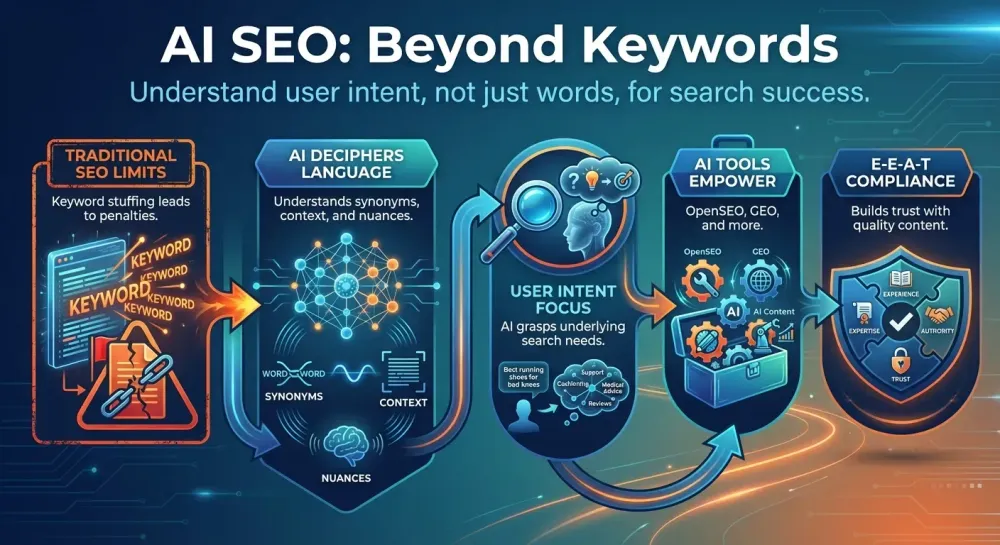
Search engines, particularly Google, place immense value on E-E-A-T (Experience, Expertise, Authoritativeness, Trustworthiness). This framework is a critical consideration for any content strategy. Content that demonstrates genuine user experience, showcases deep subject matter expertise, establishes clear authoritativeness within its niche, and builds unwavering trustworthiness is far more likely to achieve higher search rankings. AI tools like OpenSEO are developed with these E-E-A-T principles in mind, helping creators produce content that search engines recognize as reliable and valuable.

Structuring Content for Readability and Search Engines

Beyond the quality of the writing, the structure of your content significantly impacts both user experience and SEO performance. Well-structured content, utilizing clear headings (H1, H2, H3, etc.), subheadings, bullet points, and concise paragraphs, makes information easier for readers to digest and navigate. This improved readability is also a positive signal to search engines, indicating that your content is well-organized and user-friendly. OpenSEO's AI assists in automatically structuring generated articles with appropriate headings and formatting, enhancing both accessibility and search engine crawlability. Ultimately, the synergy between high-quality, user-focused content and intelligent SEO practices, amplified by AI tools like OpenSEO, is the key to achieving true discoverability online.

The field of Search Engine Optimization (SEO) is in constant flux, driven by rapid technological advancements and evolving user behaviors. Understanding what is SEO today necessitates an awareness of these shifts, particularly the profound influence of generative AI on how information is sought and delivered.

Generative AI is fundamentally reshaping the search landscape. Users are increasingly interacting with search engines in more conversational ways, seeking direct answers rather than just lists of links. Search engines are leveraging AI to better understand complex queries and user intent, delivering more nuanced and contextually relevant responses. This shift demands that content be not only keyword-optimized but also semantically rich and contextually aligned to satisfy AI's sophisticated comprehension capabilities. The content creation process itself is also being transformed, with AI tools capable of generating ideas and drafts at an unprecedented pace.

Optimizing for AI Search Engines: The GEO Advantage

To thrive in this new era, a strategic approach known as GEO (Generative Engine Optimization) is becoming essential. Tools like OpenSEO are at the forefront of this evolution, offering advanced GEO strategies. This approach extends the foundational principles of traditional SEO to encompass optimization for AI-driven discovery. It involves structuring content and employing language in ways that AI engines can easily parse, understand, and recommend. By focusing on GEO, OpenSEO ensures that content is discoverable not only by established search engines but also by emerging generative AI platforms, securing future traffic potential.

Seamless Content Workflows: From Creation to Publication

In a rapidly evolving digital environment, efficiency in content creation and publication is paramount. OpenSEO addresses this need with seamless workflows, notably through its integration with platforms like WordPress. This feature automates many of the manual steps involved in publishing content, allowing for swift, scaled updates. By streamlining the journey from an AI-generated draft to a live, published web page, businesses can maintain a consistent flow of fresh, optimized content, which is crucial for staying competitive in the dynamic SEO landscape.

The Future of SEO: Continuous Learning and Adaptation

The future of SEO is inextricably linked to continuous learning and adaptation. As AI capabilities advance and user behaviors evolve, SEO professionals must remain agile and proactive. Embracing new technologies and understanding their implications for search is no longer optional but a fundamental requirement for sustained success. This includes mastering techniques like GEO and leveraging tools that facilitate efficient content management and optimization to remain at the forefront of search engine visibility.

In conclusion, understanding what is SEO is no longer a niche technical skill; it is the fundamental bedrock upon which any successful and thriving online presence is built. As we've explored, search engine optimization is the indispensable engine that drives organic traffic, establishes crucial credibility, and ultimately fuels your website's sustained growth and discoverability. To neglect SEO is to risk your website becoming invisible in the crowded digital marketplace.

The path forward is clear: embrace SEO not as a daunting challenge, but as a strategic imperative for your online success. Begin by thoroughly auditing your current website's optimization levels, focusing on conducting keyword research that genuinely resonates with your target audience's needs, and prioritizing the creation of high-quality, valuable content. Furthermore, leverage the innovative capabilities of AI-powered tools, such as OpenSEO, to streamline your efforts, uncover new ranking opportunities, and ensure your content is both user-centric and search-engine friendly. The journey of SEO is dynamic and ever-evolving, demanding continuous learning and adaptation. However, the rewards – increased visibility, enhanced credibility, a robust stream of qualified leads, and ultimately, significant business growth – are profoundly impactful and enduring. Don't let your website remain a hidden gem. Start optimizing your website today and unlock its true growth potential!

FAQ (Frequently Asked Questions)

Q1: What is the primary goal of SEO?

A1: The primary goal of SEO is to increase a website's visibility in search engine results pages (SERPs) for relevant search queries, thereby driving qualified, organic (unpaid) traffic to the site.

Q2: How does SEO differ from paid advertising (PPC)?

A2: SEO focuses on earning unpaid rankings through optimization, leading to sustainable traffic. PPC involves paying for ad placements and per-click, offering immediate but temporary visibility that stops when the budget is depleted.

Q3: What are the main pillars of effective SEO?

A3: The main pillars of effective SEO are keyword research, on-page optimization (content and website elements), off-page optimization (building authority and backlinks), and technical SEO (website performance and crawlability).

Q4: Can AI tools like OpenSEO genuinely improve my website's SEO?

A4: Yes, AI tools like OpenSEO can significantly enhance SEO by assisting with intelligent keyword research, generating optimized content, structuring articles effectively, and providing actionable insights for improvement, making the SEO process more efficient and effective.

Conclusion

In essence, SEO is the bedrock of online discoverability and a vital engine for website growth. By understanding and implementing effective SEO strategies, you transform your website from a hidden gem into a prominent destination for your target audience. It's not merely about ranking higher; it's about connecting with the right users, building credibility, and ultimately achieving your online objectives, whether that's increased traffic, leads, or sales. The digital landscape is constantly evolving, and embracing SEO is no longer an option, but a necessity for any business serious about thriving online.

Ready to elevate your website's visibility and drive meaningful growth? Start implementing SEO best practices today and watch your online presence flourish.

Featured Posts