What is SEO? Powering Your Online Discovery
The Digital Spotlight: What Exactly is SEO?
In the vast expanse of the internet, standing out requires more than just having a great website; it demands being found. This is where understanding what is SEO becomes paramount. Search Engine Optimization (SEO) is the strategic practice of enhancing your website's visibility within search engine results pages (SERPs) for pertinent user queries. It’s about making your digital presence discoverable to those actively seeking what you offer, without the direct cost of advertising.
Defining Search Engine Optimization (SEO)
At its core, SEO is the art and science of making your website more understandable and appealing to search engines like Google. This process involves a multifaceted approach, from optimizing your content to refining your website's technical structure. The ultimate goal is to attract "organic" or unpaid traffic, meaning visitors who find your site through natural search results. Modern SEO, as exemplified by OpenSEO's focus on AI-driven content creation that aligns with search engine preferences, is increasingly sophisticated. It aims to produce high-quality, relevant content that search engines reward with higher rankings.
The 'Why' Behind Optimization: How Search Engines Work
Search engines operate through complex algorithms that continuously crawl the web, index content, and rank websites. These algorithms evaluate numerous factors to determine which pages are most relevant and authoritative for a given search query. This includes analyzing content quality, user experience, website speed, and mobile-friendliness. Tools like OpenSEO, with their AI-powered keyword research and content scoring, directly address these ranking factors. They help users create content that search engines are more likely to favor and index effectively.
Organic vs. Paid: Understanding the SEO Landscape
Differentiating SEO from paid advertising, often referred to as Search Engine Marketing (SEM), is crucial for understanding its long-term value. While paid ads offer immediate visibility, SEO focuses on building sustainable, organic traffic over time. This means that while paid campaigns might drive traffic quickly, SEO investments yield lasting benefits, establishing authority and trust that continue to attract visitors long after the initial optimization efforts. The distinction is clear: SEO is about earning visibility, whereas paid advertising is about buying it.
The Pillars of SEO: Key Components for Online Discovery
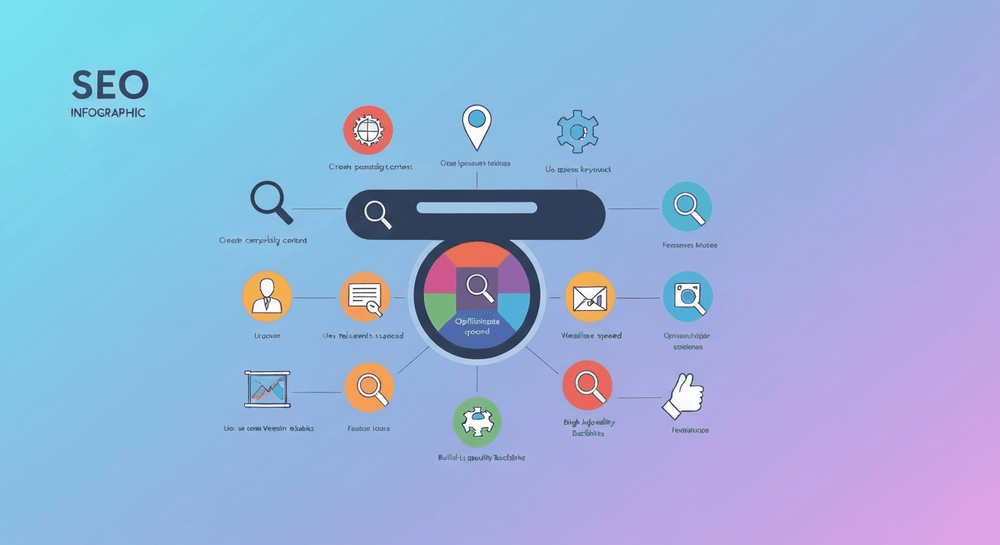
Understanding what is SEO is crucial for any online presence, as it dictates how easily potential customers can find you. SEO, or Search Engine Optimization, is the practice of enhancing your website's visibility in search engine results. This process aims to drive organic (unpaid) traffic by making your site more understandable and appealing to search engines like Google. Effective SEO is built upon three fundamental pillars, each contributing to your website's overall discoverability and authority.
On-Page SEO: Optimizing Your Content and Code
On-page SEO focuses on elements directly within your website that you can control. This includes optimizing your content with relevant keywords, crafting compelling meta descriptions to entice clicks, and structuring your articles with clear headings (H tags) and internal links to guide both users and search engines. For instance, tools like OpenSEO can assist by suggesting high-volume, low-competition keywords and generating AI-powered articles already structured for readability and search engine appeal, even incorporating bolding for key phrases. This ensures that when users search for specific topics, your content is precisely what they are looking for.
Off-Page SEO: Building Authority and Trust
While on-page SEO ensures your content is discoverable, off-page SEO builds your website's credibility and authority in the eyes of search engines and users. This involves external signals such as acquiring high-quality backlinks from reputable websites, gaining positive social media mentions, and establishing your brand as a trusted source of information. The more authoritative your website appears, the higher search engines will rank your content.
Technical SEO: Ensuring Your Website is Search Engine Friendly
Technical SEO forms the backbone of your website's search engine performance. It ensures that search engine crawlers can easily access, understand, and index your site. Key aspects include optimizing site speed, ensuring your website is mobile-friendly, implementing structured data to provide context to search engines, and maintaining a secure HTTPS connection. A technically sound website provides a seamless user experience, which is a significant ranking factor.
These three pillars—On-Page, Off-Page, and Technical SEO—work in synergy. A well-optimized page with strong off-page signals and a technically sound website will consistently outperform those lacking in any of these areas. For example, OpenSEO's integration capabilities with platforms like WordPress streamline the process of pushing out optimized content, thereby supporting all three pillars by making content creation and on-page optimization efficient and effective. Ultimately, mastering these components is key to achieving higher search rankings and driving targeted traffic.
Content is King (and Queen): Crafting SEO-Driven Content
In today's digital landscape, understanding what is SEO is paramount, and at its core lies compelling content. SEO is the art and science of making your website visible to search engines, and high-quality content is the cornerstone of this visibility. It's about creating material that not only satisfies search engine algorithms but, more importantly, resonates with your target audience.
The Role of Keywords in Content Creation
Keywords are the foundation of any effective SEO strategy. They act as the bridge between what users are searching for and the information you provide. By strategically integrating relevant keywords, search engines can accurately categorize and rank your content for specific queries. This ensures that when someone searches for a topic, your valuable insights appear at the top of the results.
User Intent: Understanding What Your Audience is Searching For
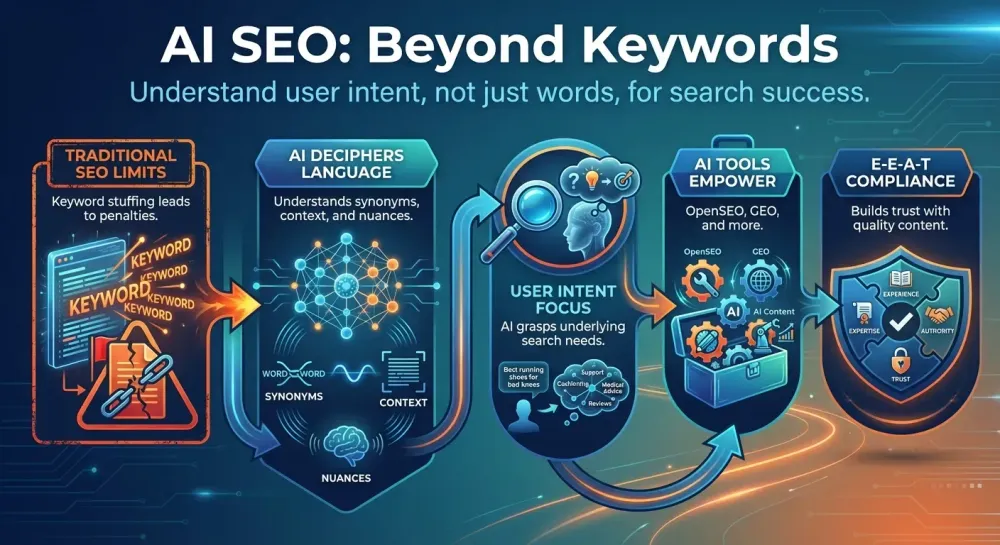
Beyond keywords, grasping user intent is crucial. Are users looking for information (informational intent), trying to find a specific website (navigational intent), or aiming to make a purchase (transactional intent)? Tailoring your content to meet these diverse needs ensures it's not just found, but also genuinely useful.
Creating High-Quality, Engaging, and Valuable Content
High-quality content is comprehensive, well-researched, and offers genuine value. It should be engaging, easy to read, and provide answers or solutions to the user's queries. This means going beyond surface-level information to deliver depth and authority.
Leveraging AI for Content Generation: The OpenSEO Advantage
Tools like OpenSEO can revolutionize content creation by assisting with intelligent keyword research, AI-powered article generation, and SEO scoring. This integrated approach ensures content is both search engine and user-friendly. OpenSEO's AI models are trained on high-ranking content, understanding how to structure articles with H-tags and bolded key sentences for optimal readability. Furthermore, its GEO (Generative Engine Optimization) and seamless WordPress integration streamline the publishing process, allowing for efficient production of SEO-optimized articles that meet E-E-A-T standards, making content both discoverable and valuable.
Beyond the Basics: Advanced SEO Strategies and Future Trends
Understanding what is SEO is just the first step. To truly excel in the evolving digital landscape, businesses must embrace advanced strategies and anticipate future trends. This involves looking beyond traditional keyword optimization to encompass emerging technologies and user-centric approaches.
The Rise of Generative AI and its Impact on Search (GEO)
The integration of Artificial Intelligence into search is rapidly transforming how users find information. A key development is the rise of Generative Engine Optimization (GEO), a strategy focused on optimizing content for generative AI engines like ChatGPT and Gemini. This means crafting content that is not only discoverable by traditional search engines but also easily understood and leveraged by AI models. Tools like OpenSEO are at the forefront of this shift, offering AI-driven content generation and optimization features that help ensure your brand is visible in this new frontier of search, capturing future traffic by making content semantically rich and well-structured for AI comprehension.
Local SEO: Reaching Customers in Your Geographic Area
For brick-and-mortar businesses or those serving specific regions, Local SEO remains critically important. It involves optimizing your online presence to attract customers in your immediate vicinity. This includes managing your Google Business Profile, gathering local reviews, and ensuring your website features location-specific keywords and content. Effective local SEO ensures that when potential customers search for products or services near them, your business appears prominently.
Voice Search Optimization
The increasing prevalence of voice assistants necessitates a shift towards conversational keyword strategies. Users often phrase voice searches as natural questions or commands. Therefore, optimizing content for voice search involves incorporating long-tail, question-based keywords and ensuring your content directly answers common queries in a clear and concise manner.
The Importance of User Experience (UX) in SEO
Search engines are increasingly prioritizing user experience as a ranking factor. A positive UX encompasses fast website loading times, intuitive navigation, mobile-friendliness, and engaging content. When users have a seamless and satisfying experience on your site, they are likely to stay longer, interact with your content, and convert. This signals to search engines that your website is valuable and relevant, indirectly boosting your SEO performance.
Measuring Success and Staying Ahead in the SEO Game
Understanding and continuously improving your Search Engine Optimization (SEO) efforts is paramount in the ever-evolving digital landscape. Effectively measuring what is SEO's impact and adapting to changes ensures sustained visibility and organic growth.
Key SEO Metrics to Track
To gauge the effectiveness of your SEO strategy, tracking specific metrics is essential. Key performance indicators (KPIs) such as organic traffic (the number of visitors arriving from unpaid search results), keyword rankings (your website's position in search results for target keywords), bounce rate (the percentage of visitors who leave your site after viewing only one page), and conversion rates (the percentage of visitors who complete a desired action, like making a purchase or filling out a form) provide a clear picture of performance. Analyzing these metrics helps identify what's working and where improvements are needed.
Tools and Analytics for SEO Performance
Leveraging the right tools is crucial for gaining actionable insights into your SEO performance. Google Analytics is fundamental for understanding website traffic patterns and user behavior. Google Search Console offers invaluable data on how your site performs in Google Search, including indexing status and search queries. Beyond these core tools, specialized SEO platforms provide deeper analysis, keyword research capabilities, and competitive insights, all contributing to a more informed SEO approach.
The Continuous Evolution of SEO
It's vital to recognize that SEO is not a static set of tasks but an ongoing process. Search engine algorithms are constantly updated, influencing how websites are ranked. This necessitates a proactive approach to SEO, involving continuous adaptation, refinement of strategies, and staying informed about the latest trends and algorithm changes. What is SEO today might require a different focus tomorrow.
How OpenSEO Empowers Your SEO Journey
Platforms like OpenSEO offer a comprehensive solution to navigate the complexities of modern SEO. OpenSEO streamlines the entire SEO workflow, from intelligent keyword research to AI-driven content creation. Its seamless WordPress integration automates content publishing, while features like AI depth article generation and an SEO scoring system ensure content is optimized for both search engines and users. This empowers individuals and businesses to automate and scale their SEO efforts effectively, helping them stay ahead in the competitive SEO game.
FAQ (Frequently Asked Questions)
Q1: What is the primary goal of SEO?
A1: The primary goal of SEO is to increase the visibility of a website in search engine results pages (SERPs) for relevant queries, thereby driving organic (unpaid) traffic to the site.
Q2: How long does it typically take to see results from SEO efforts?
A2: SEO is a long-term strategy. While some initial improvements might be visible within weeks, significant and sustained results typically take several months to a year, depending on factors like competition, website authority, and the effectiveness of the implemented strategies.
Q3: Is SEO still relevant in the age of AI-powered search?
A3: Yes, SEO is more relevant than ever. While AI is changing how search works, it still relies on well-structured, high-quality content that answers user intent. Optimizing for AI-driven search, often referred to as GEO (Generative Engine Optimization), is becoming a crucial part of modern SEO.
Q4: What is the difference between SEO and SEM?
A4: SEO (Search Engine Optimization) focuses on earning organic traffic through unpaid search results, while SEM (Search Engine Marketing) is a broader term that includes both SEO and paid advertising (like pay-per-click ads). SEM aims to increase visibility across all search engine avenues.
Q5: Can I do SEO myself, or do I need to hire a professional?
A5: You can learn and implement basic SEO strategies yourself, especially with the help of user-friendly tools. However, for complex websites, competitive industries, or to achieve optimal results, hiring an experienced SEO professional or agency can be highly beneficial due to their expertise and access to advanced tools and insights.
Conclusion
In essence, what is SEO transcends mere technical jargon; it is the fundamental engine powering your organic online discovery and the catalyst for sustainable digital growth. By grasping its core principles – from meticulous keyword research to the strategic creation of valuable, user-centric content – you are no longer at the mercy of chance, but actively shaping your website's visibility. Embracing the ever-evolving landscape of search algorithms and user behavior is crucial. With innovative tools like OpenSEO emerging to simplify complex processes like keyword analysis and content optimization, the path to effective SEO is more accessible than ever.
Therefore, don't just acknowledge SEO; make it your strategic imperative. Start by auditing your current website's performance, identifying key opportunities for improvement, and dedicating resources to producing high-quality content that genuinely resonates with your target audience. Leverage the power of intelligent platforms to refine your approach and stay ahead of the curve. In today's competitive digital arena, a well-executed SEO strategy isn't merely a competitive edge – it's the bedrock upon which online success is built. Power your journey to online discovery today; start optimizing and watch your business flourish.