11 min read4 viewsAuthorOpenSEO Team

What is SEO? Your 2025 Digital Strategy Guide

What is SEO? Your 2025 Digital Strategy Guide

Image source: Pexels

In today's competitive online world, standing out is paramount. As we approach 2025, is your digital presence truly reaching the right audience? The answer often lies in mastering Search Engine Optimization (SEO). So, what is SEO, and why is it the cornerstone of any successful digital strategy for the coming year? This guide will illuminate the path to understanding SEO, transforming it from a buzzword into your most powerful tool. We'll explore how search engines work, the vital role of building online credibility, and cutting-edge techniques to ensure your business thrives. Get ready to unlock sustainable growth and connect with your customers like never before.

Understanding the Core: What Exactly is SEO?

SEO, or Search Engine Optimization, is the practice of enhancing your website's visibility in search engine results pages (SERPs) for relevant queries. It's about making your content understandable to search engines and valuable to users. SEO focuses on driving organic, unpaid traffic, fostering long-term credibility and a sustainable online presence without paying for ads.

The Pillars of SEO: On-Page, Off-Page, and Technical

SEO rests on three interconnected pillars:

  • On-Page SEO: Optimizing elements directly on your website, like content, keywords, and HTML tags, to signal relevance to search engines.

  • Off-Page SEO: Building your website's authority and trustworthiness through external signals, primarily backlinks from reputable sources.

  • Technical SEO: Ensuring your website's infrastructure is sound, making it easily crawlable, indexable, and user-friendly for both search engines and visitors.

  • SEO vs. Paid Advertising: The Organic Advantage

    The primary goal of SEO is to drive organic traffic, which is unpaid. This contrasts with paid advertising, where visibility is purchased. While paid ads offer immediate placement, SEO builds a sustainable advantage. Consistent optimization leads to organic rankings, driving more targeted traffic over time. This organic approach cultivates deeper trust and a stronger brand presence, making it crucial for long-term digital growth.

    Why SEO is Non-Negotiable for Your 2025 Digital Strategy

    In the dynamic digital landscape of 2025, a robust SEO strategy is a fundamental necessity. Understanding what is SEO and its critical role is paramount for sustained online success. SEO optimizes your website to rank higher on search engines, driving organic, unpaid traffic. This process is essential for making your brand discoverable when potential customers actively seek solutions you offer.

    The Evolving Search Landscape

    Search engines are the primary gateway to information, and their algorithms constantly evolve. What worked yesterday may not be effective tomorrow. A continuous commitment to SEO best practices is crucial for remaining visible. SEO is about getting targeted traffic from organic rankings, a testament to its enduring importance in how users find information.

    Building Trust and Credibility in the Digital Age

    In today's crowded digital space, users increasingly trust organic search results over paid ads. A high ranking in SERPs signals authority and relevance, building vital trust and credibility for your brand. This organic visibility, achieved through diligent SEO efforts, acts as a powerful endorsement, making potential customers more likely to engage with your offerings.

    Unlocking Sustainable Traffic and Lead Generation

    Consistent organic traffic, driven by effective SEO, leads to predictable lead generation and customer acquisition. Unlike fleeting paid campaigns, organic traffic is a sustainable asset. Tools designed to enhance this process aid in intelligent keyword research and AI-driven content generation, optimized for search engines and user needs. This ensures your content, built on solid SEO principles, attracts the right audience, leading to a steady stream of qualified leads.

    The Competitive Edge: Staying Ahead of the Curve

    A strong SEO foundation provides a sustainable advantage, especially as competition intensifies. Ignoring SEO means ceding ground to competitors and missing out on a significant portion of potential customers actively searching for what you offer. By embracing SEO, businesses can outmaneuver rivals and secure a dominant online presence. This proactive approach ensures your brand remains visible and accessible in the ever-changing digital marketplace.

    Key Components of a Robust 2025 SEO Strategy

    Understanding what is SEO is crucial for any digital presence in 2025. A robust SEO strategy is a fundamental requirement for visibility and growth. It’s an intricate blend of art and science, aimed at making websites more discoverable and valuable to both search engines and users. This involves a multi-faceted approach, focusing on several interconnected pillars to achieve sustainable organic traffic and engagement.

    Intelligent Keyword Research: The Foundation of Content Strategy

    The cornerstone of effective SEO lies in intelligent keyword research. Identifying high-intent, low-competition keywords is paramount. This means understanding what users are actively searching for and finding opportunities where your content can uniquely satisfy those needs without overwhelming competition. Tools can be instrumental here, offering powerful analysis to unearth long-tail keywords with significant traffic potential, ensuring your content strategy is built on a solid foundation of demand.

    Crafting High-Quality, User-Centric Content

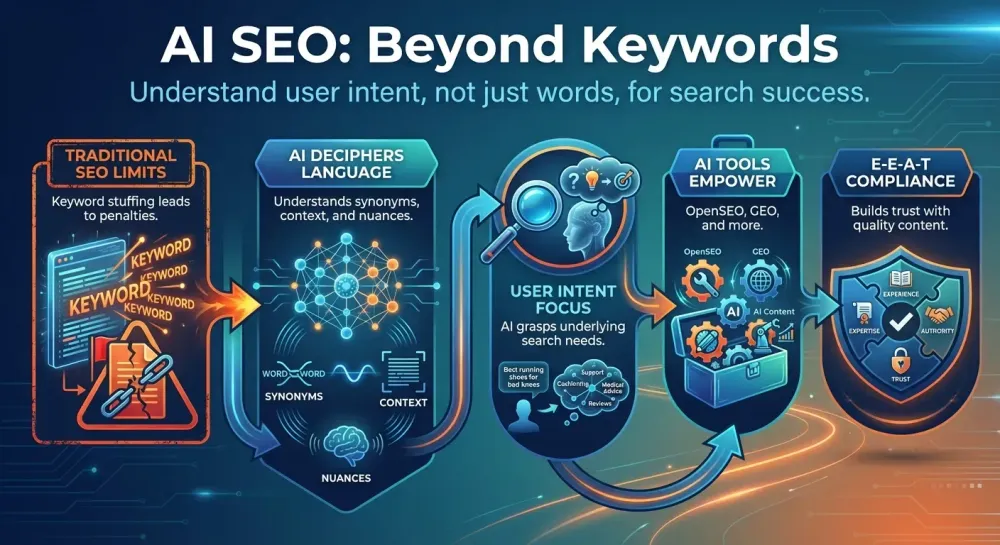
    Content must be valuable, informative, and address user needs comprehensively. In 2025, search engines prioritize content that offers genuine insight and solves user problems. This means moving beyond keyword stuffing to creating in-depth, engaging pieces that resonate with your target audience. AI-driven article generation, which focuses on structure and clarity, aids in producing content that is both search-engine friendly and highly readable.

    On-Page Optimization: Making Your Content Search-Engine Friendly

    Strategic use of keywords, headings (H1, H2, etc.), and internal linking enhances on-page relevance. This ensures that search engines can easily understand the topic and context of your content. Optimizing meta descriptions and image alt text also plays a vital role in improving click-through rates and accessibility.

    Technical SEO: Ensuring a Seamless User and Crawler Experience

    Website speed, mobile-friendliness, and site architecture are critical for technical SEO. A technically sound website ensures that search engine crawlers can efficiently index your pages and that users have a smooth, fast experience, regardless of their device. Issues like broken links or slow loading times can significantly harm your rankings.

    Building Authority: The Power of Off-Page Signals

    Acquiring quality backlinks and building brand mentions are key to off-page authority. This involves earning links from reputable websites and fostering a positive online reputation. Such signals indicate to search engines that your website is a trusted and authoritative source of information, directly impacting your search rankings.

    Leveraging AI and Advanced Tools for SEO Success in 2025

    The landscape of SEO is undergoing a profound transformation, driven by rapid advancements in artificial intelligence and sophisticated digital tools. Understanding what is SEO today means recognizing its evolution from manual optimization to intelligent, automated strategies. AI is no longer a futuristic concept but a present-day reality, revolutionizing how we approach content creation, keyword research, and overall website performance. This shift empowers businesses to achieve greater efficiency and deeper insights, leading to enhanced online visibility and traffic growth.

    The Rise of AI in Content Creation and Optimization

    AI is fundamentally changing SEO by automating repetitive tasks and providing data-driven insights. This allows SEO professionals to focus on higher-level strategy and creativity. AI-powered tools can analyze vast datasets to identify trends, predict user behavior, and optimize content for both search engine algorithms and human readers, ensuring websites remain competitive.

    Introducing OpenSEO: Your AI-Powered SEO Traffic Growth Engine

    OpenSEO is emerging as a comprehensive, AI-driven solution designed to streamline content marketing and significantly boost SEO traffic. It acts as a central hub for all your SEO needs, consolidating advanced technologies into a user-friendly platform. OpenSEO aims to democratize high-level SEO capabilities, making them accessible to a wider range of users.

    How OpenSEO Enhances Keyword Research and Content Generation

    OpenSEO's intelligent keyword research capabilities are a cornerstone of its offering. It excels at identifying high-potential long-tail keywords that often have lower competition and higher conversion rates. This ensures content is not only discoverable but also highly relevant to specific user queries. Furthermore, its AI-powered article generation feature creates structured, readable content that is inherently optimized for search engines, incorporating best practices for on-page SEO from the outset.

    The GEO (Generative Engine Optimization) Advantage

    A key differentiator for OpenSEO is its focus on Generative Engine Optimization (GEO). This forward-thinking strategy goes beyond traditional SEO by also considering how content will perform within emerging generative AI platforms. By optimizing content structure and semantic relevance, OpenSEO helps ensure your brand is not only discoverable by traditional search engines but also favored by AI assistants and search interfaces, securing future traffic potential.

    Seamless Integration and Workflow Automation

    OpenSEO offers seamless integration, most notably with WordPress, which significantly streamlines the content publishing process. This integration saves valuable time and effort by allowing users to publish AI-generated content directly to their websites with just a few clicks. Features like automatic featured image selection, category assignment, and tag application further automate the workflow, enabling users to scale their content production and SEO efforts efficiently. This automation is crucial for anyone looking to implement effective SEO strategies in 2025.

    Measuring Success and Adapting Your SEO Strategy

    Understanding how well your SEO efforts are performing is crucial for sustained online growth. This involves not just implementing strategies but also diligently tracking their impact and making necessary adjustments. At its core, SEO aims to increase organic visibility and attract targeted traffic by making websites more discoverable and appealing to both search engines and users.

    Key SEO Metrics to Track

    To gauge success, consistently monitor key SEO metrics. This includes organic traffic to understand how many visitors are finding you through search engines, and keyword rankings to see where your content appears for relevant queries. Beyond traffic volume, analyze bounce rate to assess user engagement with your landing pages and conversion rates to measure how effectively that traffic turns into desired actions, such as sales or sign-ups.

    Understanding User Behavior and Engagement

    Delving deeper into user behavior provides invaluable insights. Tools can help analyze how users interact with your content, revealing what resonates and what doesn't. This analysis is key to identifying areas for improvement, whether it's refining content structure, enhancing readability, or optimizing calls to action. Platforms can offer features that score articles on various SEO dimensions, providing actionable advice for optimization before publication.

    The Importance of Continuous Improvement and Adaptation

    SEO is not a set-and-forget practice; it's an ongoing process. Regular analysis and swift adjustments are paramount. Staying informed about algorithm updates from search engines and emerging search trends is essential. Embrace tools and strategies that foster agility, such as those that integrate AI-driven keyword research and content generation, helping you create high-quality, search-engine-friendly content efficiently.

    Future-Proofing Your SEO Strategy

    To remain effective in the long term, future-proofing your SEO strategy is vital. This means anticipating changes and adopting forward-thinking approaches. A focus on Generative Engine Optimization (GEO) is a prime example, addressing the evolving landscape of AI-driven search. Seamless integration with platforms like WordPress further streamlines content updates, ensuring your SEO efforts remain dynamic and impactful.

    FAQ (Frequently Asked Questions)

    Q1: What is the primary goal of SEO?

    A1: The primary goal of SEO is to increase a website's visibility in search engine results pages (SERPs) for relevant queries, thereby driving organic, unpaid traffic to the site. This leads to increased brand awareness, credibility, and ultimately, more leads and conversions.

    Q2: How has AI impacted SEO in recent years?

    A2: AI has significantly impacted SEO by automating tasks like keyword research and content generation, providing deeper data insights, and enabling more sophisticated optimization strategies. It allows SEO professionals to focus on strategic planning and creativity, leading to more efficient and effective campaigns.

    Q3: What is the difference between On-Page and Off-Page SEO?

    A3: On-Page SEO involves optimizing elements directly on your website, such as content, keywords, and HTML tags, to make it more understandable and relevant to search engines. Off-Page SEO, on the other hand, focuses on building your website's authority and trustworthiness through external signals, primarily backlinks from reputable sources.

    Q4: Why is technical SEO important for my website?

    A4: Technical SEO is crucial because it ensures your website's infrastructure is sound. This includes optimizing for website speed, mobile-friendliness, and site architecture, which makes it easier for search engine crawlers to index your pages and provides a seamless experience for users, directly impacting your search rankings.

    Q5: What is Generative Engine Optimization (GEO)?

    A5: Generative Engine Optimization (GEO) is a forward-thinking SEO strategy that considers how content will perform not only in traditional search engines but also within emerging generative AI platforms. It focuses on optimizing content structure and semantic relevance to be favored by AI assistants and future search interfaces.

    Conclusion

    As we navigate the ever-evolving digital landscape and look towards 2025, the fundamental question of what is SEO becomes more critical than ever. It's not merely technical optimization; it's the very foundation of a thriving online presence, the engine that drives sustainable visibility, cultivates essential credibility, and ultimately fuels customer acquisition. To truly succeed, your digital strategy must be built upon this bedrock.

    Therefore, embracing SEO in 2025 means more than just understanding its core principles. It requires a dedicated commitment to creating user-centric content that genuinely answers search queries and a willingness to leverage powerful, advanced tools. By integrating these elements, you can forge a digital strategy that not only satisfies current algorithms but also proactively positions you to seize emerging opportunities. Investing in SEO is, without question, an investment in the enduring health, growth, and ultimate success of your digital footprint.

    Don't let your business get lost in the digital noise. Start optimizing your SEO strategy today and ensure your brand is discoverable, credible, and positioned for significant growth in the year ahead.

    Featured Posts