2025 AI SEO Tools: What Actually Works for Your Strategy

Image source: Pexels
The year is 2025, and the digital marketing world is abuzz with the transformative potential of Artificial Intelligence in SEO. Everywhere you look, there are shiny new AI SEO tools promising to automate your workflow, unlock hidden ranking opportunities, and catapult your website to the top of search results. But in this whirlwind of innovation, how do you discern the groundbreaking from the gimmicky? This article is your essential reality check, cutting through the hype to reveal which AI-powered solutions are genuinely delivering tangible results for your SEO strategy. We'll explore the core functionalities that matter most, from intelligent content optimization and predictive analytics to advanced competitor analysis, empowering you to make informed decisions and confidently navigate the future of search engine optimization. Get ready to discover what truly works in the evolving landscape of AI SEO.
The AI SEO Tool Landscape in 2025: Hype vs. Reality
The explosion of AI SEO tools in 2025 promises a revolution, yet navigating this crowded market requires a keen eye. While many platforms claim to offer groundbreaking AI-powered solutions, it's crucial to distinguish genuine advancements from basic automation. Understanding the current limitations and strengths of AI in SEO is paramount, as is recognizing the indispensable role of human oversight and strategic thinking.
Navigating the Overcrowded Market
The sheer volume of AI SEO tools can be overwhelming. Platforms like Semrush One and Surfer SEO are leading the charge, offering integrated solutions for impactful SEO work. However, many tools offer superficial AI capabilities, merely automating existing processes rather than providing truly intelligent insights. It's essential to evaluate whether an AI tool genuinely enhances strategic decision-making or simply speeds up mundane tasks.
What 'AI SEO' Actually Means Today
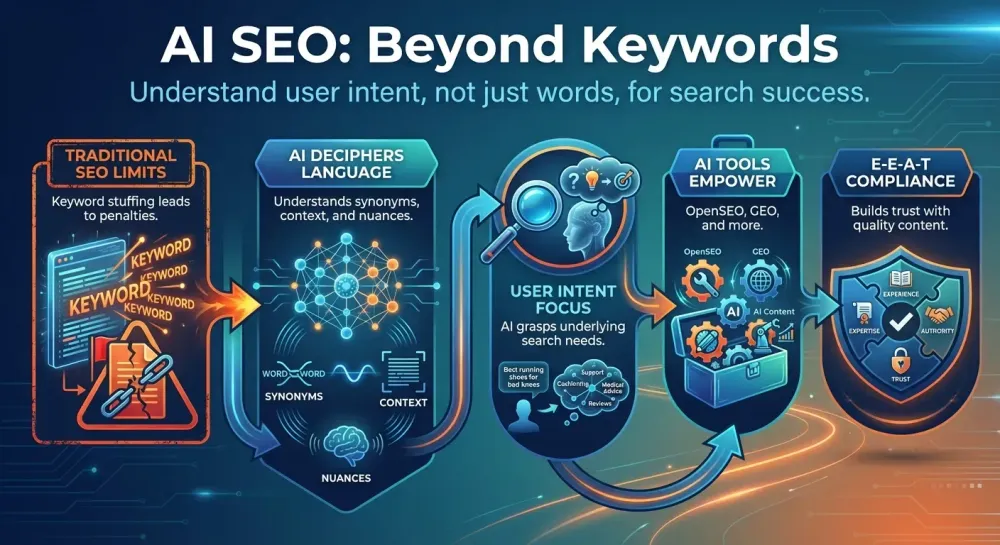
In 2025, 'AI SEO' encompasses a range of capabilities, from intelligent keyword research and AI-driven content generation to technical audits and SERP analysis. Tools like OpenSEO, for instance, focus on the entire content lifecycle, integrating AI for keyword analysis, deep article generation, and detailed SEO scoring. This signifies a shift towards AI assisting in creating content that is both search engine-friendly and user-centric, often with features like GEO (Generative Engine Optimization) for emerging AI search engines.
Setting Realistic Expectations for AI in SEO
While AI can significantly scale SEO efforts, it's not a magic bullet. The strength of AI SEO tools lies in augmenting human expertise. AI excels at data analysis and pattern recognition, but strategic planning, nuanced understanding of brand voice, and ethical considerations remain human domains. For example, while AI can generate structured content, a human SEO professional must ensure it aligns with overall marketing goals and E-E-A-T principles.
| AI SEO Tool Category | Core Functionality | Human Oversight Required |
|---|---|---|
| Content Generation | Draft creation | Fact-checking, tone, strategy |
| Keyword Research | Data analysis | Strategic selection, intent mapping |
| Technical Audits | Issue identification | Prioritization, implementation |
Core AI Capabilities That Are Actually Moving the Needle
The landscape of search engine optimization is rapidly evolving, and at its forefront are AI SEO tools that are fundamentally changing how we approach digital marketing. These advanced solutions are moving beyond basic functionalities to offer sophisticated capabilities that drive tangible results. From uncovering nuanced user intent to predicting future search trends, AI is empowering marketers with unprecedented insights and automation.
Intelligent Keyword Research: Beyond Basic Volume
Modern AI SEO tools are revolutionizing keyword research by digging deeper than simple search volume metrics. Tools like OpenSEO, for instance, offer powerful analysis to identify long-tail keywords that not only have lower competition but also signal specific user intent. This allows content creators to target niche audiences with precision, ensuring that each piece of content resonates with a highly relevant audience. By understanding the underlying intent behind search queries, marketers can develop content that directly addresses user needs, leading to higher engagement and better conversion rates. This shift from broad targeting to intent-driven keyword discovery is a critical advancement.
AI-Powered Content Generation: Structure, Depth, and Readability
The ability of AI to generate content has matured significantly, with tools now focusing on structure, depth, and readability, adhering to SEO best practices. OpenSEO's AI deep article generation, for example, automatically structures content with H-tags and bolding, enhancing both user experience and search engine crawlability. This ensures that the generated content is not only comprehensive and well-organized but also highly readable. By training AI models on vast datasets of high-ranking content, these tools can naturally incorporate elements that search engines favor, such as logical flow, detailed explanations, and adherence to E-E-A-T principles, making content creation more efficient and effective.
Automated SEO Audits and Optimization Suggestions
Technical SEO can be a complex and time-consuming aspect of optimization. AI-powered AI SEO tools excel at automating these audits, identifying technical issues that might hinder a website's performance. They go a step further by providing actionable optimization suggestions, guiding users on how to rectify problems. This proactive approach ensures that websites are technically sound, improving crawlability, indexability, and overall search engine rankings. The efficiency gained from automated audits frees up SEO professionals to focus on strategic initiatives rather than manual troubleshooting.
Predictive Analytics and Trend Forecasting
Perhaps one of the most impactful applications of AI in SEO is its ability to forecast search trends. By analyzing vast amounts of data, AI can identify emerging patterns and predict future shifts in search behavior. This allows businesses to adapt their strategies proactively, ensuring they are well-positioned to capture new opportunities. Tools that offer predictive analytics enable marketers to stay ahead of the curve, developing content and campaigns that align with upcoming popular topics and evolving user interests, thus maintaining a competitive edge in the dynamic digital landscape.
The integration of these AI capabilities marks a significant leap forward for SEO professionals and businesses alike. As evidenced by the growing array of AI SEO tools like Semrush, Surfer SEO, and HubSpot AI Tools, the focus is on delivering actionable insights and automating complex tasks. This allows for more strategic content creation, robust technical optimization, and a forward-looking approach to search engine marketing.
Beyond Content: AI's Impact on the Entire SEO Workflow
The evolution of search engine optimization is increasingly intertwined with artificial intelligence. Beyond merely generating content, AI SEO tools are now profoundly reshaping the entire SEO workflow, from foundational technical aspects to sophisticated performance analysis. This shift empowers marketers to achieve greater efficiency and effectiveness across all stages of their optimization efforts.
Streamlining Technical SEO with AI
AI is proving invaluable in optimizing the often complex and time-consuming aspects of technical SEO. Tools can now automate site speed optimization by identifying and suggesting fixes for bottlenecks, ensuring faster loading times crucial for user experience and rankings. AI also plays a significant role in enhancing crawlability and indexability, helping to uncover issues that might prevent search engines from accessing or understanding website content. This proactive approach minimizes technical friction, allowing content to be discovered and ranked more readily.
AI in Link Building and Outreach
The strategic pursuit of backlinks is another area where AI is making a substantial impact. AI-powered solutions can analyze vast datasets to identify high-quality backlink opportunities that align with a website's niche and authority. Furthermore, AI can personalize outreach messages, moving beyond generic templates to craft compelling communications that resonate with potential link partners, thereby increasing the likelihood of successful collaborations and building a stronger backlink profile.
Personalization and User Experience Enhancement
AI's ability to analyze user behavior and preferences is revolutionizing personalization. By understanding individual user journeys, AI can help tailor content dynamically, presenting the most relevant information and offers to each visitor. This not only enhances user engagement but also improves metrics like dwell time and conversion rates, signaling to search engines that the site provides a superior user experience.
Measuring ROI: How AI Impacts Performance Tracking
The impact of AI extends to the crucial domain of performance measurement. AI-driven analytics provide more sophisticated metrics, offering deeper insights into campaign effectiveness and user interactions. This advanced tracking allows for better attribution of success, helping SEO professionals to clearly demonstrate the return on investment of their strategies. By providing clearer data on what works, AI enables continuous refinement and optimization of SEO efforts.
Spotlight on Effective AI SEO Tools: What's Working Now
The landscape of search engine optimization is rapidly evolving, with AI SEO tools becoming indispensable for navigating algorithmic complexities and maximizing online visibility. These intelligent solutions are no longer a niche offering but a core component of effective digital strategy, automating tasks and providing data-driven insights that were once the domain of seasoned experts.
The Rise of Integrated SEO Platforms
Leading the charge are integrated SEO platforms that offer a comprehensive suite of AI-powered features. Tools like Semrush, Surfer SEO, and HubSpot AI Tools are streamlining workflows by combining keyword research, content optimization, competitor analysis, and technical audits under one umbrella. This holistic approach allows marketers to manage their entire SEO strategy from a single dashboard, leveraging AI to identify opportunities and address potential issues efficiently.
Specialized AI Tools for Content Creation and Optimization
Beyond broad platforms, specialized AI SEO tools are excelling in specific areas. For content creation, AI tools can generate drafts, suggest topic clusters, and optimize existing content for readability and search engine intent. These tools often provide an SEO scoring system, offering concrete recommendations for improvement, such as keyword density, heading structure, and content depth. This focus on data-driven optimization ensures that content not only ranks well but also resonates with users.
Understanding the 'GEO' Advantage: Optimizing for Generative AI
A significant new frontier is Generative Engine Optimization (GEO). As generative AI models like ChatGPT and Gemini become integral to how users find information, optimizing content for these engines is crucial. Tools like OpenSEO (open-seo.top) are at the forefront, specifically designed to enhance content for AI recommendations. By focusing on semantic relevance and structured data, GEO aims to ensure your brand is discoverable within the burgeoning ecosystem of AI-powered search, securing future traffic potential.
Seamless Integrations: WordPress and Beyond
The practical application of AI SEO tools is amplified by seamless integrations. For instance, OpenSEO's deep WordPress integration allows for the automated publishing of AI-generated content directly to your site, complete with optimized settings for categories and tags. This eliminates manual copy-pasting and scales content production significantly. This level of integration, extending beyond WordPress to other CMS and marketing platforms, is a key differentiator, making AI SEO accessible and actionable for a wider range of users.
| Feature | Semrush | Surfer SEO | HubSpot AI Tools | OpenSEO |
|---|---|---|---|---|
| Core Focus | All-in-one SEO | Content Optimization | CRM & Marketing | Content & GEO |
| AI Content Gen. | Yes (limited) | Yes | Yes | Yes (advanced) |
| GEO Optimization | Emerging | Emerging | Limited | Yes (core feature) |
| WordPress Integration | Via plugins | Via plugins | Via integrations | Direct & Seamless |
| Keyword Research | Robust | Strong | Integrated | Strong |
Choosing the Right AI SEO Tool for Your Needs
Selecting the optimal AI SEO tool is crucial for maximizing your online visibility. The market offers a diverse range of solutions, from content generation powerhouses like OpenSEO to comprehensive suites. Understanding your specific requirements will guide you to the best fit.
Assessing Your Specific SEO Goals
Consider whether your primary need is generating high-quality, SEO-optimized content, delving into technical SEO audits, or mastering keyword research. Tools like OpenSEO excel in content creation, offering AI-driven article generation and SEO scoring, making it ideal for those prioritizing content volume and quality.
Budget Considerations and ROI
Balancing the cost of AI SEO tools with their potential return on investment is paramount. While some advanced platforms offer extensive features, simpler, more focused tools might provide better value for smaller budgets. Evaluate the efficiency gains and traffic improvements each tool promises against its price point.
User Experience and Learning Curve
The importance of intuitive interfaces and accessible training cannot be overstated for effective tool adoption. A steep learning curve can hinder productivity. OpenSEO's seamless WordPress integration, for instance, aims to streamline the user experience, allowing for direct content publishing.
Data Privacy and Security with AI Tools
Addressing concerns about data handling and privacy when using AI-powered services is essential. Ensure any AI SEO tool you consider has clear data protection policies and complies with relevant regulations to safeguard your sensitive information.
FAQ (Frequently Asked Questions)
Q1: How can AI SEO tools help improve my website's ranking in 2025?
A1: AI SEO tools in 2025 can significantly improve rankings by automating complex tasks like keyword research, identifying user intent, optimizing content for readability and search engine algorithms, and suggesting technical SEO improvements. They also help in predicting trends and personalizing user experiences, all contributing to better search engine performance.
Q2: Are AI SEO tools capable of generating complete, high-quality articles?
A2: Yes, many advanced AI SEO tools can generate complete articles. However, the quality and effectiveness depend on the tool's sophistication. The best tools, like OpenSEO, focus on generating structured, in-depth content that adheres to SEO best practices and E-E-A-T principles, though human review for factual accuracy and brand voice is still recommended.
Q3: What is Generative Engine Optimization (GEO) and why is it important?
A3: Generative Engine Optimization (GEO) refers to the practice of optimizing content to be discoverable and favored by generative AI models and AI-powered search engines. As AI becomes a primary source of information, GEO ensures your content is semantically relevant and structured in a way that AI can easily understand and recommend, securing future traffic potential.
Q4: Can AI SEO tools replace human SEO professionals?
A4: No, AI SEO tools are designed to augment, not replace, human SEO professionals. AI excels at data analysis, automation, and pattern recognition, but strategic thinking, creative problem-solving, understanding nuanced brand voice, and ethical considerations remain critical human domains.
Conclusion
As we navigate the evolving landscape of search engine optimization in 2025, the era of theoretical AI SEO tools has firmly given way to practical, results-driven applications. The initial hype surrounding artificial intelligence in SEO has matured, revealing a powerful suite of AI SEO tools that, when understood and strategically implemented, can deliver tangible and sustainable growth. From pinpointing intelligent keyword opportunities that resonate with your audience to generating high-quality, AI-assisted content that captivates search engines, the true value lies in tools that offer genuine, measurable impact.
The key takeaway is to move beyond the buzzwords and identify AI SEO tools that seamlessly integrate into your existing workflow, like the comprehensive solutions exemplified by OpenSEO. These aren't just futuristic gadgets; they are essential allies in your quest for higher rankings and increased organic traffic. To truly harness the power of AI, focus on platforms that streamline your processes and align directly with your overarching business objectives.
Therefore, our actionable recommendation is clear: critically evaluate the AI SEO tools you're considering. Prioritize those that demonstrate a proven ability to enhance efficiency, improve content quality, and drive demonstrable SEO performance. Don't be afraid to experiment, but always maintain a strategic human oversight. AI is an extraordinary assistant, but your expertise in guiding its application remains paramount.
Embrace the practical power of AI today! Start by identifying one area of your SEO strategy that could benefit most from intelligent automation and explore the AI SEO tools that can help you achieve it. Your journey to sustainable traffic growth and digital dominance begins now.