Best SEO Tool for Business: Your 2025 Guide
This comprehensive guide is designed to equip you with the knowledge to make a strategic, results-driven decision. We'll delve into must-have features, explore the exciting impact of emerging AI technologies on SEO, and cover practical considerations. This will help you cut through the noise and select a solution perfectly tailored to your business goals and budget.
Understanding Your Business Needs: The Foundation of SEO Tool Selection
Selecting the best SEO tool hinges on a clear understanding of your unique business objectives and operational realities. Without this foundational insight, even the most powerful tools will fall short of delivering tangible results. Consider tools that can streamline content marketing and offer AI-driven insights.
Define Your SEO Goals
What are you trying to achieve with SEO? Are you aiming for increased website traffic, higher lead generation, or enhanced brand awareness? For instance, if lead generation is paramount, tools that excel in keyword research for high-intent searches and landing page optimization will be crucial. Clearly defined goals will help you prioritize features and assess the effectiveness of any tool you choose.
Assess Your Budget and Resources
How much can you realistically invest in SEO tools? Options range from free tools to comprehensive paid platforms. It's important to balance the cost with the features offered and the potential return on investment. Consider the long-term value and how a tool can scale with your business growth.
Identify Your Technical Expertise Level
Do you have an in-house SEO expert, or will you rely on user-friendly interfaces? The complexity of a tool's interface and the depth of its analytical capabilities should align with your team's technical proficiency. Some tools offer extensive data but require specialized knowledge to interpret, while others provide more guided insights for less technical users.
Consider Your Content Strategy
How does your content creation process currently work, and where can a tool assist? If content is a cornerstone of your marketing, look for tools that can aid in keyword ideation, content generation, and optimization. This includes features that help identify content gaps, suggest relevant topics, and improve the overall SEO performance of your articles.
Key Features to Look for in an SEO Tool
Selecting the right SEO tool is paramount for any digital marketing strategy aiming for organic growth. The best SEO tool will empower you with actionable insights and streamline complex tasks. When evaluating options, focus on a comprehensive suite of features that cover keyword research, on-page optimization, technical auditing, content creation, link building, and rank tracking.
Powerful Keyword Research Capabilities
Effective keyword research forms the bedrock of any successful SEO campaign. Look for tools that help you identify high-volume, low-competition keywords, with a particular emphasis on long-tail variations. These are crucial for attracting highly targeted traffic. Advanced tools can also analyze competitor keywords and reveal valuable SERP features, giving you a competitive edge. Tools that offer insights into user intent and emerging search trends are particularly valuable.
Essential On-Page Optimization Tools
Once you've identified your target keywords, optimizing your content is the next critical step. Your chosen SEO tool should offer features to fine-tune on-page elements. This includes tools for optimizing meta titles, descriptions, and headings (H1, H2, etc.) to ensure they are relevant, compelling, and keyword-rich. Features that provide real-time feedback on content optimization are highly beneficial.
Comprehensive Technical SEO Auditing
Technical SEO issues can significantly hinder your website's visibility. A robust SEO tool should provide comprehensive technical auditing capabilities. This means identifying problems like crawl errors, slow site speed, mobile-friendliness issues, broken links, and duplicate content. Addressing these technical challenges is vital for search engine crawlers to effectively index your site and for providing a positive user experience.
Integrated Content Creation and Optimization
The best SEO tools often integrate content creation and optimization features. AI-powered tools can assist in generating content outlines or even full drafts, saving considerable time. More importantly, they should offer optimization scoring, analyzing content for readability, keyword density, and overall SEO effectiveness. This ensures your published content is not only engaging for users but also favored by search engines. Tools that offer AI-driven content generation with integrated SEO scoring can significantly boost efficiency.
Strategic Link Building and Backlink Analysis
A strong backlink profile is a significant ranking factor. Your SEO tool should allow you to assess your current backlink profile, identify toxic links that might be harming your rankings, and analyze your competitors' backlink strategies. Understanding who links to your competitors and why can provide valuable insights for your own link-building efforts. Features that help identify high-quality backlink opportunities are invaluable.
Reliable Rank Tracking and Reporting
Finally, to gauge the effectiveness of your SEO efforts, consistent rank tracking and insightful reporting are essential. The best SEO tool will allow you to monitor your search engine rankings for target keywords across different locations and devices. Comprehensive reporting features will then translate this data into actionable insights, highlighting what's working and where improvements are needed. Customizable reports that can be easily shared with stakeholders are a significant advantage.
Exploring Different Categories of SEO Tools
Navigating the vast landscape of SEO tools can be daunting, but understanding their distinct categories helps in selecting the best SEO tool for your specific needs. From comprehensive suites to highly specialized applications, each category offers unique benefits for improving your website's search engine performance.
All-in-One SEO Suites
These platforms provide a broad spectrum of functionalities, covering keyword research, site audits, competitor analysis, and content optimization. The primary benefit is their comprehensive nature, offering a centralized solution for multiple SEO tasks. However, their extensive features can also be overwhelming for beginners, and their subscription costs can be substantial, making them a significant investment. They are ideal for businesses that require a holistic approach to SEO.
Specialized Keyword Research Tools
For those who want to dive deep into search query analysis, tools focused solely on keyword discovery are invaluable. They excel at unearthing high-potential, long-tail keywords that might be missed by broader suites. While they offer unparalleled depth in keyword analysis, they typically lack the broader SEO features found in all-in-one solutions, requiring integration with other tools for a complete SEO strategy.
Content Optimization Platforms
These platforms are designed to help you create and refine content that resonates with both users and search engines. They often provide suggestions for keyword integration, readability improvements, and structural enhancements. AI-powered platforms can assist in generating content outlines or even full drafts, saving considerable time. Features that offer SEO scoring and directly integrate with content management systems are particularly beneficial.
Technical SEO Crawlers
Technical SEO crawlers are essential for identifying and diagnosing website health issues. They meticulously scan your site to find broken links, duplicate content, crawl errors, and other technical impediments that can harm your search rankings. Their strength lies in their in-depth technical analysis, but they require a good understanding of technical SEO principles to interpret the data effectively.
Link Building and Outreach Tools
Building a strong backlink profile is crucial for SEO authority. These tools assist in identifying potential backlink opportunities by analyzing competitor backlinks and suggesting relevant websites for outreach. They also often include features to manage outreach campaigns, track responses, and monitor link acquisition. While vital for authority building, success heavily relies on the quality of outreach and the value of the content being promoted.
AI-Powered SEO: The Future of Content Creation and Optimization
The landscape of search engine optimization is undergoing a profound transformation, driven by the rapid advancements in Artificial Intelligence. AI is no longer a futuristic concept but a present-day reality that is reshaping how we approach content creation and optimization, promising greater efficiency and effectiveness in achieving higher search rankings.
How AI is Revolutionizing Keyword Research
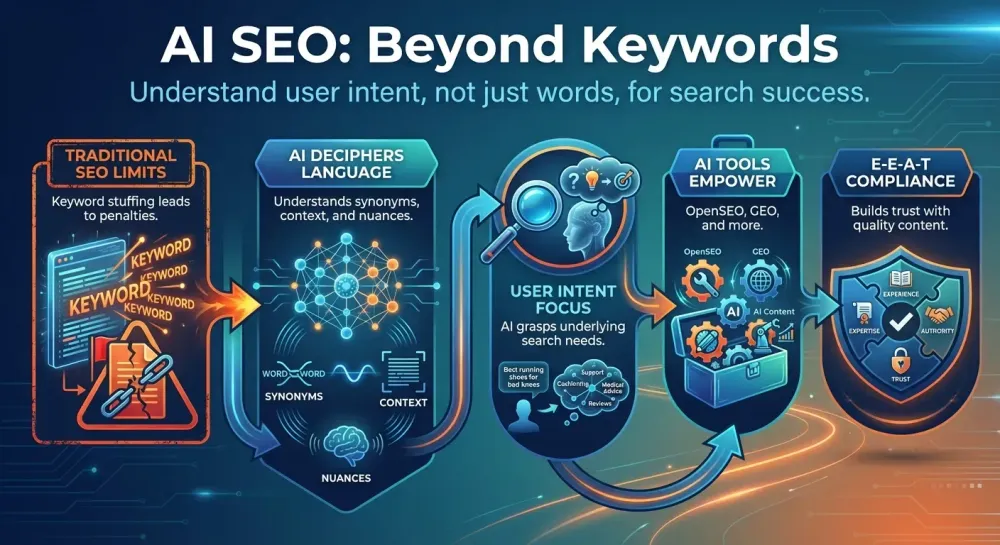
AI's ability to process vast amounts of data allows it to uncover nuanced keyword opportunities and predict emerging trends with remarkable accuracy. Tools powered by AI can identify long-tail keywords that human analysis might miss, understanding user intent and semantic relationships more deeply. This ensures content is not just relevant but also strategically positioned to capture niche search traffic, making the pursuit of the best SEO tool more data-driven than ever.
AI for Generating High-Quality, SEO-Optimized Content
The advent of AI-driven content generators has democratized the creation of high-quality, SEO-friendly articles. These tools can produce structured, readable, and engaging content that adheres to SEO best practices, including proper heading structures, keyword integration, and internal linking. For instance, platforms that utilize AI to generate comprehensive articles based on user input can ensure each piece is optimized from its inception.
Leveraging AI for Content Scoring and Improvement
Beyond creation, AI offers powerful capabilities for content analysis and refinement. AI-driven feedback loops provide detailed scoring based on various SEO metrics, such as keyword density, readability, and content depth. This allows content creators to iterate and improve their work, transforming good content into exceptional, search-engine-ready material.
Understanding GEO (Generative Engine Optimization)
A significant development is the emergence of GEO, or Generative Engine Optimization. This concept focuses on optimizing content not just for traditional search engines but also for generative AI models. By structuring content semantically and ensuring topical authority, brands can position themselves to be favored by future AI-powered search interfaces, a crucial aspect for staying ahead of the curve.
The Role of AI in Future Search Engines
The future of search engines is inextricably linked with AI. As algorithms become more sophisticated, the ability of AI to understand, generate, and optimize content will become paramount. Embracing AI-powered SEO strategies today is essential for businesses and creators to adapt and thrive in this evolving digital ecosystem.
Evaluating User Experience, Integration, and Support
When considering the best SEO tool, evaluating user experience, seamless integration, and robust support is paramount for maximizing efficiency and achieving optimal results. Tools that prioritize these aspects can significantly enhance your workflow and overall SEO success.
Ease of Use and Learning Curve
A tool's interface should be intuitive, allowing users to quickly find and utilize its features. A steep learning curve can lead to underutilization of the tool's capabilities and frustration for your team. Prioritize tools that offer clear navigation and straightforward workflows.
Integration with Existing Workflows (e.g., WordPress)
Seamless integration with your existing technology stack is crucial for efficiency. For example, if you use WordPress, a tool that can directly publish content or sync data can save significant time and reduce manual errors. Consider how well a tool fits into your current operational processes.
Customer Support and Community
Responsive customer service and comprehensive support resources are vital. Look for tools that offer detailed documentation, tutorials, and accessible support channels. A strong community forum can also be a valuable resource for troubleshooting and sharing best practices.
Security and Data Privacy Considerations
Ensuring how your data is protected and used is a critical consideration. Tools should clearly outline their data privacy policies and demonstrate a commitment to safeguarding your sensitive information.
Reliability and Uptime
The reliability and uptime of any best SEO tool are essential. Consistent availability ensures that content creation and publishing workflows are never interrupted, maintaining momentum in SEO efforts. Downtime can lead to missed opportunities and negatively impact your marketing schedule.
Making Your Final Decision and Implementing Your Chosen Tool
Choosing the best SEO tool involves careful consideration and strategic implementation. Leveraging free trials allows you to directly test features relevant to your specific business needs, ensuring the tool aligns with your goals.
Trial Periods and Demos
Utilize free trials to thoroughly evaluate an SEO tool's capabilities. During the trial, focus on the features that are most critical to your business objectives. Test the keyword research tools, content optimization suggestions, and reporting functionalities to see if they meet your expectations.
Comparing Pricing Models
Understanding subscription tiers is crucial for value. Different plans offer varying levels of access to features and support. Compare not just the monthly cost but also what is included in each tier to ensure you are getting the best return on your investment. Look for scalability to accommodate future growth.
Phased Implementation Strategy
Begin with core functionalities. If a tool offers a wide range of features, start by mastering the most essential ones. For example, focus on keyword research and on-page optimization first, then gradually integrate more advanced features like competitor analysis or link building as your team becomes more comfortable.
Measuring ROI and Continuous Improvement
Track key metrics to assess the impact of your chosen SEO tool on business goals. Monitor traffic increases, keyword ranking improvements, and conversion rates to gauge the return on investment. Regularly review your SEO strategy and how your chosen tool contributes to it, making adjustments as needed.
FAQ (Frequently Asked Questions)
Q1: What are the most important features to look for in an SEO tool for a small business?
A1: For a small business, prioritize tools that offer strong keyword research capabilities, user-friendly on-page optimization suggestions, and reliable rank tracking. Features that help identify local SEO opportunities and provide actionable insights without requiring deep technical expertise are also highly valuable.
Q2: How does AI impact the selection of the best SEO tool in 2025?
A2: AI is revolutionizing SEO by enhancing keyword research with predictive analytics, automating content creation and optimization, and offering deeper insights into user intent. The best SEO tools in 2025 will leverage AI to provide more efficient, data-driven, and personalized SEO strategies.
Q3: Is it better to choose an all-in-one SEO suite or specialized tools?
A3: The choice depends on your business needs and budget. All-in-one suites offer a comprehensive solution for multiple SEO tasks, which can be convenient and cost-effective for many. However, if you have very specific needs in an area like keyword research or technical auditing, specialized tools might offer greater depth and precision.
Q4: How can I ensure an SEO tool integrates well with my existing website and CMS?
A4: Look for tools that explicitly mention integrations with popular Content Management Systems (CMS) like WordPress, Shopify, or Squarespace. Many tools offer plugins or direct API connections. Always check the tool's documentation or contact their support team to confirm compatibility with your specific setup.
Conclusion
In conclusion, navigating the landscape of SEO tools in 2025 to find the best SEO tool for your business is not merely a technical task, but a crucial strategic decision that will shape your digital trajectory. By meticulously assessing your specific business objectives, financial constraints, and in-house expertise, you can pinpoint solutions that truly resonate. Prioritizing core functionalities such as robust keyword research, insightful content optimization, and thorough technical audits, while enthusiastically embracing the transformative potential of AI-powered features, will lay a solid foundation for enduring growth.
Remember, the journey doesn't end with selection. Actively leverage free trial periods to experience tools firsthand, diligently compare pricing structures to ensure optimal value, and always place a premium on user-friendly interfaces and responsive customer support. The best SEO tool is more than just a ranking booster; it's a catalyst for creating compelling, audience-centric content that drives meaningful traffic, converts leads, and ultimately fuels your long-term business success.
Don't delay your digital ascent.Take the first step today:Begin your research, explore your options, and invest wisely in the SEO tool that will empower your business to dominate search results and thrive in the dynamic digital marketplace of 2025 and beyond!