Master Keyword Research with Free SEO Tools Effectively
Understanding the Power of Keyword Research in SEO
Keyword research is the cornerstone of any successful SEO strategy, acting as the compass that guides your content creation and optimization efforts. It's not merely about identifying popular search terms; it's about delving into the minds of your target audience to understand their needs, questions, and pain points. By uncovering the precise language users employ when searching for solutions, you can craft content that resonates deeply, driving relevant traffic and significantly improving conversion rates.
Why Keyword Research is the Bedrock of Your SEO Strategy
Effective keyword research allows you to move beyond guesswork and build a data-driven approach. Tools like Google Search Console (GSC) are invaluable, offering insights into how users find your site, the keywords they use, and your average search positions. GSC, a free SEO tool, helps track keyword performance, impressions, and clicks, providing critical data for informed decision-making. This understanding is crucial for identifying opportunities, such as free SEO tools that can aid in this process, and for ensuring your content aligns perfectly with user intent.
The Shifting Landscape: From Broad Searches to Intent-Driven Queries
The search landscape is constantly evolving, with users becoming more specific in their queries. Identifying long-tail keywords—longer, more specific phrases—is paramount for niche targeting and reducing competition. These detailed queries often indicate higher purchase intent, leading to better conversion rates. Furthermore, mapping keywords to different stages of the buyer's journey, from initial awareness to decision-making, ensures your content meets users exactly where they are. For instance, understanding that a user searching for "best free SEO tools for small businesses" has a different intent than someone searching "what is SEO" is vital for tailoring your approach and maximizing your SEO impact.
Defining Your Target Audience and Their Search Behavior
Understanding your target audience's search behavior is critical for effective keyword research. This involves identifying their pain points, questions, and the language they use when seeking solutions. By analyzing this, you can uncover relevant keywords that directly address their needs.
Practical Implications:
Actionable Tips:
1. Create Audience Personas: Develop detailed profiles of your ideal customers, including their demographics, interests, and online search habits.
2. Analyze Competitor Content: Examine the language and topics your competitors use in their highly-ranked content to understand what resonates with your shared audience.
Leveraging Free SEO Tools for Keyword Discovery
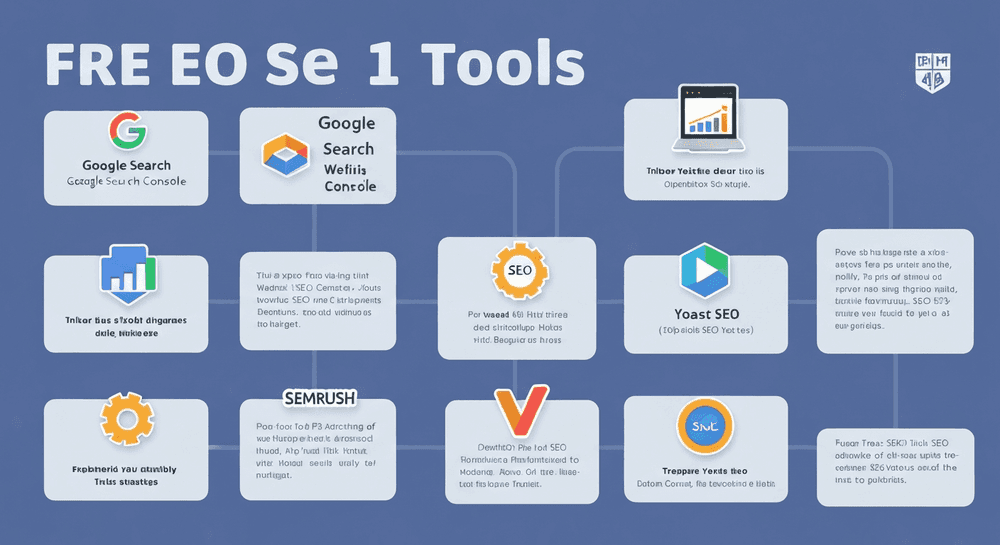
Unlocking effective SEO often begins with robust keyword research, and fortunately, a wealth of powerful, free SEO tools are available to guide your strategy. These resources can provide invaluable insights into what your target audience is searching for, helping you create content that resonates and ranks.
The Essential Free Toolkit: Google Search Console and Google Analytics
Google Search Console (GSC) is an indispensable, free tool for understanding your current search performance. It reveals precisely which keywords users are already employing to find your website, offering insights into impressions, clicks, and average positions. Complementing GSC, Google Analytics provides a deep dive into user behavior on your site. By analyzing popular content themes and how users interact with your pages, you can identify content gaps and popular topics to inform your keyword strategy.
Exploring Google Keyword Planner: A Foundational Free Tool
Google Keyword Planner, while primarily designed for Google Ads, offers significant value for organic SEO. Its strengths lie in providing search volume estimates and competition levels for various keywords. However, it's crucial to remember that Keyword Planner's data is often presented within an advertising context, so organic competition insights might require careful interpretation. Despite these caveats, it remains a foundational free tool for initial keyword exploration.
Beyond Google: Discovering Other Valuable Free Keyword Research Tools
The landscape of free SEO tools extends beyond Google's offerings. Tools like AnswerThePublic excel at uncovering question-based keyword ideas, revealing the specific queries people are typing into search engines. This is invaluable for creating comprehensive content that directly addresses user intent. Furthermore, browser extensions can offer quick keyword analysis directly on search results pages, providing on-the-fly insights. For instance, OpenSEO's AI-powered keyword research capabilities help in identifying high-volume, low-competition long-tail keywords, ensuring content is built on a solid foundation of traffic potential.
Advanced Keyword Research Techniques with Free Tools
Unlocking search engine visibility often starts with a deep understanding of keywords. While paid tools offer extensive features, a strategic approach using free SEO tools can unearth valuable opportunities. This section delves into advanced techniques for discovering niche keywords, analyzing competitors, and understanding user intent, all without a significant financial outlay.
Unearthing Long-Tail Keywords and Niche Opportunities
Finding high-intent, low-competition long-tail keywords is crucial for attracting targeted traffic. These longer, more specific phrases often indicate a user closer to making a decision. Tools like Google Search itself, through its "Searches related to..." feature and autocomplete suggestions, can be invaluable. Furthermore, platforms like OpenSEO, while an AI SEO growth engine, offer built-in keyword analysis to identify such opportunities. By inputting broad topics, OpenSEO helps uncover specific, less saturated keyword phrases that can drive qualified leads.
Analyzing Competitor Keywords (Ethically and Effectively)
Understanding what keywords your competitors are ranking for is a cornerstone of effective SEO. While direct access to competitor data is limited with free tools, you can infer this information. Tools like Google Search Console (GSC), a free service from Google, allows you to monitor your own site's performance, including the queries that drive impressions and clicks. By observing your competitors' top-ranking content and cross-referencing it with your own GSC data, you can identify potential keyword gaps. Analyzing the search results pages (SERPs) directly for your target topics will also reveal which sites are dominating and for what terms.
Understanding Search Intent: Informational, Navigational, Transactional, and Commercial
Matching your content to the user's search intent is paramount for engagement and conversions.
By using free SEO tools and analyzing the SERPs, you can infer intent. For instance, informational queries often yield blog posts and guides, while transactional queries show product pages and e-commerce listings. OpenSEO's AI-driven approach also helps in generating content that aligns with these intents, ensuring your articles are relevant and valuable.
Integrating AI-Powered Solutions for Enhanced Keyword Research: The OpenSEO Advantage
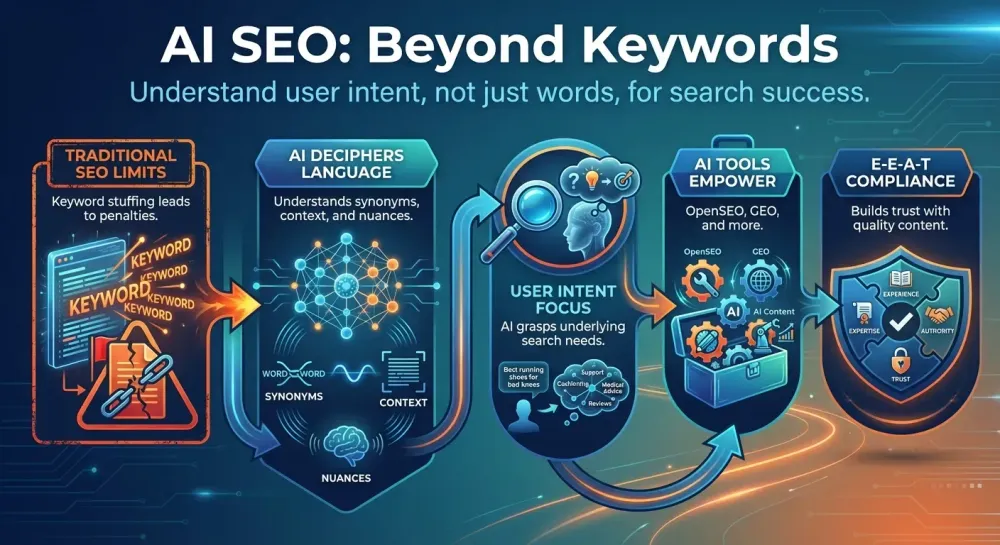
In today's dynamic digital landscape, traditional methods of keyword research often fall short, leaving content creators guessing about user intent and market demand. The limitations of basic free SEO tools are particularly apparent when trying to navigate the complexities of modern search algorithms. This is where AI-powered solutions like OpenSEO step in, revolutionizing content strategy by providing intelligent insights and predictive capabilities. OpenSEO bridges the gap left by rudimentary tools, offering a sophisticated approach to uncovering valuable keywords that drive organic traffic.
The Evolution of Keyword Research: AI's Role in Content Strategy
The era of simply relying on search volume and competition metrics is over. AI has transformed keyword research from a manual, often speculative, process into a data-driven science. OpenSEO leverages advanced AI to analyze vast datasets, identify emerging trends, and understand nuanced user behavior. This allows content strategists to move beyond guesswork and build a solid foundation for their content, ensuring it resonates with target audiences and aligns with search engine priorities.
OpenSEO's Smart Keyword Research: Beyond Basic Volume and Competition
OpenSEO's core function is intelligent keyword research designed to maximize content marketing ROI. It goes beyond the superficial data offered by many free SEO tools by analyzing not just volume and competition, but also user intent, topical relevance, and predictive trends. This deep dive ensures that the keywords identified have genuine potential to attract qualified traffic, not just clicks.
How OpenSEO Identifies High-Search Volume, Low-Competition Keywords
OpenSEO's AI meticulously analyzes search patterns, competitor strategies, and semantic relationships to pinpoint lucrative keyword opportunities. It identifies long-tail keywords that are often overlooked by basic tools, yet possess high search intent and lower competition. This precision allows content creators to target underserved niches effectively. Furthermore, OpenSEO's unique GEO (Generative Engine Optimization) feature is crucial for preparing content for the future of search. By optimizing content structure and semantic relevance for generative AI engines like ChatGPT and Gemini, OpenSEO ensures your content is discoverable not only by traditional search engines but also by emerging AI-powered search interfaces, securing your brand's visibility in the evolving search ecosystem.
GEO (Generative Engine Optimization): Preparing for the Future of Search
Generative Engine Optimization (GEO) is a forward-thinking approach to content creation that anticipates the rise of AI-driven search. It focuses on structuring and semantically optimizing content so it can be easily understood and utilized by AI models.
Practical Implications:
Actionable Tips:
1. Focus on Semantic Relevance: Use clear, concise language and ensure your content thoroughly covers a topic from multiple angles, providing depth that AI can process.
2. Structure for AI Consumption: Employ clear headings, bullet points, and logical flow to make information easily digestible for AI models.
From Keywords to Content: Optimizing and Publishing with Free Tools and AI Assistance
Transitioning from keyword research to published content involves strategic optimization and efficient workflows. Leveraging free SEO tools alongside AI assistance can significantly streamline this process, ensuring your content not only ranks well but also resonates with your audience. This approach focuses on creating high-quality, search-engine-friendly articles that meet E-E-A-T standards.
Structuring Your Content for SEO and Readability
Effective on-page SEO begins with a solid structure. Utilizing headings (H1, H2, H3) logically breaks down your content, making it easier for both search engines and readers to digest. Crafting compelling meta descriptions encourages click-throughs from search results. Maintaining an appropriate keyword density, without keyword stuffing, is crucial for relevance. Tools like Google Search Console, a free SEO tool, can help monitor how your pages perform for specific keywords, offering insights into impressions and average positions, which can inform your content structure and keyword usage.
Utilizing AI for Deep Article Generation with SEO Best Practices
AI has revolutionized content creation, enabling the generation of comprehensive articles with built-in SEO considerations. Platforms like OpenSEO leverage advanced AI models trained on high-ranking content. By inputting a topic or primary keyword, AI can produce well-structured articles complete with appropriate heading tags and bolded key phrases, enhancing readability. This AI-driven generation adheres to SEO best practices, ensuring the foundational elements for search engine visibility are in place from the outset.
OpenSEO's SEO Scoring System: Ensuring Content Excellence
Before publication, it's vital to ensure content quality and SEO effectiveness. OpenSEO offers a unique article scoring system that evaluates content from multiple angles, including keyword density, readability, and content depth. This scoring mechanism provides actionable feedback, allowing for fine-tuning to maximize optimization. This ensures that content is not only comprehensive but also aligned with search engine expectations and user needs, contributing to authority and trustworthiness, key components of E-E-A-T.
Seamless Publishing: WordPress Integration and Automation
The final step, publishing, can be significantly automated. OpenSEO's seamless WordPress integration allows for direct pushing of generated articles to your website. This feature supports the automatic setting of featured images, categories, and tags, transforming a manual process into an efficient, automated workflow. This not only saves time but also enables content creators to scale their publishing efforts effectively, ensuring consistent delivery of optimized content.
FAQ (Frequently Asked Questions)
Q1: What are the most essential free SEO tools for beginners?
A1: For beginners, Google Search Console and Google Analytics are indispensable. They provide foundational data on how users find your site and interact with it. Google Keyword Planner is also crucial for initial keyword research, and tools like AnswerThePublic help generate topic ideas based on user questions.
Q2: Can AI tools like OpenSEO replace traditional keyword research methods entirely?
A2: AI tools like OpenSEO enhance and accelerate keyword research rather than replacing it entirely. They provide deeper insights, identify complex patterns, and predict trends that manual methods might miss. However, a human understanding of your niche, audience, and business goals remains vital for strategic direction.
Q3: How can I find long-tail keywords using only free tools?
A3: You can find long-tail keywords by using Google's autocomplete suggestions and "Searches related to" feature. Tools like AnswerThePublic can reveal question-based long-tail queries. Additionally, by analyzing competitor content and using keyword suggestion features within platforms like OpenSEO, you can uncover these valuable, specific phrases.
Q4: Is it possible to analyze competitor keywords effectively without paid tools?
A4: Yes, it's possible to gain insights into competitor keywords by analyzing their top-ranking content on search results pages (SERPs) and observing the language and topics they use. While you won't get direct data, you can infer their keyword strategy. Google Search Console can also help you identify keywords for which you are ranking, offering a comparative perspective.
Q5: How important is "search intent" in keyword research, and how do free tools help identify it?
A5: Search intent is critically important as it dictates whether your content will satisfy the user's needs, leading to engagement and conversions. Free tools help identify intent by analyzing the types of results that appear for a given keyword (e.g., blog posts for informational intent, product pages for transactional intent). Tools like AnswerThePublic also highlight the questions users are asking, directly indicating informational intent.
Conclusion: Unlock Your Online Potential with Free SEO Tools
Mastering keyword research, even with the limitations of free SEO tools, is not just achievable; it's a fundamental cornerstone for unlocking significant online growth. We've explored how understanding user intent lies at the heart of effective research, enabling you to connect with your audience on a deeper level. By strategically leveraging powerful, accessible platforms like Google Search Console, you gain invaluable insights into what your audience is actually searching for, and by embracing innovative AI-driven solutions like OpenSEO, you can uncover hidden opportunities and refine your approach with unprecedented efficiency.
The true power of free SEO tools lies in their ability to democratize advanced SEO strategies, making them accessible to everyone. Don't underestimate their potential to build a robust content strategy that not only satisfies search engines but, more importantly, resonates deeply with your target audience, driving engagement and conversions. Remember, effective keyword research is not a one-time task but a dynamic, ongoing process. Commit to consistently applying these techniques, stay curious about emerging tools and trends, and actively experiment with your findings. Start today by diving into Google Search Console and exploring OpenSEO to identify your next high-impact keywords. Your journey to dominating your niche and driving sustainable, organic traffic begins now – take the first step and watch your online presence flourish!