What is SEO? Your 2025 Beginner's Guide to Search Optimization

Image source: Pexels
Ever wondered how some websites effortlessly climb to the top of Google search results, while yours seems lost in the digital abyss? In 2025, the answer lies in mastering the art of Search Engine Optimization (SEO). If you've ever asked yourself, "what is SEO," you're in the right place. It's about making your online presence shine so the right audience can find you. This comprehensive beginner's guide cuts through the jargon, revealing the fundamental principles of search optimization. We'll explore why SEO is more vital than ever for businesses and creators, and equip you with practical strategies to dramatically improve your website's visibility. Get ready to unlock the secrets to attracting more targeted traffic and ensuring your digital dreams become a reality.
1. Decoding the Acronym: What Exactly is SEO?
Understanding what is SEO is crucial for anyone looking to enhance their online presence. At its core, SEO, or Search Engine Optimization, is the practice of improving a website's visibility within search engine results pages (SERPs). It's both an art and a science, focusing on making your website content understandable and appealing to search engines like Google. The primary objective is to attract relevant, organic traffic – visitors who find you through unpaid search listings.
Breaking Down 'Search Engine Optimization'
The term "Search Engine Optimization" breaks down into two key components. "Search Engine" refers to platforms like Google, Bing, and DuckDuckGo that index the web and provide results to user queries. "Optimization" signifies the process of making strategic adjustments to your website – from its content and structure to its technical performance – to improve its ranking on these search engines. This involves creating valuable, relevant content that addresses user intent and ensuring your site is technically sound for search engine crawlers.
The Fundamental Goal: Visibility and Traffic
The fundamental goal of SEO is to increase a website's visibility in organic search results, thereby driving targeted traffic. When users search for keywords related to your products or services, a well-optimized website is more likely to appear at the top. This increased visibility translates directly into more potential visitors, leads, and customers. Tools like OpenSEO are designed to streamline this process, assisting in keyword research and content generation to maximize a site's potential for organic growth.
SEO vs. Paid Advertising: A Crucial Distinction
It's vital to distinguish SEO from paid advertising, such as Pay-Per-Click (PPC). While PPC ads offer immediate visibility and can drive traffic quickly, they come with ongoing costs per click. SEO, on the other hand, is a long-term strategy. While it requires an initial investment of time and effort, the organic traffic generated through SEO is essentially free once rankings are achieved. This makes SEO a more sustainable and cost-effective approach for building lasting online authority and consistent traffic flow.
2. Why Does SEO Matter in 2025 and Beyond?
In today's digital landscape, understanding what is SEO is more critical than ever. As search engines continuously refine their algorithms, a robust Search Engine Optimization strategy is not just beneficial; it's essential for online visibility and business growth. SEO is the art and science of making your website more visible in search engines like Google without paying for ads, ensuring your content connects with users actively seeking information.
The Ever-Evolving Search Landscape
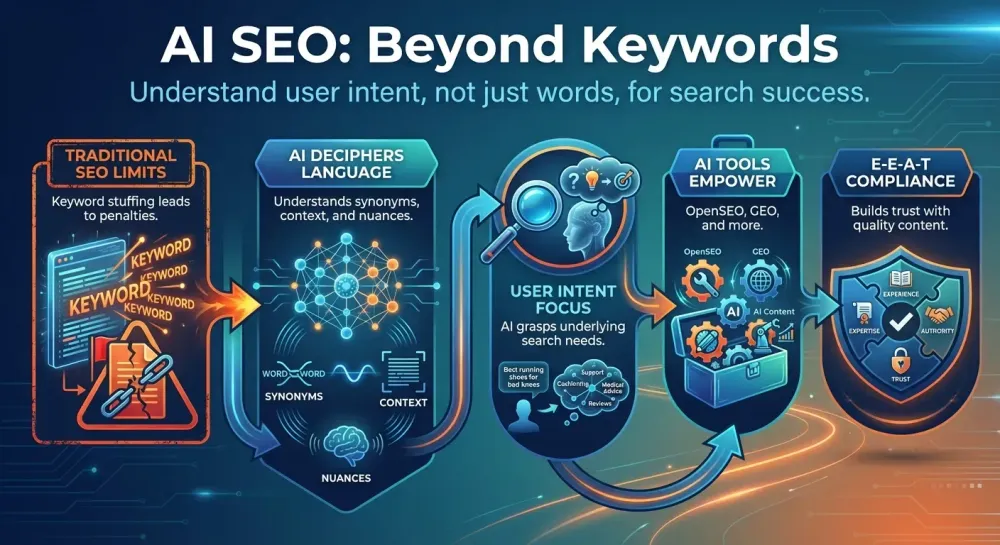
Search algorithms are becoming increasingly sophisticated, moving beyond simple keyword matching to understand the nuances of user queries. This complexity means that SEO efforts must be dynamic and informed. Tools like OpenSEO, with its advanced AI capabilities, assist in navigating this evolving terrain by focusing on creating content that aligns with these complex algorithms.
User Intent: The Driving Force Behind Search
The core of modern SEO lies in understanding user intent – what users really want when they type a query. Search engines prioritize content that directly answers questions and fulfills needs. This shift means that simply stuffing keywords is obsolete; instead, creating comprehensive, valuable content tailored to specific user needs is paramount.
Building Trust and Authority with Search Engines
Consistent, high-quality SEO efforts are fundamental to building credibility with search engines like Google. This involves not only on-page optimization but also demonstrating Expertise, Authoritativeness, and Trustworthiness (E-E-A-T). Search engines reward websites that consistently provide reliable and valuable information, making them more likely to rank higher.
The Competitive Edge SEO Provides
In a crowded online marketplace, strong SEO is what differentiates a business from its competitors. By ranking higher for relevant searches, businesses attract targeted traffic, leading to increased brand awareness and conversions. For instance, OpenSEO’s AI-driven approach to content generation, which is SEO-oriented and adheres to E-E-A-T standards, helps users create content that not only satisfies search engines but also resonates with their audience, offering a significant competitive advantage.
3. The Core Pillars of SEO: On-Page, Off-Page, and Technical
Understanding what is SEO involves recognizing its fundamental role in driving targeted traffic to a website from organic search results. This practice is not a single action but a multifaceted strategy built upon three interconnected pillars: On-Page, Off-Page, and Technical SEO. Each pillar plays a crucial role in ensuring a website is discoverable, authoritative, and user-friendly for both search engines and visitors.
On-Page SEO: Optimizing Your Content for Search
On-page SEO focuses on optimizing elements directly on your website to improve its ranking. This begins with thorough keyword research to understand what users are searching for, followed by creating high-quality, engaging content that naturally incorporates these terms. Key elements include crafting compelling title tags and meta descriptions, structuring content with header tags (H1, H2, etc.) for readability, and implementing internal linking to guide users and search engines through your site. Image optimization, including descriptive alt text, also contributes to a better user experience and search visibility. Tools like OpenSEO can assist in this process by identifying high-potential keywords and aiding in the generation of well-structured, SEO-friendly content.
Off-Page SEO: Building Authority Beyond Your Website
Off-page SEO involves actions taken outside of your website to impact your rankings. The most significant aspect is building high-quality backlinks from reputable websites, emphasizing quality over quantity. Social signals, such as shares and engagement on social media platforms, also play a role in signaling relevance and popularity. Brand mentions across the web and positive online reviews contribute to a site's overall authority and trustworthiness in the eyes of search engines.
Technical SEO: Ensuring Search Engines Can Access and Understand Your Site
Technical SEO ensures that search engines can effectively crawl, index, and understand your website. This includes optimizing site speed for a faster user experience, ensuring mobile-friendliness for the growing number of mobile searches, and submitting sitemaps to help search engines discover your content. Configuring robots.txt correctly is essential for guiding search engine crawlers. Implementing schema markup helps search engines understand the context of your content, and securing your site with HTTPS is a critical ranking factor.
A holistic approach, where these three pillars work in synergy, is essential for effective SEO. For instance, OpenSEO's AI-driven approach to content generation, coupled with its SEO scoring system, directly supports on-page optimization, while the platform's ability to integrate with WordPress facilitates the technical aspects of publishing and managing content. Ultimately, mastering these pillars is key to achieving sustainable organic growth and understanding what is SEO in its entirety.
4. Keyword Research: The Foundation of Effective SEO
Understanding keyword research is crucial to grasping what is SEO. It forms the bedrock upon which all successful search engine optimization strategies are built, guiding content creation and targeting the right audience.
Understanding Search Intent
Search intent categorizes user queries into four main types: Informational (seeking knowledge), Navigational (looking for a specific website), Transactional (intending to buy), and Commercial (researching before a purchase). Recognizing these intents allows for content tailored to user needs, significantly impacting engagement and conversion rates.
Finding Your Niche: Long-Tail Keywords and Their Power
Long-tail keywords are more specific, multi-word phrases that users often employ. While they have lower search volumes individually, they typically experience lower competition and attract users with clearer intent, leading to higher conversion rates. For instance, instead of "shoes," a long-tail keyword might be "waterproof hiking boots for women with arch support."
Tools and Techniques for Keyword Discovery
Effective keyword discovery relies on specialized tools that analyze search volumes, competition, and related terms. OpenSEO offers intelligent keyword research capabilities, adept at uncovering high-volume, low-competition long-tail keywords. This AI-powered approach ensures your content aligns with what users are actively searching for.
Integrating Keywords Naturally into Your Content
Once identified, keywords must be integrated seamlessly into your content. Over-optimization, or "keyword stuffing," can harm your SEO. The goal is to create valuable, readable content where keywords appear organically, enhancing both user experience and search engine understanding.
5. Content Creation for SEO: From AI Assistance to Human Touch
Understanding what is SEO involves recognizing the critical role of content. In today's digital landscape, creating compelling content is paramount for search engine visibility and user engagement. AI tools are revolutionizing this process, but the human element remains indispensable for truly impactful results.
The Role of AI in Modern Content Creation
AI significantly accelerates content generation, particularly for foundational drafts. Tools like OpenSEO's AI deep article generation can quickly produce structured, readable content, complete with H-tags and bolded key phrases. This speeds up the initial writing phase, allowing creators to focus on refinement and strategic input.
Crafting High-Quality, User-Centric Content
While AI provides a powerful starting point, human oversight is crucial. Content must be fact-checked for accuracy, infused with a distinct tone, and enriched with unique insights that AI alone cannot replicate. The goal is always to satisfy user intent and provide genuine value.
Structuring Content for Readability and Search Engines
Effective content structure is key to both user experience and SEO. Employing clear headings, short paragraphs, and bullet points enhances readability, making information easily digestible. This structured approach also helps search engines understand and index content more effectively.
The Power of Originality and Depth
Ultimately, exceptional SEO content offers unique value and in-depth information that thoroughly answers user queries. OpenSEO's platform aids this by offering an SEO scoring system, ensuring that generated content is not only well-structured and readable but also optimized for search engines before publication. This combination of AI efficiency and human expertise is the cornerstone of modern SEO content strategy.
6. Advanced Strategies and the Future of SEO
As the digital landscape evolves, understanding what is SEO is just the beginning. The future demands a more sophisticated approach, integrating cutting-edge technology to maintain and enhance online visibility. This involves not only optimizing for traditional search engines but also for the emerging world of AI-driven content discovery.
The Rise of Generative AI and its Impact on Search (GEO)
The advent of Generative AI is reshaping how users find information. This necessitates a shift towards Generative Engine Optimization (GEO), which goes beyond traditional SEO by focusing on making content discoverable by AI models. Optimizing content structure, semantic relevance, and clarity for AI consumption is becoming crucial for future visibility, ensuring your brand is not only found by users but also recommended by intelligent systems.
Seamless Integration: From Creation to Publication
Streamlined workflows are paramount for efficient content marketing. Tools like OpenSEO offer seamless integration, particularly with platforms like WordPress. This allows for one-click publishing, automatic feature image selection, and effortless category/tag assignment. Such automation frees up valuable time, enabling content creators to focus on strategy and quality rather than manual processes, thereby accelerating the content-to-publication cycle.
Measuring Your SEO Success: Key Metrics and Analytics
To truly understand the effectiveness of your SEO efforts, consistent measurement is key. Essential metrics include organic traffic, tracking the number of visitors arriving from unpaid search results. Keyword rankings, monitoring your position for target search terms, and bounce rate, which indicates user engagement, are also vital. Ultimately, conversion rates, measuring how many visitors complete a desired action, demonstrate the tangible impact of your SEO strategy.
Staying Ahead: Continuous Learning and Adaptation
The world of search is in constant flux. Algorithm updates, new search technologies, and evolving user behaviors mean that continuous learning and adaptation are non-negotiable. Embracing a proactive mindset, staying informed about industry trends, and being willing to pivot your strategies are essential for long-term SEO success and maintaining a competitive edge in the ever-changing digital ecosystem.
FAQ (Frequently Asked Questions)
Q1: What is the primary goal of SEO?
A1: The primary goal of SEO is to increase a website's visibility in organic search engine results pages (SERPs) to attract more targeted, unpaid traffic.
Q2: How does SEO differ from paid advertising?
A2: SEO is a long-term strategy focused on organic visibility without direct per-click costs, while paid advertising (like PPC) offers immediate visibility but requires ongoing payment for each click.
Q3: What are the three core pillars of SEO?
A3: The three core pillars of SEO are On-Page SEO (optimizing content and elements on your website), Off-Page SEO (building authority through external factors like backlinks), and Technical SEO (ensuring search engines can crawl, index, and understand your site).
Q4: Why is understanding user intent important in SEO?
A4: Understanding user intent is crucial because search engines prioritize content that directly answers user questions and fulfills their needs. Tailoring content to specific intents leads to higher engagement and better rankings.
Q5: Can AI tools like OpenSEO fully replace human SEO experts?
A5: While AI tools can significantly assist with tasks like keyword research and content generation, human expertise remains vital for strategic planning, nuanced content creation, E-E-A-T demonstration, and adapting to the ever-evolving SEO landscape.
Conclusion
In essence, understanding what is SEO is no longer a niche consideration but a fundamental pillar of online success. As we've explored, SEO is not a fleeting trend or a one-time fix; it's a dynamic, ongoing strategy demanding patience, unwavering consistency, and a deep-seated commitment to delivering genuine value to your audience. By mastering the core tenets of on-page, off-page, and technical SEO, and by harnessing the power of intelligent tools for keyword research and content ideation, you equip yourself to navigate the ever-evolving search landscape. Embracing this strategic approach will not only elevate your website's visibility but will also pave the way for sustainable, long-term growth. Tools like OpenSEO are specifically crafted to demystify these intricate processes, freeing you to concentrate on your most vital tasks: crafting exceptional content and forging meaningful connections with your target audience. The time to act is now. Begin implementing these proven strategies today, and witness your online presence not just improve, but truly flourish throughout 2025 and well into the future. Ready to transform your website's visibility? Explore OpenSEO's powerful AI-driven solutions to kickstart your SEO journey and achieve your online goals.