What is SEO? Your 2025 Guide to Online Visibility

Image source: Pexels
In the vast digital landscape of 2025, simply existing online is akin to whispering in a hurricane. To cut through the noise and genuinely connect with your audience, your website needs to be more than just a digital storefront; it needs to be a beacon. This is precisely why understanding what is SEO has become non-negotiable for anyone serious about making their mark. Search Engine Optimization is the art and science of ensuring your online presence is not only seen but also found by the people actively searching for what you offer.
This guide is your definitive roadmap to demystifying SEO. We'll explore its foundational principles, dissect its key strategies, and reveal the cutting-edge tools that will empower you to elevate your online visibility, attract qualified leads, and conquer your digital objectives. Get ready to transform your website from a hidden gem into a sought-after destination.
The Digital Landscape: Why Online Visibility Matters More Than Ever
In today's digital age, the sheer volume of online content presents a significant challenge for users seeking specific information. This information overload underscores the critical importance of online visibility for businesses and individuals alike.
The Ever-Growing Internet and Information Overload
The internet is a vast and ever-expanding universe of data. With millions of new pieces of content published daily, it's increasingly difficult for users to sift through the noise and find what they're truly looking for. This is where the role of search engines becomes paramount.
The Role of Search Engines in Navigating the Web
Search engines like Google act as the primary gateways to information for the vast majority of internet users. They are the tools people use to discover products, services, and answers to their questions. Therefore, being visible on these platforms is no longer optional; it's essential for reaching your target audience. Understanding what is SEO (Search Engine Optimization) is key here, as it's the process of making your website more understandable to search engines, thereby connecting it with users.
Understanding User Intent: What People Are Really Looking For
Successful online visibility means connecting with users precisely at the moment they are actively searching for what you offer. This involves not just being present, but being found organically through relevant search results. While paid advertising has its place, the long-term value and trust built through organic visibility, driven by effective SEO practices, are invaluable. Tools like OpenSEO are designed to streamline this process, aiding in keyword research and AI-powered content generation to meet user intent and search engine preferences.
Demystifying SEO: What Exactly Is Search Engine Optimization?
Understanding what is SEO is crucial for anyone looking to establish a significant online presence. Essentially, Search Engine Optimization (SEO) is the strategic practice of enhancing a website to improve its visibility in search engine results pages (SERPs). This isn't about paid advertising; it's about earning your place at the top through organic means.
Defining SEO: The Art and Science of Visibility
SEO is often described as both an art and a science. The "science" lies in understanding the intricate algorithms that search engines like Google employ, while the "art" comes into play in crafting compelling content and user experiences that resonate with both search engines and human visitors. Tools like OpenSEO are designed to aid this process, offering AI-driven solutions for keyword research and content generation, aiming to optimize for both traditional search engines and emerging generative AI platforms.
The Core Goal: Driving Organic Traffic
The primary objective of SEO is straightforward: to attract unpaid, targeted traffic to your website. By ranking higher for relevant search queries, websites can connect with users actively seeking the products, services, or information they offer. This sustained, organic influx of visitors is fundamental to growing an online audience and achieving business goals.
How Search Engines Work: Crawling, Indexing, and Ranking
To grasp SEO, it's vital to understand how search engines operate. They employ automated programs called crawlers to discover new and updated web pages. These pages are then indexed, creating a massive database of information. Finally, sophisticated ranking algorithms determine which pages are most relevant and authoritative for a given search query, presenting them to users.
Key Components of SEO: On-Page vs. Off-Page
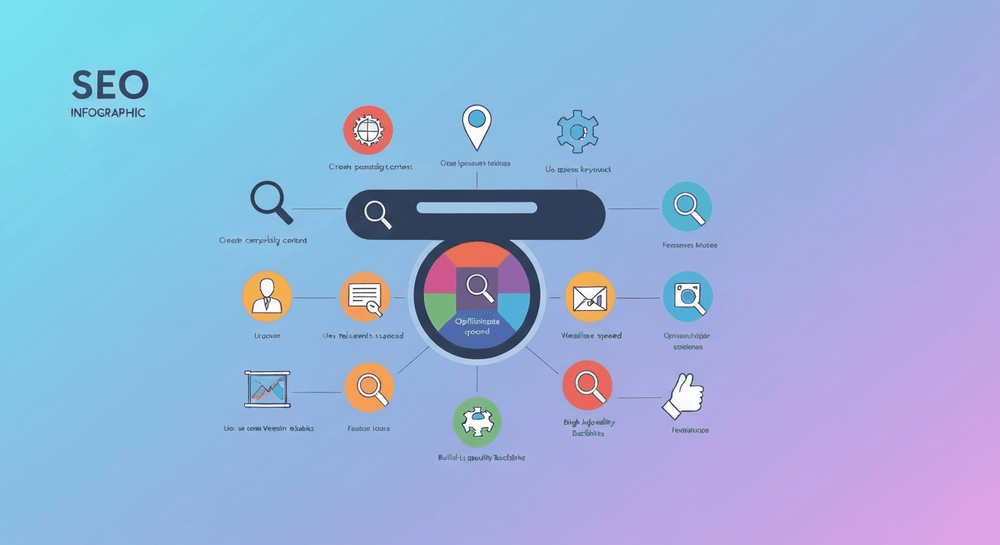
SEO is broadly divided into two foundational pillars: on-page and off-page optimization. On-page SEO involves optimizing elements directly on your website, such as content quality, keyword usage, meta descriptions, and site structure. Off-page SEO focuses on building your website's authority and credibility through external factors like backlinks from reputable sites and social signals.
The Pillars of Effective SEO: On-Page Optimization
Understanding what is SEO is paramount for online success, and on-page optimization forms its bedrock. This involves fine-tuning elements directly on your website to improve its visibility in search engine results pages (SERPs). From the initial keyword strategy to the final polish of image alt text, every detail contributes to a better user experience and stronger search engine comprehension.
Keyword Research: The Foundation of Your Content Strategy
The journey to effective SEO begins with identifying relevant keywords that your target audience is actively searching for. This isn't just about stuffing popular terms; it's about understanding user intent and finding those specific phrases that lead qualified traffic. Tools like those integrated into platforms such as OpenSEO can help uncover high-volume, low-competition long-tail keywords, ensuring your content resonates with genuine search queries.
Crafting High-Quality, User-Centric Content
Creating content that is valuable, informative, and directly addresses user needs is crucial. Search engines prioritize content that satisfies users, making it essential to offer in-depth, engaging material. This means moving beyond superficial information to provide comprehensive answers and solutions.
Optimizing Title Tags and Meta Descriptions
Writing compelling titles and descriptions is your first opportunity to encourage clicks from SERPs. These snippets act as a preview, and their clarity and relevance directly impact click-through rates.
The Power of Header Tags (H1-H6)
Structuring content logically with clear headings (H1-H6) improves readability for users and helps search engines understand the hierarchy and topical relevance of your content.
Image Optimization: Alt Text and File Names
Making images accessible and descriptive for both users and search engines through optimized alt text and descriptive file names enhances your SEO efforts and improves user experience, especially for those using screen readers.
Internal Linking: Connecting Your Content
Strategically linking between pages on your website improves navigation for users and helps search engines discover and crawl your content more effectively, distributing link equity throughout your site. By implementing these on-page strategies, you build a robust foundation for your SEO efforts, ensuring your website is both user-friendly and search engine optimized.
Building Authority: The Realm of Off-Page SEO
Off-page SEO focuses on actions taken outside your website to impact your rankings within search engine results pages (SERPs). It's about building your site's credibility and authority. Understanding what is SEO fundamentally involves recognizing both on-page and off-page efforts.
The Importance of Backlinks: Earning Trust and Authority
Backlinks from reputable websites act as votes of confidence for your site, signaling to search engines that your content is valuable and trustworthy. These links are crucial for establishing authority.
Understanding Different Types of Links
It's vital to differentiate between natural, earned, and manipulative link-building tactics. Natural links are created organically by others due to your content's quality. Earned links are those you actively acquire through outreach or partnerships. Manipulative tactics, such as buying links, can harm your SEO. Tools like OpenSEO can help identify high-quality link opportunities by analyzing keyword potential and content depth, ensuring your efforts align with SEO best practices.
Social Signals and Brand Mentions
While not direct ranking factors, social media engagement and online mentions can indirectly influence SEO by increasing brand visibility and driving traffic.
Local SEO: Connecting with Your Local Audience
For businesses targeting a specific geographic area, local SEO strategies are essential. This involves optimizing your online presence for local searches, ensuring potential customers can find you when searching for products or services in your vicinity.
The Evolving SEO Landscape: AI, User Experience, and Beyond
The world of what is SEO is in constant flux, driven by technological advancements and a deeper understanding of user behavior. As search engines become more sophisticated, so too must our strategies to achieve visibility. This evolution presents both challenges and opportunities for website owners and content creators.
The Rise of AI in Search and Content Creation
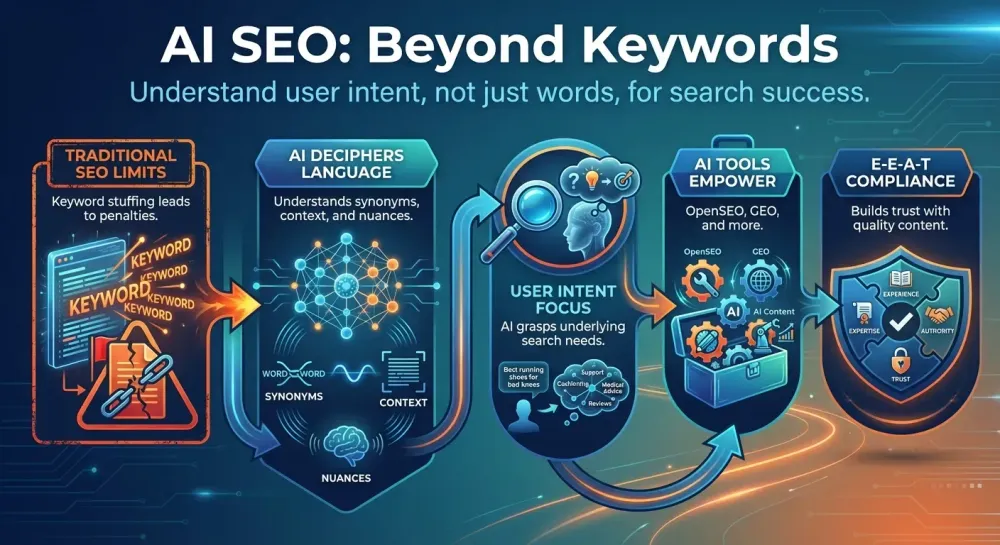
Advanced AI models are fundamentally changing how search engines comprehend and present information. They can now understand nuance, context, and intent far better than before. This shift means that content needs to be not only keyword-rich but also genuinely valuable and informative to rank well.
Introducing OpenSEO: Your AI-Powered SEO Solution
To navigate this dynamic landscape, OpenSEO (open-seo.top) emerges as a powerful AI SEO traffic growth engine. It's designed to streamline content creation and optimization, making it easier for users to produce high-quality content that aligns with modern search engine preferences.
GEO (Generative Engine Optimization) and Future-Proofing Your Content
OpenSEO leverages GEO (Generative Engine Optimization), a pioneering approach that optimizes content not just for traditional search engines but also for emerging generative AI engines. This forward-thinking strategy ensures your content is discoverable in the future of search. OpenSEO assists with intelligent keyword research, helping you identify high-potential topics, and its AI-driven article generation produces well-structured, readable content, complete with H-tags and bolded key phrases. The platform's AI models are trained on vast datasets of SEO-optimized content, inherently understanding what search engines favor.
User Experience (UX) as a Ranking Factor
A seamless and positive user experience is no longer a secondary concern; it's a critical ranking factor. Search engines prioritize websites that are easy to navigate, load quickly, and provide engaging content that keeps users on the page. OpenSEO supports this by generating content that is not only optimized for search engines but also crafted for readability and user engagement.
The Importance of E-E-A-T (Experience, Expertise, Authoritativeness, Trustworthiness)
Meeting the growing demand for content that demonstrates genuine Experience, Expertise, Authoritativeness, and Trustworthiness (E-E-A-T) is paramount. OpenSEO's AI models are trained to produce content that reflects these qualities, helping to build credibility and trust with both users and search engines. This holistic approach ensures your website is well-positioned for long-term SEO success.
Putting SEO into Practice: Tools and Strategies for Success
Understanding what is SEO is the first step; putting it into practice requires the right approach. This section delves into essential tools, leveraging innovative solutions like OpenSEO, and the critical aspect of performance measurement.
Essential SEO Tools for Research and Analysis
Effective SEO begins with robust research. Popular tools aid in keyword research to uncover high-potential search terms, conduct comprehensive site audits to identify technical issues, and perform competitor analysis to understand market strategies. These insights form the foundation for targeted optimization efforts.
Leveraging OpenSEO for Content Creation and Optimization
OpenSEO elevates the SEO workflow by integrating advanced AI capabilities. Its intelligent keyword research helps pinpoint low-competition, high-volume terms. The AI-powered article generation produces structured, readable content, complete with H-tags and bolding. Furthermore, OpenSEO's unique scoring system provides actionable feedback on content depth, keyword density, and readability, ensuring content is optimized for both search engines and users.
Seamless WordPress Integration with OpenSEO
For WordPress users, OpenSEO offers direct integration, streamlining the publishing process. This feature allows for one-click content pushing, automating tasks like setting featured images, categories, and tags. This seamless connection significantly enhances efficiency and allows for scalable content production.
Measuring Your SEO Success: Key Metrics to Track
To gauge the effectiveness of your SEO strategies, tracking key metrics is crucial. These include organic traffic growth, fluctuations in keyword rankings, website bounce rate, and ultimately, conversion rates. These data points provide a clear picture of your SEO performance.
Staying Ahead: The Continuous Nature of SEO
It's vital to recognize that SEO is not a static, one-time task. It's an ongoing process of adaptation and refinement. Search engine algorithms are constantly evolving, and user search behaviors change. Continuous monitoring, analysis, and strategic adjustments are necessary to maintain and improve search engine visibility and drive sustainable traffic.
FAQ (Frequently Asked Questions)
Q1: What is the primary goal of SEO?
A1: The primary goal of SEO is to increase the quantity and quality of organic traffic to a website by improving its visibility in search engine results pages (SERPs) for relevant search queries.
Q2: What's the difference between on-page and off-page SEO?
A2: On-page SEO involves optimizing elements directly on your website, such as content, keywords, and meta descriptions. Off-page SEO focuses on external factors like backlinks, social signals, and brand mentions that build your website's authority and credibility.
Q3: How has AI impacted SEO?
A3: AI has significantly impacted SEO by enabling search engines to understand content context and user intent more deeply. It also powers tools like OpenSEO, which assist in keyword research, content generation, and optimization, making SEO more efficient and effective.
Q4: Is SEO a one-time task, or an ongoing process?
A4: SEO is an ongoing process. Search engine algorithms, user behaviors, and the competitive landscape are constantly evolving, requiring continuous monitoring, analysis, and strategic adjustments to maintain and improve search engine visibility.
Conclusion
As we navigate the ever-evolving landscape of digital marketing, understanding what is SEO is no longer an option, but a fundamental imperative for achieving meaningful online visibility. This essential introduction has illuminated how the core principles of SEO – the strategic optimization of your website's content and structure (on-page) alongside building authority and trust across the web (off-page) – remain the bedrock of organic growth. Furthermore, embracing forward-thinking solutions like AI-driven platforms such as OpenSEO, and critically, placing user experience at the forefront, are crucial for staying ahead of the curve in 2025 and beyond.
The journey to mastering SEO is not a destination, but a continuous process of learning, adapting, and consistently applying best practices. Don't let the complexity deter you; the rewards of enhanced visibility and organic traffic are substantial. Start implementing these actionable strategies today. Begin by auditing your current website, refining your keyword research, and creating valuable, user-centric content. Embrace the power of off-page signals, and explore how AI can streamline your efforts. By taking these steps now, you are not just improving your website's performance; you are investing in its future, paving the way for sustained success and a commanding presence in the digital marketplace for years to come. Ready to elevate your online visibility? Explore OpenSEO (open-seo.top) and transform your SEO strategy with the power of AI.